MinuteRead
30 min
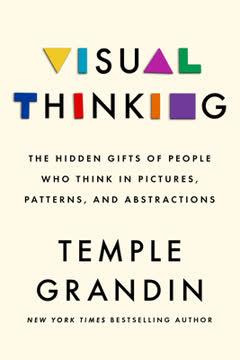
Temple Grandin has spent her life seeing things differently. Not metaphorically. Literally. Her mind works in pictures, in detailed images she can rotate, manipulate, and inspect from every angle. When she designs livestock handling systems, she runs them in her head like a movie, watching the cattle move through the chutes, noticing where they will balk, where the shadows will spook them, where the noise will create panic. She sees problems before they exist in the physical world.
**Author:** Temple Grandin **Estimated Reading Time:** 45 minutes
**What You'll Learn:** - Why visual thinking is a distinct cognitive style, not a learning deficit - How object visualizers and spatial visualizers differ and why both matter - Why schools systematically fail visual thinkers and what must change - How visual thinkers prevent disasters, drive innovation, and shape civilization - Practical ways to harness visual thinking in your own life and work
**Who This Book Is For:** Anyone who has ever felt out of place in a word-driven world. Parents and teachers who want to understand children who learn differently. Leaders who need to build teams that actually solve complex problems. And anyone curious about how the human mind works in all its remarkable variety.
Temple Grandin has spent her life seeing things differently. Not metaphorically. Literally. Her mind works in pictures, in detailed images she can rotate, manipulate, and inspect from every angle. When she designs livestock handling systems, she runs them in her head like a movie, watching the cattle move through the chutes, noticing where they will balk, where the shadows will spook them, where the noise will create panic. She sees problems before they exist in the physical world. This ability made her one of the most influential animal behaviorists in the world. More than half the cattle in North America are handled in facilities she designed. But for much of her life, the education system told her she was deficient. She was the weird kid who couldn't do algebra but could build elaborate structures from cardboard. The student who failed French but could visualize mechanical systems with extraordinary precision. Grandin's central argument in Visual Thinking is simple and profound: the way she thinks is not a defect. It is a different cognitive style, one shared by millions of people, and one that modern society desperately needs but systematically undervalues. The problem begins early. Schools are built around words and abstract symbols. Reading, writing, and mathematics dominate the curriculum. Children who think in images struggle with these formats, not because they lack intelligence, but because their brains process information differently. They get labeled as slow, disruptive, or learning disabled. They get medicated, marginalized, or pushed into remedial tracks. Many never discover what they are actually good at. Meanwhile, the world is losing something precious. The people who design our bridges, fix our electrical grids, invent new medical devices, and solve mechanical problems are disproportionately visual thinkers. As hands-on classes disappear from schools, as shop class and drafting and home economics get replaced by more test preparation, we are quietly eliminating the pipeline of practical problem solvers. Grandin knows this from personal experience. She barely made it through…
Continue reading in the MinuteRead app
Get the complete 30-minute summary of Visual Thinking
Get the complete summary in the appVisual thinking is a distinct cognitive style, not a learning deficit.
There are two types of visual thinkers: object visualizers and spatial visualizers.
Schools systematically fail visual thinkers by eliminating hands-on learning and favoring verbal skills.
Visual thinkers are essential for innovation, infrastructure, and disaster prevention.
Different cognitive styles are complementary. The best teams include verbal thinkers, object visualizers, and spatial vi
Many great innovators displayed traits associated with neurodiversity, such as autism or ADHD.
"Visual Thinking" is a strong fit if you want practical ideas around psychology, science, autistic spectrum disorder, especially themes like visual thinking is a distinct cognitive style, not a learning deficit; there are two types of visual thinkers: object visualizers and spatial visualizers. The MinuteRead summary distills these concepts into a focused read, whether you're deciding whether to buy the book or applying its lessons at work.
Temple Grandin is an American academic, animal behaviorist, and autism spokesperson. She is renowned for her work in humane livestock treatment and has authored numerous scientific papers on animal behavior. Grandin, who is autistic, has been instrumental in documenting insights from her personal experiences with autism. She is a faculty member at Colorado State University and has been recognized as one of Time's 100 most influential people. Grandin's life was portrayed in an Emmy- and Golden Gl…
View all summaries by Temple GrandinContinue Reading
Access the complete 30-minute summary and thousands more nonfiction books in the MinuteRead app.

Continue reading the complete summary in the MinuteRead app.