MinuteRead
30 min
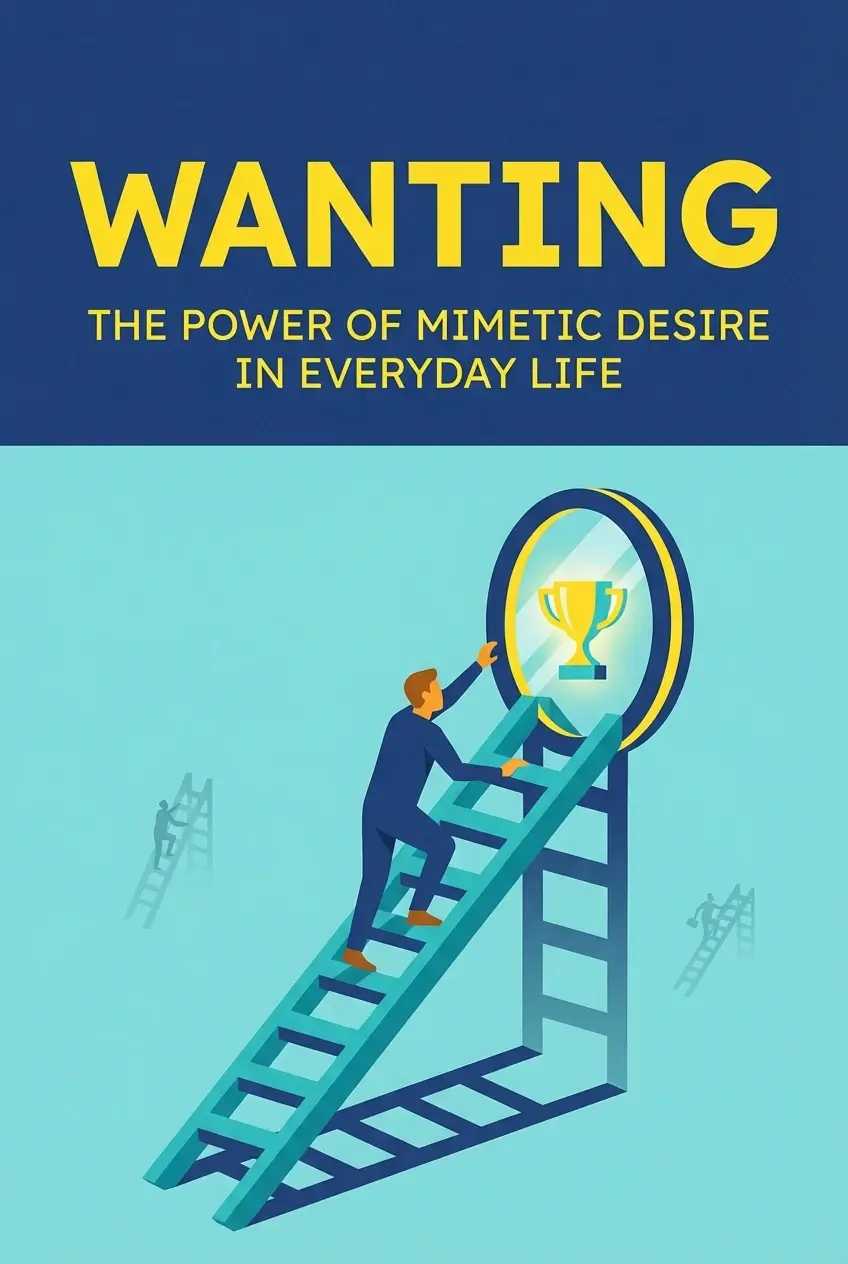
Book summary
by Luke Burgis
Premium summary · Opens in the app · 30 min read
There is a moment in every life when a person realizes that something they desperately wanted was never really their desire at all. It was borrowed. Absorbed from a friend, a colleague, a stranger on the internet, a character in a film. The wanting felt real. The pursuit felt urgent. But the origin was somewhere else entirely.
**Author:** Luke Burgis
**Estimated Reading Time:** 45 minutes
**What You'll Learn:**
* Why you want things you never actually wanted * How hidden models shape your desires every day * Why social media makes rivalry worse and what to do about it * The difference between desires that fulfill and desires that leave you empty * How to break free from destructive cycles of imitation
**Who This Book Is For:**
Anyone who has ever achieved a goal and felt strangely empty afterward. Anyone who has wondered why they suddenly wanted something the moment someone else wanted it. Anyone who feels caught in cycles of comparison, competition, and dissatisfaction. And anyone who wants to understand the hidden forces shaping their choices, their relationships, and their future.
There is a moment in every life when a person realizes that something they desperately wanted was never really their desire at all. It was borrowed. Absorbed from a friend, a colleague, a stranger on the internet, a character in a film. The wanting felt real. The pursuit felt urgent. But the origin was somewhere else entirely. Luke Burgis opens his book with a simple observation that carries enormous weight: human beings are imitative creatures. We learn to speak by imitating sounds. We learn to walk by imitating movements. We learn to live by imitating the lives around us. And crucially, we learn what to want by watching what other people want. This is not a flaw in human nature. It is the foundation of human culture. Without imitation, there would be no language, no education, no civilization. But the same force that allows us to learn and grow also drives us into rivalry, envy, and endless dissatisfaction. The same mechanism that builds communities can tear them apart. The French thinker René Girard spent decades developing a theory that explains this paradox. He called it mimetic desire, from the Greek word mimesis, meaning imitation. His central insight was deceptively simple: we do not want objects directly. We want them because someone else, a model, has made them appear desirable. Desire is triangular, not linear. There is always a third party involved, even when we cannot see them. Burgis takes Girard's theory and brings it into the twenty-first century. He shows how mimetic desire operates in our careers, our relationships, our consumer choices, and our political lives. He explains why social media has intensified these dynamics to unprecedented levels. And he offers a path forward, not toward eliminating desire, but toward understanding it well enough to choose more wisely. The problem is not that we want things. The problem is that we rarely know why we want them. We mistake borrowed desires for authentic ones. We…
Continue reading in the MinuteRead app
Get the complete 30-minute summary of Wanting
Get the complete summary in the appYour desires are not entirely your own. They are shaped by models, whether you know it or not.
Identify your models. Awareness is the first step toward freedom.
Distinguish between Celebristan and Freshmanistan. Close models create rivalry. Distant models create inspiration.
Recognize the scapegoat mechanism. When groups unite against a victim, ask whether the blame is serving a social functio
Cultivate thick desires. They lead to lasting fulfillment. Thin desires lead to emptiness.
Build positive flywheels. Small wins create momentum toward meaningful goals.
"Wanting" is a strong fit if you want practical ideas around psychology, philosophy, self help, especially themes like your desires are not entirely your own. they are shaped by models, whether you know it or not; identify your models. awareness is the first step toward freedom. The MinuteRead summary distills these concepts into a focused read, whether you're deciding whether to buy the book or applying its lessons at work.
Luke Burgis is an entrepreneur and educator with experience in various industries. He has founded multiple companies in wellness, consumer products, and technology. Currently, he serves as Entrepreneur-in-Residence and Director of Programs at the Ciocca Center for Principled Entrepreneurship at The Catholic University of America. Burgis studied business at NYU's Stern School of Business and philosophy and theology in Rome. He is involved in K-12 education initiatives and is the Managing Partner …
View all summaries by Luke BurgisContinue Reading
Access the complete 30-minute summary and thousands more nonfiction books in the MinuteRead app.

Continue reading the complete summary in the MinuteRead app.