MinuteRead
30 min
Book summary
by Mohamed El-Erian
Premium summary · Opens in the app · 30 min read
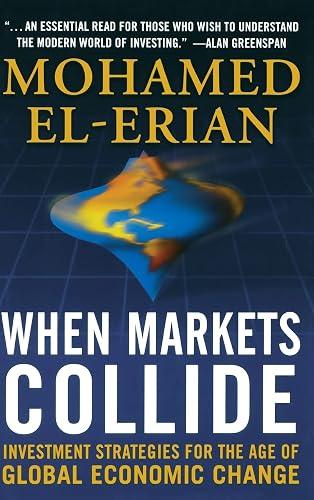
The global economy changed profoundly in the first decade of the twenty-first century, yet most people continued to operate with mental models built for a world that no longer exists. This is the central problem Mohamed El-Erian addresses in *When Markets Collide*. Written in 2008, just as the worst financial crisis in generations was unfolding, the book offers something rare: a coherent framework for understanding why the old rules stopped working and what the new landscape looks like.
**Author:** Mohamed El-Erian
**Estimated Reading Time:** 45 minutes
**What You'll Learn:** - Why the global economy is undergoing a once-in-a-century transformation - How emerging economies are reshaping the rules of international finance - Why traditional economic models are failing and what replaces them - How to position yourself for the bumpy journey toward a new equilibrium - What sovereign wealth funds, complex instruments, and policy failures mean for your financial future
**Who This Book Is For:** Investors, policy professionals, business leaders, and curious readers who sense that something fundamental has shifted in the global economy. If you have wondered why markets behave in ways that defy conventional wisdom, why central banks seem less powerful than they once were, or why China and India now matter more than ever, this book provides the framework you need.
The global economy changed profoundly in the first decade of the twenty-first century, yet most people continued to operate with mental models built for a world that no longer exists. This is the central problem Mohamed El-Erian addresses in *When Markets Collide*. Written in 2008, just as the worst financial crisis in generations was unfolding, the book offers something rare: a coherent framework for understanding why the old rules stopped working and what the new landscape looks like. El-Erian writes from a unique vantage point. As CEO and co-CIO of PIMCO, one of the world's largest investment management firms, he sat at the intersection of global capital flows, central bank policy, and market behavior. He saw firsthand how traditional relationships between economic variables were breaking down. He watched as emerging economies transformed from borrowers to creditors. He observed the rise of financial instruments so complex that even sophisticated market participants struggled to understand their risks. And he recognized that these developments were not isolated anomalies but part of a structural shift that would define the coming decades. The book's title captures its central insight. When markets collide, the collision is not just between buyers and sellers or between bulls and bears. It is a collision between different economic systems, different growth models, different regulatory regimes, and different assumptions about how the world works. The old industrialized economies of the West, built on consumption and debt, collided with the rising economies of the East and South, built on production, savings, and export-led growth. The result is a period of profound instability as the global system searches for a new equilibrium. Why does this matter for ordinary readers? Because the collision affects everything. It affects the interest rate on your mortgage, the return on your retirement savings, the stability of your job, and the price of goods on supermarket shelves. It affects government budgets, currency values, and…
Continue reading in the MinuteRead app
Get the complete 30-minute summary of When Markets Collide
Get the complete summary in the appThe global economy is undergoing a structural transformation, not a cyclical downturn.
Emerging economies, led by China and India, are now major drivers of global growth.
The old relationship between creditors and debtors has reversed, with emerging economies financing developed countries.
Financial innovation has created new risks that are more opaque and more interconnected than in the past.
Traditional economic models and indicators are becoming less reliable.
The transition to a new equilibrium will be bumpy, with periods of volatility and crisis.
"When Markets Collide" is a strong fit if you want practical ideas around economics, finance, business, especially themes like the global economy is undergoing a structural transformation, not a cyclical downturn; emerging economies, led by china and india, are now major drivers of global growth. The MinuteRead summary distills these concepts into a focused read, whether you're deciding whether to buy the book or applying its lessons at work.
Motivated to help readers with for the first time ever China was the most important contributor to world growth over the year when measured, Mohamed El-Erian wrote “When Markets Collide” to package those ideas for a fast, focused read. In “When Markets Collide”, Mohamed El-Erian focuses on for the first time ever China was the most important contributor to world growth over the year when measured. Through “When Markets Collide”, Mohamed El-Erian distills the core ideas on economics into lessons …
Continue Reading
Access the complete 30-minute summary and thousands more nonfiction books in the MinuteRead app.

Continue reading the complete summary in the MinuteRead app.