MinuteRead
30 min
Book summary
by Richard Florida
Premium summary · Opens in the app · 30 min read
For most of human history, the question of where to live was not really a question at all. People were born in a village, grew up in that village, worked in that village, and died in that village. Migration happened, but it was usually forced. War pushed people across borders. Famine drove families from their land. Religious persecution sent communities fleeing across oceans. Economic necessity pulled workers toward factories and ports. Choice was a luxury that few could afford.
**Author:** Richard Florida **Estimated Reading Time:** 45 minutes
**What You'll Learn:**
- Why place matters more than ever in a supposedly flat world - How mega-regions drive the global economy - Why where you live shapes your career, relationships, and happiness - How to evaluate a city using the Place Pyramid framework - What makes certain communities ideal for different life stages - How to make one of the most important decisions of your life with clarity
**Who This Book Is For:**
Anyone who has ever wondered whether they are living in the right place. Whether you are a young professional choosing your first city, a family weighing schools and safety, an empty-nester planning your next chapter, or simply someone who senses that geography shapes destiny, this book will change how you think about location.
For most of human history, the question of where to live was not really a question at all. People were born in a village, grew up in that village, worked in that village, and died in that village. Migration happened, but it was usually forced. War pushed people across borders. Famine drove families from their land. Religious persecution sent communities fleeing across oceans. Economic necessity pulled workers toward factories and ports. Choice was a luxury that few could afford. Even in the middle of the twentieth century, when mobility increased dramatically, the pattern remained largely reactive. People moved because a company transferred them. They relocated because a factory closed. They followed jobs, not dreams. The idea that an individual might survey the entire country, or the entire world, and deliberately select a city based on personality fit, lifestyle preferences, and long-term happiness would have seemed absurd to most people. That world is gone. Today, an unprecedented number of people have genuine freedom to choose where they live. The barriers that once constrained mobility have fallen. Remote work has untethered millions from specific offices. Air travel has made distant cities accessible. Information technology has made it possible to research any community on earth from a laptop. The question is no longer whether you can move. The question is whether you are thinking carefully enough about where to move. And here is the problem: most people are not thinking carefully about it at all. Richard Florida has spent his career studying why some places thrive while others decline. His earlier work, particularly The Rise of the Creative Class, established him as one of the world's leading urban thinkers. That book argued that economic growth increasingly depends on attracting talented, creative people, and that those people are drawn to places that offer tolerance, diversity, and quality of life. It sparked a global conversation about what makes cities competitive.…
Continue reading in the MinuteRead app
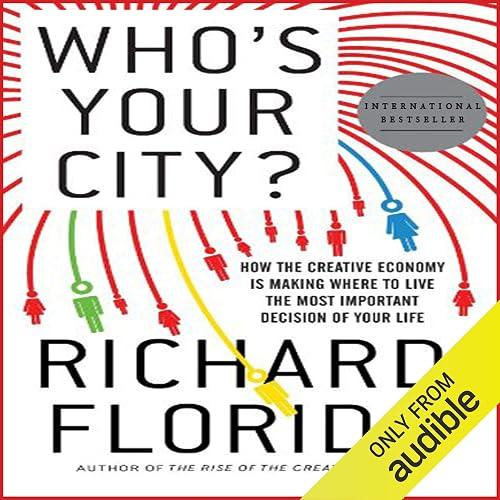
Get the complete 30-minute summary of Who's Your City?
Get the complete summary in the appPlace matters more than ever. Despite globalization and technology, where you live has a profound impact on your life.
The world is spiky, not flat. Economic activity is concentrated in a relatively small number of mega-regions.
The clustering force drives innovation. Talented people become more productive when they work in close proximity.
Place is one of the three pillars of well-being, alongside relationships and work.
Your career prospects depend heavily on where you live. Industries are geographically concentrated.
Real estate appreciation varies dramatically across regions. Where you buy property matters enormously.
"Who's Your City?" is a strong fit if you want practical ideas around economics, sociology, business, especially themes like place matters more than ever. despite globalization and technology, where you live has a profound impact on your life; the world is spiky, not flat. economic activity is concentrated in a relatively small number of mega-regions. The MinuteRead summary distills these concepts into a focused read, whether you're deciding whether to buy the book or applying its lessons at work.
Motivated to help readers with the subject, combines scholarly research with a lighthearted self-help tone, Richard Florida wrote “Who's Your City?” as a practical guide drawn from years of experience and research. In “Who's Your City?”, Richard Florida focuses on despite all the hype over globalization and the "flat world. Through “Who's Your City?”, Richard Florida distills the core ideas on economics into lessons readers can absorb in a single short sitting. Readers turn to this work when the…
Continue Reading
Access the complete 30-minute summary and thousands more nonfiction books in the MinuteRead app.

Continue reading the complete summary in the MinuteRead app.