MinuteRead
30 min
Book summary
Premium summary · Opens in the app · 30 min read
We live in an age of information, yet misinformation spreads faster than ever. We carry devices in our pockets that give us access to the accumulated knowledge of humanity, yet millions of us use those same devices to watch videos claiming the earth is flat. We have mapped the human genome, landed spacecraft on comets, and peered back to the earliest moments of the universe, yet astrology columns remain among the most widely read features in newspapers and magazines.
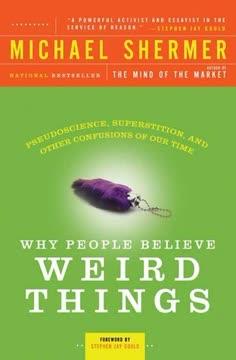
**Author:** Michael Shermer
**Estimated Reading Time:** 45 minutes
**What You'll Learn:**
- Why intelligent people sometimes believe things that are demonstrably false - How pseudoscience mimics real science and why it fools so many of us - The psychological mechanisms that shape and defend our beliefs - How to apply skeptical thinking without becoming cynical - Why science works and how it differs fundamentally from dogma
**Who This Book Is For:**
This book is for anyone who has ever wondered how reasonable people come to hold unreasonable beliefs. It is for the curious, the questioning, and the confused. It is for those who want to understand why a Nobel laureate might champion vitamin C megadoses, why the creator of Sherlock Holmes believed in fairies, and why millions of people insist they have been abducted by aliens. It is also for anyone who wants to think more clearly about the flood of claims that wash over us daily.
We live in an age of information, yet misinformation spreads faster than ever. We carry devices in our pockets that give us access to the accumulated knowledge of humanity, yet millions of us use those same devices to watch videos claiming the earth is flat. We have mapped the human genome, landed spacecraft on comets, and peered back to the earliest moments of the universe, yet astrology columns remain among the most widely read features in newspapers and magazines. How can this be? Michael Shermer has spent decades asking this question. As the founder of The Skeptics Society and the editor of Skeptic magazine, he has investigated claims of alien abductions, psychic powers, creationism, Holocaust denial, and countless other beliefs that fly in the face of established evidence. Along the way, he discovered something surprising: the people who hold these beliefs are not stupid. They are not crazy. Many of them are intelligent, educated, and successful. They are doctors, engineers, professors, and business leaders. They are your neighbors, your colleagues, and perhaps even members of your own family. This book is an attempt to understand why. The answer, Shermer argues, lies not in intelligence but in the way our minds work. We are pattern-seeking animals. We see faces in clouds, hear voices in static, and find meaning in coincidences. This tendency served our ancestors well. The early human who mistook a shadow for a predator survived to pass on his genes. The one who dismissed the shadow as nothing sometimes got eaten. Evolution favored the cautious, the pattern-seekers, the believers. But the same mental machinery that kept our ancestors alive also makes us vulnerable to error. We see patterns where none exist. We remember hits and forget misses. We seek evidence that confirms…
Continue reading in the MinuteRead app
Get the complete 30-minute summary of Why People Believe Weird Things
Get the complete summary in the appSkepticism is a method for evaluating claims, not a position of automatic rejection.
Extraordinary claims require extraordinary evidence.
Smart people believe weird things because intelligence does not equal critical thinking.
Humans are pattern-seeking animals who see meaning in randomness.
Science is a self-correcting process, not a body of fixed facts.
Pseudoscience mimics the appearance of science while lacking its substance.
"Why People Believe Weird Things" is a strong fit if you want practical ideas around science, psychology, philosophy, especially themes like skepticism is a method for evaluating claims, not a position of automatic rejection; extraordinary claims require extraordinary evidence. The MinuteRead summary distills these concepts into a focused read, whether you're deciding whether to buy the book or applying its lessons at work.
Michael Brant Shermer is an American science writer, historian of science, and founder of The Skeptics Society. Born in 1954 in Glendale, California, Shermer is the Editor in Chief of Skeptic magazine, which investigates and debunks pseudoscientific and supernatural claims. He co-hosts the television series Exploring the Unknown and writes a monthly column for Scientific American. Formerly a fundamentalist Christian, Shermer now describes himself as an agnostic nontheist and advocate for humanis…
View all summaries by Michael ShermerContinue Reading
Access the complete 30-minute summary and thousands more nonfiction books in the MinuteRead app.

Continue reading the complete summary in the MinuteRead app.