MinuteRead
30 min
Book summary
Premium summary · Opens in the app · 30 min read
In September 2008, the global financial system came closer to collapse than at any point since the Great Depression. Banks that had spent years packaging toxic mortgages into complex securities suddenly discovered that no one would lend them money. The machinery of credit, which modern economies depend on as surely as they depend on electricity, began to seize up. Within weeks, governments around the world had committed trillions of dollars to rescue financial institutions whose recklessness had
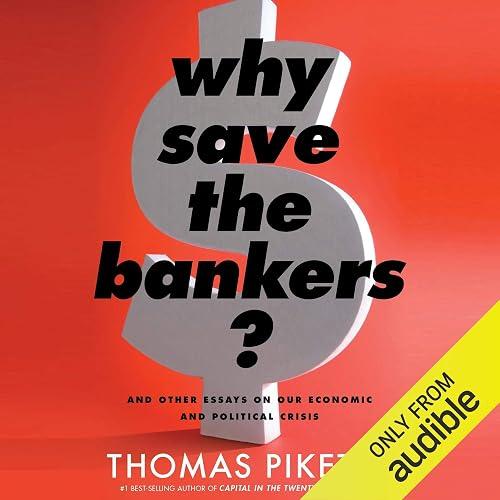
**Author:** Thomas Piketty
**Estimated Reading Time:** 45 minutes
**What You'll Learn:**
- Why the 2008 financial crisis exposed fatal flaws in the European monetary union - How central banks prevented total collapse while creating new dilemmas - Why inequality has exploded and what it means for democracy - What a democratic reconstruction of capitalism could look like - How ordinary citizens can reclaim control over economic institutions
**Who This Book Is For:**
This book is for anyone who watched the financial crisis unfold and wondered why the people who caused it seemed to escape the consequences. It is for readers who sense that something fundamental has gone wrong with the relationship between democracy and capitalism. It is for Europeans trying to understand why their currency has become a source of instability rather than unity. And it is for anyone who wants to think seriously about alternatives to the economic status quo.
In September 2008, the global financial system came closer to collapse than at any point since the Great Depression. Banks that had spent years packaging toxic mortgages into complex securities suddenly discovered that no one would lend them money. The machinery of credit, which modern economies depend on as surely as they depend on electricity, began to seize up. Within weeks, governments around the world had committed trillions of dollars to rescue financial institutions whose recklessness had created the crisis in the first place. The response was swift and, in many ways, effective. Central banks opened their lending windows without limit. Governments guaranteed deposits and took ownership stakes in failing banks. The complete meltdown that many feared never arrived. But the way the crisis was handled left a bitter taste that has never fully dissipated. The bankers who had gambled with other people's money kept their bonuses. The executives who had built business models on the assumption that housing prices would rise forever kept their jobs. The costs of the crisis, meanwhile, were borne by ordinary people who lost homes, jobs, and savings. Thomas Piketty wrote this book in the years following the crisis, as the initial shock gave way to a longer and more troubling period of stagnation, austerity, and political upheaval. The book is a collection of columns he wrote for the French newspaper Liberation, but it is held together by a coherent argument about what went wrong and what needs to change. Piketty's central claim is that the crisis revealed something deeper than the greed of individual bankers or the failure of particular regulations. It revealed that the economic system itself had drifted away from democratic control. Financial institutions had become so large and so interconnected that governments felt they had no choice but to rescue…
Continue reading in the MinuteRead app
Get the complete 30-minute summary of Why Save the Bankers?
Get the complete summary in the appThe 2008 financial crisis was not a natural disaster. It was the result of systemic failures that incentivized excessive
The rescue of the banks was necessary, but it was carried out without meaningful conditions or fundamental reforms, deep
The euro was created as a currency without a state, and this design flaw made the monetary union vulnerable to crisis.
Inequality has risen dramatically since the 1970s, with the top 1 percent capturing a disproportionate share of economic
The formula r > g explains why wealth concentrates when the return on capital exceeds the rate of economic growth.
A progressive wealth tax is the most direct tool for counteracting the concentration of wealth.
"Why Save the Bankers?" is a strong fit if you want practical ideas around economics, politics, essays, especially themes like the 2008 financial crisis was not a natural disaster. it was the result of systemic failures that incentivized excessive; the rescue of the banks was necessary, but it was carried out without meaningful conditions or fundamental reforms, deep. The MinuteRead summary distills these concepts into a focused read, whether you're deciding whether to buy the book or applying its lessons at work.
Motivated to help readers with single currency with seventeen different public debts and seventeen different interest rates on which markets, Thomas Piketty wrote “Why Save the Bankers?” to package those ideas for a fast, focused read. In “Why Save the Bankers?”, Thomas Piketty focuses on single currency with seventeen different public debts and seventeen different interest rates on which markets. Through “Why Save the Bankers?”, Thomas Piketty distills the core ideas on economics into lessons r…
View all summaries by Thomas PikettyContinue Reading
Access the complete 30-minute summary and thousands more nonfiction books in the MinuteRead app.

Continue reading the complete summary in the MinuteRead app.