MinuteRead
30 min
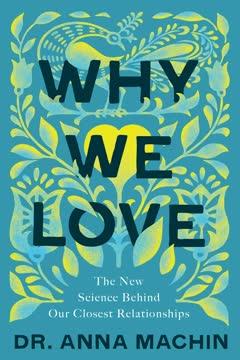
Book summary
by Anna Machin
Premium summary · Opens in the app · 30 min read
For most of human history, love was a mystery. Poets called it a madness. Philosophers called it a virtue. Artists called it a muse. Scientists, for the most part, stayed quiet. Love was too messy, too subjective, too embarrassingly human for serious study. It belonged to the realm of sonnets and love songs, not laboratories and peer-reviewed journals.
**Author:** Anna Machin **Estimated Reading Time:** 35 minutes
**What You'll Learn** The biological, psychological, and evolutionary forces that shape the most powerful human experience. You will discover why love is not a mystery but a survival strategy, how brain chemistry creates the sensation of connection, why your attachment style predicts your relationship patterns, and how love extends far beyond romance into every corner of a meaningful life.
**Who This Book Is For** Anyone who has ever wondered why love feels the way it does. Anyone navigating the early thrill of attraction, the deep comfort of long-term partnership, the fierce devotion of parenthood, or the quiet loyalty of friendship. Anyone who wants to understand the forces that draw people together, push them apart, and sometimes cause them to hurt the ones they claim to love.
For most of human history, love was a mystery. Poets called it a madness. Philosophers called it a virtue. Artists called it a muse. Scientists, for the most part, stayed quiet. Love was too messy, too subjective, too embarrassingly human for serious study. It belonged to the realm of sonnets and love songs, not laboratories and peer-reviewed journals. That has changed. Over the past several decades, a quiet revolution has taken place in the sciences of human connection. Anthropologists have traced love across cultures and centuries. Neuroscientists have mapped the brain in love, watching its circuits light up in real time. Evolutionary biologists have asked the uncomfortable question: what is love actually for? The answers they have found are surprising, humbling, and deeply practical. Anna Machin sits at the intersection of these disciplines. An anthropologist by training, she brings together neuroscience, genetics, psychology, and evolutionary theory to answer a question that sounds simple but is endlessly complex: why do we love? The answer, it turns out, is not romance. It is survival. Human beings are born spectacularly unprepared for the world. Unlike many other mammals, we arrive helpless. A newborn gazelle can stand within minutes. A human infant cannot lift its own head. It will need years of constant care before it can feed itself, protect itself, or navigate social life. This extended childhood is the price we pay for our large brains, and it created an evolutionary problem. How do you ensure that parents stick around long enough to raise such vulnerable offspring? How do you build the cooperative groups that can protect and provide for everyone? The solution was love. Love is not a feeling that evolved to make life pleasant. It evolved to make cooperation possible. The rush of dopamine that makes a new romance feel electric. The flood of oxytocin that bonds a mother to her newborn. The quiet contentment of a…
Continue reading in the MinuteRead app
Get the complete 30-minute summary of Why We Love
Get the complete summary in the appLove evolved to make cooperation possible. It is a survival strategy, not a luxury.
The neurochemicals of love are dopamine (desire), oxytocin (bonding), and beta-endorphin (comfort). Each serves a differ
The shift from passionate to companionate love is natural and healthy. Do not mistake it for the death of love.
Your attachment style, secure, anxious, avoidant, or disorganized, shapes your relationships in predictable ways. It can
You have an unconscious love map that guides attraction. Becoming aware of it gives you more choice.
Romantic love is not the only love that matters. Friendship, family, and community are equally essential.
"Why We Love" is a strong fit if you want practical ideas around psychology, science, relationships—especially themes like love evolved to make cooperation possible. it is a survival strategy, not a luxury; the neurochemicals of love are dopamine (desire), oxytocin (bonding), and beta-endorphin (comfort). each serves a differ. The MinuteRead summary distills these concepts into a focused read, whether you're deciding whether to buy the book or applying its lessons at work.
Anna Machin is an anthropologist and researcher specializing in the science of human relationships and love. She holds a doctorate in anthropology and has extensive experience studying the biological, psychological, and cultural aspects of human bonds. Machin's work combines insights from various disciplines, including neuroscience, genetics, and psychology, to provide a comprehensive understanding of love and its impact on human life. Her writing style is noted for its accessibility, making com…
View all summaries by Anna MachinContinue Reading
Access the complete 30-minute summary and thousands more nonfiction books in the MinuteRead app.

Continue reading the complete summary in the MinuteRead app.