MinuteRead
30 min
Book summary
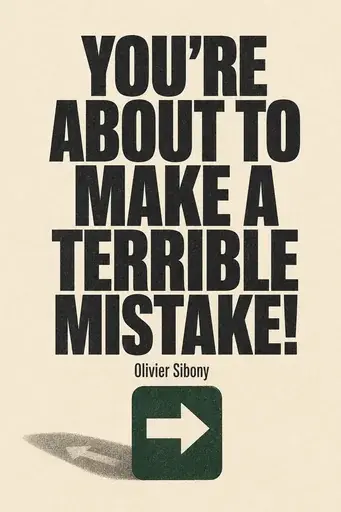
by Olivier Sibony
Premium summary · Opens in the app · 30 min read
In 2012, the French food company Danone was struggling. The company had lost market share in key European markets, and its stock price had stagnated. The board of directors faced a critical decision: should they replace the CEO, Franck Riboud, who had led the company for nearly two decades?
**Author:** Olivier Sibony
**Estimated Reading Time:** 45 minutes
**What You'll Learn:**
- Why smart people and successful organizations make predictably bad decisions - The nine most dangerous cognitive biases that derail strategic thinking - Why individual willpower cannot fix biased decision-making - How to design organizational processes that systematically improve judgment - Practical frameworks for better collaboration, dialogue, and decision architecture
**Who This Book Is For:**
This book is for leaders, managers, entrepreneurs, and anyone who participates in important decisions. If you have ever wondered how a room full of intelligent people could approve a disastrous acquisition, launch a doomed product, or ignore an obvious threat, this book explains exactly how it happens and what to do about it.
In 2012, the French food company Danone was struggling. The company had lost market share in key European markets, and its stock price had stagnated. The board of directors faced a critical decision: should they replace the CEO, Franck Riboud, who had led the company for nearly two decades? The board's decision-making process was thorough. They analyzed performance data, reviewed strategic options, and consulted external advisors. After months of deliberation, they made their choice: keep Riboud. The company needed stability, they reasoned. Continuity was essential. What happened next surprised everyone. Over the following years, Danone's performance improved dramatically. The decision to retain Riboud appeared vindicated. But here is the uncomfortable question: was the board's decision actually good, or did they simply get lucky? Olivier Sibony asks this question throughout his book because the answer reveals something profound about how we make decisions. We judge decisions by their outcomes, not by the quality of the thinking that produced them. When things work out, we assume the process was sound. When things fail, we hunt for scapegoats. This is a fundamental error. Sibony spent twenty-five years at McKinsey & Company, where he advised some of the world's largest corporations on strategy. During that time, he observed something troubling. The most sophisticated organizations, staffed with brilliant people and armed with mountains of data, kept making the same kinds of mistakes. They overpaid for acquisitions. They launched products nobody wanted. They ignored threats until it was too late. They resisted necessary changes until crisis forced their hand. These were not random errors. They followed predictable patterns. And the patterns pointed to something deeper than individual incompetence or bad luck. They pointed to the systematic ways our minds deceive us. The book's title comes from a simple observation: in most important decisions, someone in the room knows something is wrong. Someone has a nagging doubt, a counterargument, a piece of contradictory evidence. But that person stays silent. Or they speak up and are politely ignored. Or…
Continue reading in the MinuteRead app
Get the complete 30-minute summary of You're About to Make a Terrible Mistake
Get the complete summary in the appCognitive biases cause predictable errors in strategic decision-making.
Individual debiasing does not work. The bias blind spot prevents us from seeing our own biases.
The solution is to change the decision-making environment, not the decision-maker.
Collaboration is essential, but it must be designed. Cognitive diversity, sufficient time, and clear process are require
Use structured techniques like premortems, devil's advocacy, and red team exercises to surface dissent.
Separate discussion from decision. Explore alternatives before converging on a choice.
"You're About to Make a Terrible Mistake" is a strong fit if you want practical ideas around psychology, business, leadership, especially themes like cognitive biases cause predictable errors in strategic decision-making; individual debiasing does not work. the bias blind spot prevents us from seeing our own biases. The MinuteRead summary distills these concepts into a focused read, whether you're deciding whether to buy the book or applying its lessons at work.
Motivated to help readers with we cheat up to the level that allows us to retain our self-image as reasonably honest individuals, Olivier Sibony wrote “You're About to Make a Terrible Mistake” to package those ideas for a fast, focused read. In “You're About to Make a Terrible Mistake”, Olivier Sibony focuses on we cheat up to the level that allows us to retain our self-image as reasonably honest individuals. Through “You're About to Make a Terrible Mistake”, Olivier Sibony distills the core ide…
Continue Reading
Access the complete 30-minute summary and thousands more nonfiction books in the MinuteRead app.

Continue reading the complete summary in the MinuteRead app.