MinuteRead
30 min
Book summary
Premium summary · Opens in the app · 30 min read
In the summer of 1979, inflation in the United States was running above 13 percent. Gasoline lines snaked around city blocks. Savers watched the purchasing power of their bank accounts evaporate. Workers received double-digit pay raises and still fell behind. The American economy was in crisis, and the institution charged with stabilizing it, the Federal Reserve, had lost the confidence of the public, the markets, and even itself.
**Author:** Ben S. Bernanke
**Estimated Reading Time:** 45 minutes
**What You'll Learn:**
- How the Great Inflation of the 1970s fundamentally reshaped central banking - Why Paul Volcker's painful recession was necessary to restore the Fed's credibility - How Alan Greenspan navigated prosperity while missing growing financial risks - What new tools the Fed developed when interest rates hit zero - How the pandemic response tested the limits of monetary innovation - What challenges await central banks in the decades ahead
**Who This Book Is For:**
This book is for anyone who wants to understand how the Federal Reserve actually works, why it makes the decisions it does, and what those decisions mean for their financial lives. Whether you are an investor trying to anticipate the next policy move, a student of economics seeking historical context, or simply a curious citizen wondering why your mortgage rate changes, this condensed edition will give you a clear picture of the most powerful economic institution in the world.
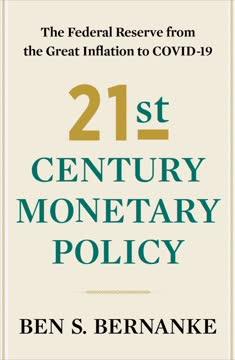
In the summer of 1979, inflation in the United States was running above 13 percent. Gasoline lines snaked around city blocks. Savers watched the purchasing power of their bank accounts evaporate. Workers received double-digit pay raises and still fell behind. The American economy was in crisis, and the institution charged with stabilizing it, the Federal Reserve, had lost the confidence of the public, the markets, and even itself. This moment marked a turning point in the history of central banking. The decisions made in the years that followed would reshape not just the American economy but the entire global financial system. They would determine how future generations of policymakers thought about inflation, employment, financial stability, and the very purpose of a central bank. Ben Bernanke knows this history from both sides of the lectern. As a Princeton professor, he spent decades studying the Great Depression and the failures of monetary policy. As chairman of the Federal Reserve from 2006 to 2014, he found himself applying those lessons in real time during the worst financial crisis since the one he had studied. His book, *21st Century Monetary Policy*, is an attempt to explain how the Fed evolved from the institution that allowed inflation to spiral out of control in the 1970s into the institution that deployed unprecedented tools to fight the 2008 crisis and the COVID-19 pandemic. The story begins with a fundamental question: What should a central bank do? The answer seems obvious today, but it was not always so. For much of the twentieth century, the Fed operated without a clear framework. It responded to political pressures, followed the whims of its chairmen, and often made decisions based on incomplete or flawed economic theories.…
Continue reading in the MinuteRead app
Get the complete 30-minute summary of 21st Century Monetary Policy
Get the complete summary in the appThe Great Inflation was caused by political interference and flawed economic theories, not by external shocks.
Credibility is a central bank's most valuable asset. Once lost, it is extremely difficult to regain.
Paul Volcker broke the back of inflation by accepting a severe recession. The cost was high, but the alternative was wor
The Great Moderation showed that low inflation and stable growth can coexist, but it also bred complacency.
The financial crisis demonstrated that financial stability is essential for economic prosperity.
The zero lower bound limits the Fed's ability to stimulate the economy. The decline in the neutral rate means this const
"21st Century Monetary Policy" is a strong fit if you want practical ideas around economics, history, finance, especially themes like the great inflation was caused by political interference and flawed economic theories, not by external shocks; credibility is a central bank's most valuable asset. once lost, it is extremely difficult to regain. The MinuteRead summary distills these concepts into a focused read, whether you're deciding whether to buy the book or applying its lessons at work.
Ben S. Bernanke is a renowned economist who served as chairman of the Federal Reserve from 2006 to 2014. His tenure included guiding the U.S. economy through the 2008 financial crisis, for which he was named Time magazine's Person of the Year in 2009. Before his public service career, Bernanke was a professor of economics at Princeton University. His academic background and practical experience in monetary policy make him a respected authority in the field. Bernanke's work has significantly infl…
View all summaries by Ben S. BernankeContinue Reading
Access the complete 30-minute summary and thousands more nonfiction books in the MinuteRead app.

Continue reading the complete summary in the MinuteRead app.