MinuteRead
30 min
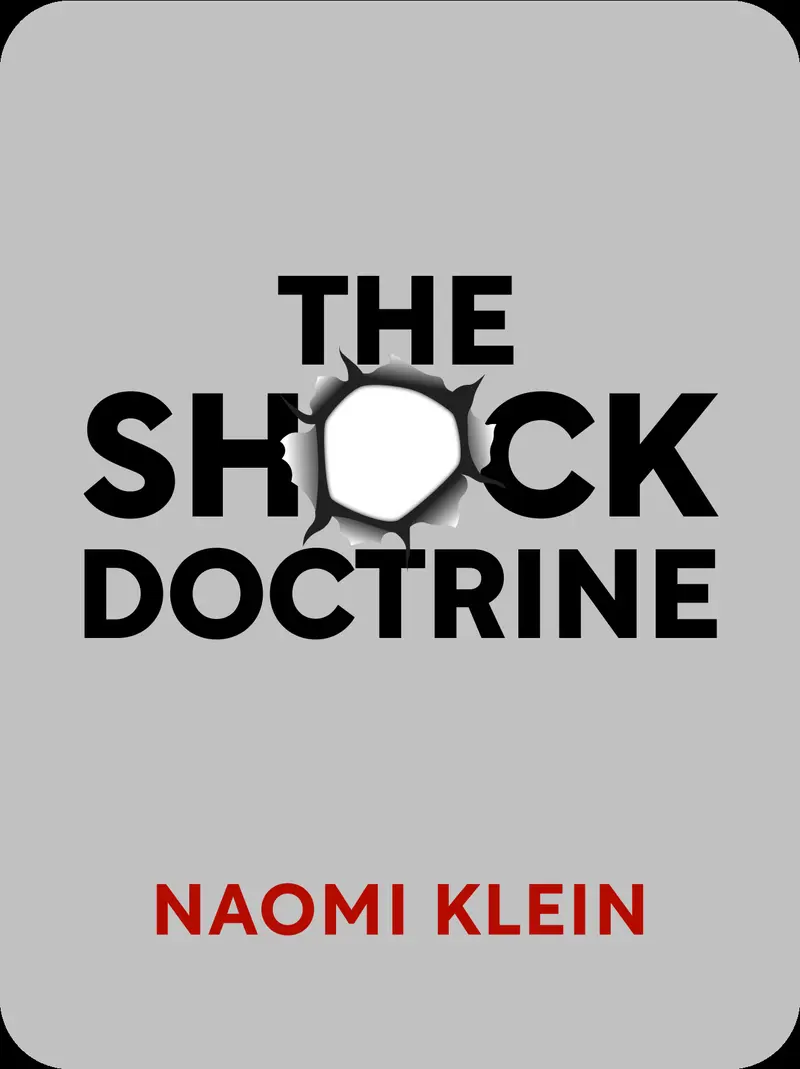
Book summary
by Naomi Klein
Premium summary · Opens in the app · 30 min read
In the aftermath of Hurricane Katrina, while the floodwaters still covered large parts of New Orleans, something remarkable happened. The public school system, one of the city's most important public institutions, was dismantled with astonishing speed. Within nineteen months, the vast majority of the city's public schools had been replaced by privately run charter schools. The teachers' union contract was voided. Thousands of experienced educators were fired. The disaster had created something t
**Author:** Naomi Klein **Estimated Reading Time:** 45 minutes
**What You'll Learn:**
* How economic crises have been systematically exploited to push through radical free-market reforms * The intellectual origins of "shock therapy" and its connection to the Chicago School of Economics * Why some of the most sweeping economic transformations in modern history happened during periods of trauma and disorientation * The relationship between political violence, torture, and economic restructuring * How disaster capitalism has evolved from isolated experiments to a global operating system * What resistance movements around the world reveal about alternatives to the shock doctrine
**Who This Book Is For:**
This book is for anyone who has ever wondered why governments sometimes respond to disasters with policies that seem to hurt the people most affected. It is for readers curious about the hidden forces shaping economic policy, for students of history and politics, and for citizens who want to understand the deeper patterns behind headlines about privatization, deregulation, and austerity. If you have ever felt that crises seem to benefit the powerful while burdening the vulnerable, this book will explain the mechanism behind that observation.
In the aftermath of Hurricane Katrina, while the floodwaters still covered large parts of New Orleans, something remarkable happened. The public school system, one of the city's most important public institutions, was dismantled with astonishing speed. Within nineteen months, the vast majority of the city's public schools had been replaced by privately run charter schools. The teachers' union contract was voided. Thousands of experienced educators were fired. The disaster had created something that decades of political debate had failed to achieve: the near-total privatization of a major American school system. Naomi Klein noticed this pattern and began to trace it backward through history. What she found was not a series of isolated incidents but a coherent strategy, refined over decades, for using moments of collective trauma to push through economic transformations that would be impossible under normal circumstances. She called this strategy the shock doctrine. The book that emerged from her investigation is one of the most influential and controversial works of political economy written in the twenty-first century. It connects events that most people experience as separate and unrelated: a military coup in Chile, hyperinflation in Bolivia, the collapse of the Soviet Union, the Asian financial crisis, the Iraq War, and the aftermath of natural disasters. Beneath all of these events, Klein argues, runs a common thread. The central insight is deceptively simple. When people are in a state of shock, whether from a natural disaster, a terrorist attack, an economic collapse, or political violence, they become temporarily disoriented and suggestible. Their normal defenses are down. Their ability to organize resistance…
Continue reading in the MinuteRead app
Get the complete 30-minute summary of The Shock Doctrine
Get the complete summary in the appThe shock doctrine is the strategy of using crises to push through radical free-market reforms that would be impossible
The strategy was developed deliberately by Milton Friedman and the Chicago School, who understood that their ideas were
The first full-scale test came in Chile following the 1973 coup, where economic shock was combined with political terror
Crisis works because it weakens normal social defenses, making people disoriented, afraid, and less likely to organize r
Speed is essential. The reforms must be implemented before people have time to recover from the shock and mobilize oppos
The shock doctrine relies on the narrative of inevitability: there is no alternative, we have no choice, the old system
"The Shock Doctrine" is a strong fit if you want practical ideas around politics, economics, history, especially themes like the shock doctrine is the strategy of using crises to push through radical free-market reforms that would be impossible; the strategy was developed deliberately by milton friedman and the chicago school, who understood that their ideas were. The MinuteRead summary distills these concepts into a focused read, whether you're deciding whether to buy the book or applying its lessons at work.
Naomi Klein is a prominent Canadian author, activist, and filmmaker known for her critiques of corporate globalization and capitalism. Her books, including No Logo and The Shock Doctrine, have garnered international attention and influenced public discourse on economic and environmental issues. Klein advocates for climate justice, labor rights, and leftist politics. She is a professor at the University of British Columbia and has received accolades such as the Sydney Peace Prize. Klein frequentl…
View all summaries by Naomi KleinContinue Reading
Access the complete 30-minute summary and thousands more nonfiction books in the MinuteRead app.

Continue reading the complete summary in the MinuteRead app.