MinuteRead
30 min
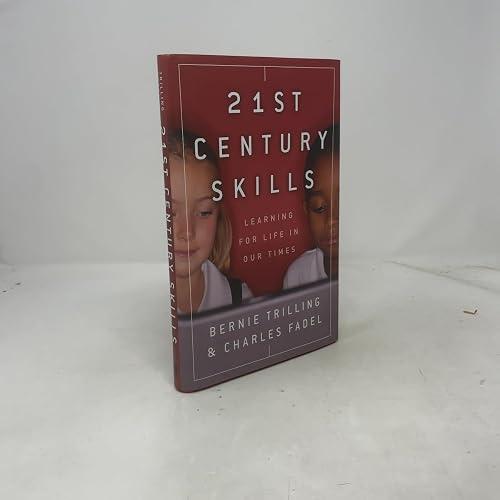
Book summary
by Bernie Trilling
Premium summary · Opens in the app · 30 min read
For over a century, the basic architecture of education remained remarkably stable. Students sat in rows. Teachers delivered information. Tests measured recall. The goal was to produce workers who could follow instructions, perform repetitive tasks, and fit into the machinery of industrial society. This system worked because the world it served was predictable. Jobs were stable. Information was scarce. Change was slow.
**Author:** Bernie Trilling
**Estimated Reading Time:** 45 minutes
**What You'll Learn:**
- Why the fundamental shift from the Industrial Age to the Knowledge Age demands a complete rethinking of education - The three essential skill categories every person needs to thrive in the modern world - How learning and innovation skills, digital literacy, and career and life skills work together - The power of project-based learning and inquiry-driven education - How schools, businesses, and communities are successfully transforming learning - A practical framework for developing these skills in your own life and work
**Who This Book Is For:**
This book is for educators, parents, business leaders, policymakers, and lifelong learners who sense that something fundamental has shifted in how we must prepare people for work and life. It is for anyone who has wondered whether traditional education still serves us in an era of constant change, and for those ready to understand what comes next.
For over a century, the basic architecture of education remained remarkably stable. Students sat in rows. Teachers delivered information. Tests measured recall. The goal was to produce workers who could follow instructions, perform repetitive tasks, and fit into the machinery of industrial society. This system worked because the world it served was predictable. Jobs were stable. Information was scarce. Change was slow. That world no longer exists. We now live in what Trilling calls the Knowledge Age, a period defined by the rapid transformation of every aspect of life through technology, globalization, and the explosion of information. The skills that once guaranteed a middle-class life are increasingly automated, outsourced, or obsolete. The jobs that remain demand something different: the ability to think critically, solve novel problems, collaborate across cultures, and adapt to circumstances that shift beneath our feet. The problem is that our education systems were never designed to develop these abilities. They were designed to produce compliant workers for an industrial economy. The result is a growing gap between what schools teach and what the world actually requires. Employers report that graduates arrive unprepared. Young people enter the workforce with credentials but without the skills to navigate complexity. And the cost of this mismatch falls on everyone: businesses spend billions on remedial training, individuals struggle to find meaningful work, and societies lose the innovative potential of their citizens. Trilling's argument is both simple and profound. The world has changed so fundamentally that the role of learning and education in daily life has changed forever. We can no longer front-load education into the first two decades of life and expect it to carry us through. We can no longer treat knowledge as something to be transmitted and memorized. We can no longer measure success by…
Continue reading in the MinuteRead app
Get the complete 30-minute summary of 21st Century Skills
Get the complete summary in the appThe world has shifted from the Industrial Age to the Knowledge Age, and education must shift with it.
The skills gap is real and costly, affecting individuals, businesses, and societies.
Learning and innovation skills, including critical thinking, creativity, and collaboration, are the foundation of succes
Digital literacy extends beyond reading and writing to include information literacy, media literacy, and ICT literacy.
Career and life skills, including adaptability, initiative, and leadership, are essential for navigating constant change
Questions and problems are the catalysts for engaged learning.
"21st Century Skills" is a strong fit if you want practical ideas around education, teaching, business, especially themes like the world has shifted from the industrial age to the knowledge age, and education must shift with it; the skills gap is real and costly, affecting individuals, businesses, and societies. The MinuteRead summary distills these concepts into a focused read, whether you're deciding whether to buy the book or applying its lessons at work.
Motivated to help readers with the premise of this book is that the world has changed so fundamentally in the last few decades that the, Bernie Trilling wrote “21st Century Skills” to package those ideas for a fast, focused read. In “21st Century Skills”, Bernie Trilling focuses on the premise of this book is that the world has changed so fundamentally in the last few decades that the. Through “21st Century Skills”, Bernie Trilling distills the core ideas on education into lessons readers can ab…
Continue Reading
Access the complete 30-minute summary and thousands more nonfiction books in the MinuteRead app.

Continue reading the complete summary in the MinuteRead app.