MinuteRead
30 min
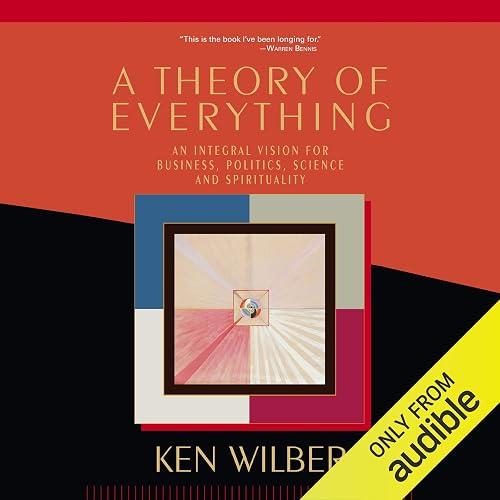
Book summary
by Ken Wilber
Premium summary · Opens in the app · 30 min read
We live in a world of fragments. The physicist speaks a language the poet cannot understand. The economist dismisses the mystic. The activist distrusts the executive. Each discipline, each worldview, each culture operates with its own vocabulary, its own assumptions, its own criteria for what counts as truth. The result is a civilization that knows more than ever before yet understands less.
**Author:** Ken Wilber **Estimated Reading Time:** 42 minutes
**What You'll Learn:**
- Why every major worldview contains a piece of the truth - How human consciousness evolves through recognizable stages - What integral thinking means and why it matters now - How to reconcile science and spirituality without diminishing either - How to apply integral principles to politics, medicine, business, and daily life
**Who This Book Is For:**
This book is for anyone who has felt frustrated by the fragmentation of modern knowledge. It is for readers who sense that science and spirituality are not enemies but partial views of a larger whole. It is for those who want a coherent framework for understanding why people think so differently, why societies clash, and how we might move toward more comprehensive solutions. If you have ever suspected that the great debates of our time are not about who is right and who is wrong but about which partial truth each side is defending, this book will give you a map.
We live in a world of fragments. The physicist speaks a language the poet cannot understand. The economist dismisses the mystic. The activist distrusts the executive. Each discipline, each worldview, each culture operates with its own vocabulary, its own assumptions, its own criteria for what counts as truth. The result is a civilization that knows more than ever before yet understands less. This fragmentation is not merely an intellectual inconvenience. It shapes how we treat illness, how we educate children, how we govern societies, and how we relate to one another. When a doctor sees only the physical body and ignores the patient's emotional life, treatment fails. When a policymaker considers only economic metrics and ignores cultural meaning, communities suffer. When a spiritual seeker dismisses science as soulless mechanism, they abandon a powerful tool for understanding the world. Ken Wilber wrote A Theory of Everything to address this fragmentation directly. His central observation is deceptively simple: everybody is right. More precisely, every major worldview contains some important piece of truth, and those pieces need to be honored, cherished, and included in a more spacious embrace. The problem is not that people are wrong. The problem is that they mistake their partial truth for the whole truth. Wilber's project is ambitious. He seeks to create a framework that can hold the insights of physics and mysticism, biology and Buddhism, systems theory and spiritual practice. He calls this framework integral. It is not a new religion or a replacement for existing disciplines. It is a map that shows how different domains of knowledge fit together. The book emerges from a specific historical moment. Wilber wrote it at the turn of the millennium, when…
Continue reading in the MinuteRead app
Get the complete 30-minute summary of A Theory of Everything
Get the complete summary in the appEverybody is right. Every worldview contains a partial truth that needs to be honored and included.
Reality is composed of holons: wholes that are also parts of larger wholes.
Human consciousness evolves through stages, each transcending and including the previous one.
The four quadrants are interior-individual, exterior-individual, interior-collective, and exterior-collective. Every phe
Science and religion are complementary, not competitive. They investigate different quadrants of reality.
States are temporary experiences. Levels are enduring capacities. Do not confuse them.
"A Theory of Everything" is a strong fit if you want practical ideas around philosophy, spirituality, psychology, especially themes like everybody is right. every worldview contains a partial truth that needs to be honored and included; reality is composed of holons: wholes that are also parts of larger wholes. The MinuteRead summary distills these concepts into a focused read, whether you're deciding whether to buy the book or applying its lessons at work.
Motivated to help readers with 1) The Amazing Spiral: Understanding the Evolution of Human Consciousness 2) Boomeritis: The Narcissistic, Ken Wilber wrote “A Theory of Everything” to package those ideas for a fast, focused read. In “A Theory of Everything”, Ken Wilber focuses on 1) The Amazing Spiral: Understanding the Evolution of Human Consciousness 2) Boomeritis: The Narcissistic. Through “A Theory of Everything”, Ken Wilber distills the core ideas on philosophy into lessons readers can absor…
View all summaries by Ken WilberContinue Reading
Access the complete 30-minute summary and thousands more nonfiction books in the MinuteRead app.

Continue reading the complete summary in the MinuteRead app.