MinuteRead
30 min
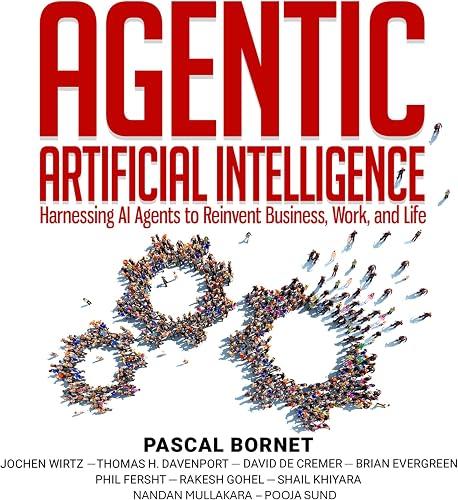
Book summary
by Pascal Bornet
Premium summary · Opens in the app · 30 min read
We are standing at the edge of a profound shift in how humans interact with computers. For decades, we have been the operators. We typed commands. We clicked icons. We learned the language of machines and adapted ourselves to their limitations. The computer was a tool, and we were the ones doing the work.
**Author:** Pascal Bornet
**Estimated Reading Time:** 45 minutes
**What You'll Learn:**
- Why AI agents represent the next fundamental shift in how humans interact with technology - The three keystones that separate effective AI agents from impressive but useless AI systems - How to evaluate AI agents across five levels of autonomy - The principles for designing, building, and deploying AI agents that actually work - How the agent economy will reshape business models and create new opportunities - What the rise of AI agents means for human skills, education, and society
**Who This Book Is For:**
This book is for leaders, entrepreneurs, technologists, and curious professionals who want to understand the most important technological shift of the coming decade. Whether you are evaluating AI solutions for your organization, building products in the AI space, or simply trying to understand what comes next, this book provides a clear, grounded framework for navigating the agentic AI revolution.
We are standing at the edge of a profound shift in how humans interact with computers. For decades, we have been the operators. We typed commands. We clicked icons. We learned the language of machines and adapted ourselves to their limitations. The computer was a tool, and we were the ones doing the work. That relationship is about to change. Generative AI has already transformed what machines can create. Large language models can write essays, generate code, produce images, and answer complex questions with remarkable fluency. But there is a catch. These systems, for all their brilliance, are fundamentally passive. They think. They analyze. They suggest. But they do not act. This creates what Pascal Bornet calls the Execution Gap. The AI can tell you exactly how to book a flight, but it cannot book the flight. It can draft an email, but it cannot send it. It can analyze a spreadsheet, but it cannot update the database. Humans are left to serve as the connective tissue between brilliant but helpless AI systems and the real-world tasks that need to be accomplished. We have become, in Bornet's memorable phrase, AI plumbers. Agentic AI closes this gap. The word agentic comes from the Latin agere, meaning to do. Agentic AI is not just about thinking. It is about acting. It is about giving AI systems the ability to take initiative, maintain persistent objectives, and adapt their strategies autonomously. An agentic AI can plan a trip, book the flights, reserve the hotel, and add the events to your calendar. It can monitor your inbox, draft responses, and send them on your behalf. It can watch a production line, detect anomalies, and adjust the machinery before a failure occurs. This is not an incremental improvement. It is…
Continue reading in the MinuteRead app
Get the complete 30-minute summary of Agentic Artificial Intelligence
Get the complete summary in the appAI agents will become the primary way we interact with computers, shifting from passive AI that thinks to agentic AI tha
The three keystones of effective AI agents are action, reasoning, and memory. All three must work together.
AI agents exist on a spectrum of autonomy from Level 0 to Level 5. The Golden Rule is that simpler is better.
AI agents are digital colleagues with unique strengths and inherent limitations. They complement humans rather than repl
Multi-Agent Systems outperform individual AI models. Teams of specialized agents achieve better results than monolithic
The A.G.E.N.T. framework provides a comprehensive approach to design. Identity is the most critical step.
"Agentic Artificial Intelligence" is a strong fit if you want practical ideas around artificial intelligence, business, technology, especially themes like ai agents will become the primary way we interact with computers, shifting from passive ai that thinks to agentic ai tha; the three keystones of effective ai agents are action, reasoning, and memory. all three must work together. The MinuteRead summary distills these concepts into a focused read, whether you're deciding whether to buy the book or applying its lessons at work.
Motivated to help readers with "AI agents will become the primary way we interact with computers in the future." Bridging the gap, Pascal Bornet wrote “Agentic Artificial Intelligence” to package those ideas for a fast, focused read. In “Agentic Artificial Intelligence”, Pascal Bornet focuses on "AI agents will become the primary way we interact with computers in the future." Bridging the gap. Through “Agentic Artificial Intelligence”, Pascal Bornet distills the core ideas on artificial intellig…
Continue Reading
Access the complete 30-minute summary and thousands more nonfiction books in the MinuteRead app.

Continue reading the complete summary in the MinuteRead app.