MinuteRead
30 min
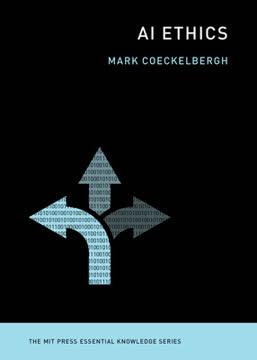
AI is already happening today and it is pervasive, often invisibly embedded in our day-to-day tools and as part of complex technological systems.
**Author:** Mark Coeckelbergh **Estimated Reading Time:** 42 minutes
How artificial intelligence is reshaping what it means to be human, why the most pressing AI challenges are not technical but ethical and political, and how to think clearly about the responsibilities that come with building and using intelligent machines.
Anyone who uses technology and wonders what it is doing to us. Anyone who builds AI systems and wants to understand their broader consequences. Anyone who suspects that the most important questions about artificial intelligence are not about whether machines will become conscious, but about power, justice, and the kind of world we want to create.
Artificial intelligence is not coming. It is already here. When you scroll through a social media feed, an algorithm decides what you see. When you apply for a loan, a machine learning model may assess your creditworthiness. When you visit a doctor, AI systems increasingly assist in diagnosis. When you drive, your car may be collecting data that shapes insurance premiums. None of this is hypothetical. None of it is science fiction. It is the texture of everyday life in the twenty-first century. Yet most of us have not paused to ask what this means. Mark Coeckelbergh wrote AI Ethics to address a strange paradox. We are surrounded by intelligent machines, increasingly dependent on them, and increasingly shaped by them. But our thinking about them remains shallow. We oscillate between utopian fantasies of technological salvation and dystopian fears of robot overlords. Neither extreme helps us grapple with the actual ethical challenges that AI presents right now. The problem is not that we lack technical knowledge. The problem is that we lack a framework for thinking about technology as a moral and political phenomenon. We treat AI as a tool, a neutral instrument that can be used for good or ill depending on human intentions. But this framing misses something essential. AI is not just a tool. It is a force that restructures how we live, work, relate to one another, and understand ourselves. Consider the question of bias. When an AI system denies someone parole or flags them as a fraud risk, we might ask whether the algorithm is fair. But fairness is not a technical property. It is a moral and political concept with a long history of contestation. To ask whether an algorithm is fair, we must first ask what fairness means, who gets to define it, and who bears the consequences when the definition is wrong. These are not questions that data scientists can answer alone. They require philosophers, lawyers, activists, policymakers, and ordinary citizens. Coeckelbergh's approach is distinctive because he refuses to treat AI ethics as a narrow technical specialty. He situates…
Continue reading in the MinuteRead app
Get the complete 30-minute summary of AI Ethics
Get the complete summary in the appAI is already pervasive in everyday life, and its ethical implications are pervasive too.
The most important questions about AI are not technical but ethical and political.
Bias in AI is structural, reflecting the societies that produce the data.
Privacy is a social and political value that is threatened by AI-powered surveillance.
Traditional notions of responsibility are inadequate for dealing with AI systems.
Regulation is necessary to ensure that AI serves human flourishing rather than merely serving the interests of the power
"AI Ethics" is a strong fit if you want practical ideas around philosophy, artificial intelligence, technology, especially themes like ai is already pervasive in everyday life, and its ethical implications are pervasive too; the most important questions about ai are not technical but ethical and political. The MinuteRead summary distills these concepts into a focused read, whether you're deciding whether to buy the book or applying its lessons at work.
Mark Coeckelbergh is a Professor of Philosophy of Media and Technology at the University of Vienna. His work focuses on the intersection of technology, ethics, and society. Coeckelbergh has authored several books published by MIT Press, including "New Romantic Cyborgs: Romanticism, Information Technology, and the End of the Machine" and "AI Ethics." His other works include "Introduction to Philosophy of Technology." As an expert in the field, Coeckelbergh explores the philosophical implications …
View all summaries by Mark CoeckelberghContinue Reading
Access the complete 30-minute summary and thousands more nonfiction books in the MinuteRead app.

Continue reading the complete summary in the MinuteRead app.