MinuteRead
30 min
In the autumn of 2008, the global economy nearly collapsed. Banks that had seemed invincible failed overnight. Stock markets lost trillions of dollars in value. Millions of people lost their homes, their jobs, and their savings. The crisis was not supposed to happen. According to the dominant economic theories of the time, such catastrophic failures were practically impossible.
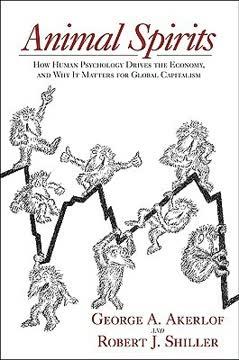
**How Human Psychology Drives the Economy, and Why It Matters for Global Capitalism**
By George A. Akerlof and Robert J. Shiller
**Estimated Reading Time:** 45 minutes
**What You'll Learn:**
* Why conventional economics fails to explain booms, busts, and persistent unemployment * How confidence, fairness, corruption, money illusion, and stories shape economic reality * What really caused the 2008 financial crisis and why standard models missed it * How policymakers can use behavioral insights to build more stable economies * Practical ways to apply these ideas to your own financial and professional decisions
**Who This Book Is For:**
This book is for anyone who has ever wondered why economies behave in ways that seem irrational. It is for investors who have watched markets soar and crash without clear cause. It is for business leaders trying to navigate uncertainty. It is for citizens who want to understand the forces that shape their jobs, homes, and savings. Most of all, it is for readers who sense that the standard economic story about rational actors and efficient markets leaves something essential out.
In the autumn of 2008, the global economy nearly collapsed. Banks that had seemed invincible failed overnight. Stock markets lost trillions of dollars in value. Millions of people lost their homes, their jobs, and their savings. The crisis was not supposed to happen. According to the dominant economic theories of the time, such catastrophic failures were practically impossible. The standard view held that markets are efficient. People make rational decisions based on available information. Prices reflect fundamental values. Financial innovation distributes risk to those best able to bear it. Government regulation should be light because markets self-correct. These ideas dominated economics departments, central banks, and policy circles for decades. Yet the crisis happened anyway. And it was not an isolated anomaly. Financial crises have occurred repeatedly throughout history: the South Sea Bubble of 1720, the Panic of 1907, the Great Depression of the 1930s, the savings and loan crisis of the 1980s, the Asian financial crisis of 1997, the dot-com crash of 2000. Each time, the same pattern emerges. Confidence builds, prices rise, people believe the good times will continue forever, and then everything falls apart. George Akerlof and Robert Shiller wrote this book because they believe conventional economics has a fatal blind spot. It ignores the role of human psychology in economic life. It assumes that people are rational calculating machines who always act in their own best interest. But real people are not like that. Real people are driven by emotions, intuitions, social pressures, and stories. They make decisions based on what feels right, not just what the numbers say. They follow the crowd. They believe things because other…
Continue reading in the MinuteRead app
Get the complete 30-minute summary of Animal Spirits
Get the complete summary in the appAnimal spirits are the psychological forces that drive economic behavior, and they are missing from standard economic th
Confidence has multiplier effects that can turn small changes into large economic fluctuations.
Fairness concerns prevent wage cuts, leading to persistent unemployment.
Corruption and bad faith are pervasive and can destabilize financial systems.
Money illusion leads people to think in nominal terms, causing wage and price stickiness.
Stories shape economic expectations and can become self-fulfilling prophecies.
"Animal Spirits" is a strong fit if you want practical ideas around economics, psychology, finance, especially themes like animal spirits are the psychological forces that drive economic behavior, and they are missing from standard economic th; confidence has multiplier effects that can turn small changes into large economic fluctuations. The MinuteRead summary distills these concepts into a focused read, whether you're deciding whether to buy the book or applying its lessons at work.
George A. Akerlof is a renowned economist and professor at the University of California, Berkeley. He was awarded the Nobel Prize in Economics in 2001 for his work on markets with asymmetric information. Akerlof's research has significantly contributed to the field of behavioral economics, challenging traditional economic models by incorporating psychological and sociological factors. His collaborative work with Robert Shiller in "Animal Spirits" explores the role of human behavior in economic d…
View all summaries by George A. AkerlofContinue Reading
Access the complete 30-minute summary and thousands more nonfiction books in the MinuteRead app.

Continue reading the complete summary in the MinuteRead app.