MinuteRead
30 min
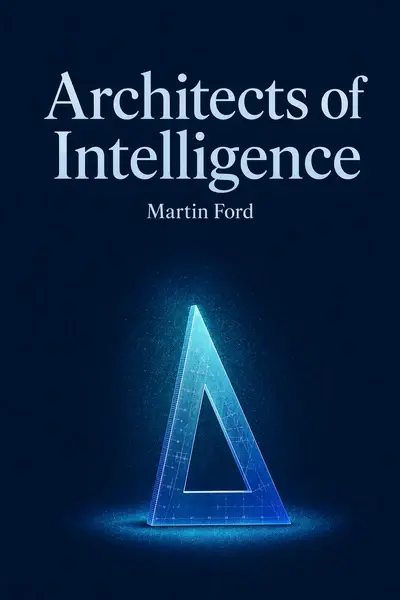
Book summary
by Martin Ford
Premium summary · Opens in the app · 30 min read
In the winter of 2012, a small team of researchers from the University of Toronto submitted an entry to the ImageNet competition, an annual contest where computer systems compete to recognize objects in photographs. The Toronto team, led by a British-born computer scientist named Geoffrey Hinton, used a technology that most of the AI establishment had long dismissed as a dead end. Their system, built on artificial neural networks, didn't just win. It demolished the competition, nearly halving th
**Author:** Martin Ford **Estimated Reading Time:** 45 minutes
**What You'll Learn:**
How the pioneers of artificial intelligence built the foundations of deep learning, why the technology succeeded after decades of failure, what the smartest minds in AI think about the future of work, the path to artificial general intelligence, and the ethical challenges that will shape the coming decades.
**Who This Book Is For:**
Anyone who wants to understand artificial intelligence from the people who built it. This condensed edition is for readers curious about how AI actually works, why it matters, and what it means for their career, their children, and their society. No technical background required.
In the winter of 2012, a small team of researchers from the University of Toronto submitted an entry to the ImageNet competition, an annual contest where computer systems compete to recognize objects in photographs. The Toronto team, led by a British-born computer scientist named Geoffrey Hinton, used a technology that most of the AI establishment had long dismissed as a dead end. Their system, built on artificial neural networks, didn't just win. It demolished the competition, nearly halving the error rate of the best previous system. That moment marked the beginning of a transformation that has reshaped technology, business, and the global economy. Within a few years, neural networks were powering voice assistants, translating languages, driving cars, and beating world champions at games that were once considered beyond the reach of machines. The technology that had been written off during the "AI winter" of the 1980s and 1990s had returned, and this time it was unstoppable. But the story of artificial intelligence is not just a story about technology. It is a story about people. It is about a small group of researchers who believed in an idea when almost no one else did, who kept working through years of rejection and ridicule, and who lived to see their vision transform the world. Martin Ford, a Silicon Valley entrepreneur and author known for his work on the economic impact of automation, set out to understand this transformation by going directly to its source. In *Architects of Intelligence*, he conducts in-depth interviews with the people who built modern AI: Geoffrey Hinton, Yann LeCun, Yoshua Bengio, Demis Hassabis, Andrew Ng, Fei-Fei Li, Ray Kurzweil, and many others. These are the individuals whose ideas, persistence, and ambition created the technology that is now reshaping every industry on Earth. What emerges from these conversations is a nuanced picture of both the promise and the peril of artificial intelligence. The people who know the most about AI are neither utopians nor doomsayers. They see enormous potential for good, but they also see real risks. They disagree with…
Continue reading in the MinuteRead app
Get the complete 30-minute summary of Architects of Intelligence
Get the complete summary in the appDeep learning is a powerful pattern recognition technology that has transformed AI, but it is not general intelligence.
The deep learning revolution was built by researchers who persisted through the AI winter, believing in neural networks
Deep learning succeeded because of the convergence of data, computing power, and algorithmic advances.
Current AI systems lack common sense and causal reasoning, and these are the key missing pieces on the path to AGI.
AI has the potential to be a new industrial revolution, with enormous benefits and significant disruption.
The impact of AI on employment involves jobs lost, jobs gained, and jobs changed, and the net effect is uncertain.
"Architects of Intelligence" is a strong fit if you want practical ideas around artificial intelligence, ai, technology, especially themes like deep learning is a powerful pattern recognition technology that has transformed ai, but it is not general intelligence; the deep learning revolution was built by researchers who persisted through the ai winter, believing in neural networks. The MinuteRead summary distills these concepts into a focused read, whether you're deciding whether to buy the book or applying its lessons at work.
Motivated to help readers with "In the early '90s, Martin Ford wrote “Architects of Intelligence” to package those ideas for a fast, focused read. In “Architects of Intelligence”, Martin Ford focuses on "In the early '90s. Through “Architects of Intelligence”, Martin Ford distills the core ideas on artificial intelligence into lessons readers can absorb in a single short sitting. Readers turn to this work when they want Martin Ford's perspective on the subject without working through the entire …
View all summaries by Martin FordContinue Reading
Access the complete 30-minute summary and thousands more nonfiction books in the MinuteRead app.

Continue reading the complete summary in the MinuteRead app.