MinuteRead
30 min
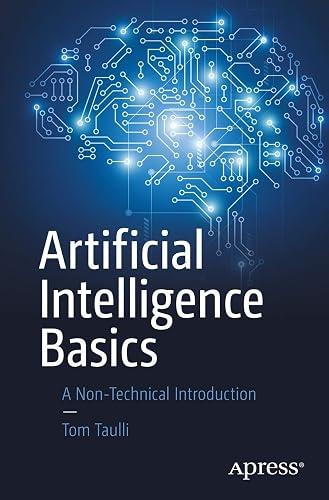
Book summary
by Tom Taulli
Premium summary · Opens in the app · 30 min read
Larry Page, co-founder of Google, once described artificial intelligence as the ultimate version of a search engine. Not a system that simply matches keywords to web pages, but something far more profound: a technology that understands exactly what you want and delivers precisely the right answer. That vision captures both the promise and the challenge of AI. We have been dreaming about intelligent machines for decades, but only recently have those dreams started to become practical realities.
**Author:** Tom Taulli **Estimated Reading Time:** 45 minutes
**What You'll Learn:**
- The foundational concepts that make artificial intelligence possible - How machine learning and deep learning actually work in practice - Why data quality determines whether AI succeeds or fails - The practical entry points for bringing AI into your organization - What the future holds and how to prepare for it
**Who This Book Is For:**
This book is for business leaders, professionals, students, and curious readers who want to understand artificial intelligence without getting lost in mathematical formulas or technical jargon. If you have ever wondered how AI actually works, what it can realistically do, and how to separate genuine opportunity from hype, this condensed edition will give you the foundation you need.
Larry Page, co-founder of Google, once described artificial intelligence as the ultimate version of a search engine. Not a system that simply matches keywords to web pages, but something far more profound: a technology that understands exactly what you want and delivers precisely the right answer. That vision captures both the promise and the challenge of AI. We have been dreaming about intelligent machines for decades, but only recently have those dreams started to become practical realities. The story of artificial intelligence begins in the 1950s, when a small group of brilliant researchers believed they could replicate human intelligence in machines. Alan Turing proposed his famous test for machine intelligence. John McCarthy coined the term "artificial intelligence" at the Dartmouth Conference in 1956. Marvin Minsky built some of the first neural networks. These pioneers were extraordinarily optimistic. They believed that within a generation, machines would think like humans. Reality proved far more difficult. The early approaches relied on hand-coded rules and symbolic logic. Researchers tried to program intelligence directly, writing thousands of rules that attempted to capture human knowledge. These systems worked in narrow domains but collapsed when confronted with the messy complexity of the real world. Funding dried up. Progress stalled. The field entered what researchers now call "AI winters," periods when disappointment led to dramatically reduced investment and interest. What changed everything was the explosion of data and computing power. The internet created an unprecedented flood of digital information. Smartphones put powerful computers in billions of pockets. Cloud computing made massive computational resources available on demand. Suddenly, the old algorithms had enough data and enough processing power to actually work. A new approach called machine learning emerged as the dominant paradigm. Instead of programming rules directly, researchers built systems that could learn patterns from data. Feed a machine learning system enough examples, and it would discover the underlying structure on its own. This shift from explicit programming to statistical learning transformed the…
Continue reading in the MinuteRead app
Get the complete 30-minute summary of Artificial Intelligence Basics
Get the complete summary in the app**AI learns from data instead of following explicit rules.** This is the fundamental shift that makes modern AI possible
**Data quality determines AI success.** Invest in data before investing in algorithms.
**Machine learning has three types:** supervised learning uses labeled data, unsupervised learning finds patterns in unl
**Deep learning uses neural networks** to learn hierarchical patterns, enabling breakthroughs in vision, language, and g
**RPA is the entry point to AI adoption,** automating rule-based tasks with quick returns.
**NLP enables human-computer communication** but does not truly understand language the way humans do.
"Artificial Intelligence Basics" is a strong fit if you want practical ideas around artificial intelligence, technology, computer science, especially themes like **ai learns from data instead of following explicit rules.** this is the fundamental shift that makes modern ai possible; **data quality determines ai success.** invest in data before investing in algorithms. The MinuteRead summary distills these concepts into a focused read, whether you're deciding whether to buy the book or applying its lessons at work.
Motivated to help readers with "AI would be the ultimate version of Google, Tom Taulli wrote “Artificial Intelligence Basics” to package those ideas for a fast, focused read. Through “Artificial Intelligence Basics”, Tom Taulli distills the core ideas on artificial intelligence into lessons readers can absorb in a single short sitting. Readers turn to this work when they want Tom Taulli's perspective on the subject without working through the entire original volume. The book is structured so eac…
Continue Reading
Access the complete 30-minute summary and thousands more nonfiction books in the MinuteRead app.

Continue reading the complete summary in the MinuteRead app.