MinuteRead
30 min
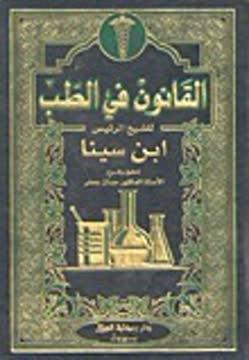
Imagine a single medical textbook so comprehensive and so authoritative that it remained the standard reference for physicians across multiple continents for more than five hundred years. Imagine a physician whose ideas about personalized medicine, preventive health, and the mind-body connection anticipated concepts that modern medicine is only now rediscovering. That physician was Avicenna, and that textbook was The Canon of Medicine.
**The Ancient Healing Wisdom That Shaped Modern Medicine**
**Author:** Avicenna (Abu Ali al-Husain ibn Abdullah ibn Sina) **Estimated Reading Time:** 45 minutes
You will discover the foundational principles of Unani medicine as systematized by the 11th-century polymath Avicenna. His Canon of Medicine served as the standard medical textbook across Europe and the Islamic world for over five centuries. You will learn his theories of the four humors and temperaments, his approach to personalized diagnosis and treatment, his preventive health strategies, and his surprisingly sophisticated understanding of pharmacology, surgery, and patient care. These ideas not only shaped medical history but continue to offer insights into holistic health and individualized medicine today.
This book is for anyone curious about the historical roots of modern medicine, practitioners of holistic and integrative health seeking time-tested frameworks, students of medical history, and readers interested in how ancient wisdom can inform contemporary approaches to wellness. It is also for those who want to understand why Avicenna remains one of the most influential physicians in human history.
Imagine a single medical textbook so comprehensive and so authoritative that it remained the standard reference for physicians across multiple continents for more than five hundred years. Imagine a physician whose ideas about personalized medicine, preventive health, and the mind-body connection anticipated concepts that modern medicine is only now rediscovering. That physician was Avicenna, and that textbook was The Canon of Medicine. Born in 980 CE in what is now Uzbekistan, Abu Ali al-Husain ibn Abdullah ibn Sina, known to the West as Avicenna, was not merely a physician. He was a philosopher, astronomer, mathematician, poet, and statesman. By the age of ten, he had memorized the entire Quran. By sixteen, he was already practicing medicine. By eighteen, he had mastered every field of knowledge available in his time. He wrote nearly 450 treatises, of which 240 survive, covering topics from logic and metaphysics to geology and music. Yet it is his medical writings that secured his immortality. The problem Avicenna faced was one of fragmentation. Before his time, medical knowledge existed in scattered texts, competing schools, and contradictory traditions. Greek physicians like Hippocrates and Galen had laid important foundations, but their works were incomplete and often inconsistent. Arabic and Persian healers possessed valuable clinical experience, but their knowledge was largely oral and unsystematized. No one had created a unified framework that brought everything together into a coherent, teachable, practical system. Avicenna solved this problem with The Canon of Medicine, a five-volume encyclopedia that synthesized Greek, Roman, Persian, Indian, and Arabic medical knowledge into a single integrated whole. He did not simply compile existing information. He tested ideas against his own clinical observations, resolved contradictions through logical analysis, and organized…
Continue reading in the MinuteRead app
Get the complete 30-minute summary of Avicenna's Medicine
Get the complete summary in the appHealth is dynamic equilibrium. Disease is disruption of that equilibrium. Everything in Avicenna's system flows from thi
Every person has a unique temperament based on their humoral balance. Treatment must be individualized, not standardized
The four humors, blood, phlegm, yellow bile, and black bile, are real physiological substances whose balance determines
The six essential factors, air, diet, movement and rest, sleep, elimination, and emotional balance, are the foundations
Treat by opposites. Apply cooling remedies to hot conditions, warming remedies to cold conditions, and so on.
Begin with the gentlest intervention. Diet first, then herbs, then stronger measures only when necessary.
"Avicenna's Medicine" is a strong fit if you want practical ideas around medicine, philosophy, science, especially themes like health is dynamic equilibrium. disease is disruption of that equilibrium. everything in avicenna's system flows from thi; every person has a unique temperament based on their humoral balance. treatment must be individualized, not standardized. The MinuteRead summary distills these concepts into a focused read, whether you're deciding whether to buy the book or applying its lessons at work.
Abu Ali al-Husain ibn Abdullah ibn Sina, known as Avicenna , was a renowned Persian polymath of the 11th century. His works, particularly the Canon of Medicine, remained influential in European medical education until the 17th century. Avicenna's expertise spanned various fields, including astronomy, chemistry, geology, logic, mathematics, physics, and poetry. He authored nearly 450 treatises, with 240 surviving works. His most famous contribution, The Book of Healing, served as a comprehensive …
View all summaries by AvicennaContinue Reading
Access the complete 30-minute summary and thousands more nonfiction books in the MinuteRead app.

Continue reading the complete summary in the MinuteRead app.