MinuteRead
30 min
Book summary
Premium summary · Opens in the app · 30 min read
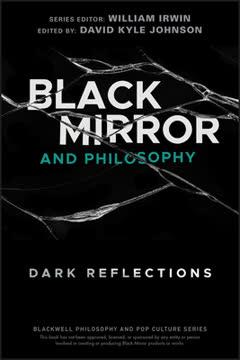
The title Black Mirror refers to something deceptively simple. When your phone screen goes dark, when the television shuts off, when the laptop lid closes, you are left staring at a black pane of glass. And in that black pane, you see yourself. This is the premise Charlie Brooker's anthology series has been exploring since 2011: that our technologies are not neutral tools but reflective surfaces, and what they reflect is not the machines but the people using them.
**Edited by David Kyle Johnson**
*Estimated Reading Time: 18 minutes*
**What This Story Explores:** The collision between human nature and the technologies we build, the ethical nightmares hiding inside our screens, and the uncomfortable truth that the darkest reflections in our devices are often our own.
**Who This Book Is For:** Anyone who has finished a Black Mirror episode and sat frozen on the couch afterward, staring at the credits, wondering whether the future depicted is a warning or a prophecy.
The title Black Mirror refers to something deceptively simple. When your phone screen goes dark, when the television shuts off, when the laptop lid closes, you are left staring at a black pane of glass. And in that black pane, you see yourself. This is the premise Charlie Brooker's anthology series has been exploring since 2011: that our technologies are not neutral tools but reflective surfaces, and what they reflect is not the machines but the people using them. The series began as a British production before moving to Netflix, where it became a global phenomenon. Each episode stands alone, set in a slightly different near-future or alternate present, but they share a common grammar. A new technology appears, often one that seems plausible within a decade or two. At first, it looks convenient, even wonderful. Then the story follows that technology into the corners of human behavior where convenience curdles into control, where connection becomes surveillance, where the promise of happiness reveals itself as a trap. What makes Black Mirror distinctive is not its pessimism about technology. It is its pessimism about us. The show rarely blames the machines. The machines work exactly as designed. The horror comes from watching people use them the way people use everything: to dominate, to escape, to punish, to perform, to avoid the hard work of being human. Technology in Black Mirror is an amplifier. It takes flaws that already exist and turns up the volume until they become unbearable. The philosophical territory is vast. Episodes raise questions about consciousness and what it means to be a person. They ask whether a digital copy of your mind deserves moral consideration. They explore whether love can exist between a human and a simulation. They examine how memory shapes identity and what happens when memory becomes editable, searchable, or transferable. They probe the ethics of punishment, the nature of free will, the meaning of death, and the possibility of genuine connection in a world where everything is mediated by screens. The tone is deliberately unsettling. Brooker has described the show as a way of examining the unintended consequences of technologies we are already embracing. The episodes often feel like thought experiments conducted with the…
Continue reading in the MinuteRead app
Get the complete 30-minute summary of Black Mirror and Philosophy
Get the complete summary in the appThe title Black Mirror refers to something deceptively simple. When your phone screen goes dark, when the television shuts off, when the laptop lid closes, you are left staring at a black pane of glass. And in that black pane, you see yours
"Black Mirror and Philosophy" will resonate with readers drawn to philosophy, technology, dystopia. The title Black Mirror refers to something deceptively simple. When your phone screen goes dark, when the television shuts off, when the laptop lid closes, you are left staring at… Our summary captures the core argument so you can learn the essentials before committing to the full book.
William Irwin is a philosophy professor at King's College in Pennsylvania, known for pioneering the "philosophy and popular culture" book genre. He initiated this genre with works like "Seinfeld and Philosophy" (1999) and "The Simpsons and Philosophy" (2001). Irwin's approach involves examining philosophical concepts through the lens of popular media, making complex ideas more accessible to a broader audience. His work has paved the way for numerous similar books exploring the intersection of ph…
View all summaries by David Kyle JohnsonContinue Reading
Access the complete 30-minute summary and thousands more nonfiction books in the MinuteRead app.

Continue reading the complete summary in the MinuteRead app.