MinuteRead
30 min
Book summary
Premium summary · Opens in the app · 30 min read
Law school teaches you how to think like a lawyer. It teaches you how to read cases, spot issues, and construct arguments. What law school does not teach you is how to actually run a law practice. It does not teach you how to handle a client who calls every day asking for updates. It does not teach you how to manage fifty active cases without letting something slip through the cracks. It does not teach you how to stand in front of a jury and connect with twelve strangers who will decide your cli
**Author:** Jeremy W. Richter
**Estimated Reading Time:** 42 minutes
**What You'll Learn:**
* How to build client relationships that prevent disputes and generate referrals * The systems and habits that separate efficient lawyers from overwhelmed ones * How to write and argue more persuasively * How to prepare for trial with confidence * How to build a practice that grows without consuming your life
**Who This Book Is For:**
This book is for lawyers who want to build a practice that works. Whether you are a new associate learning the ropes, a solo practitioner trying to grow, or an experienced attorney looking to refine your systems, the principles here apply. If you have ever felt overwhelmed by your caseload, frustrated by difficult clients, or unsure how to market yourself effectively, this book provides a practical path forward.
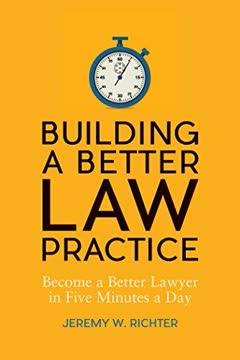
Law school teaches you how to think like a lawyer. It teaches you how to read cases, spot issues, and construct arguments. What law school does not teach you is how to actually run a law practice. It does not teach you how to handle a client who calls every day asking for updates. It does not teach you how to manage fifty active cases without letting something slip through the cracks. It does not teach you how to stand in front of a jury and connect with twelve strangers who will decide your client's fate. Jeremy W. Richter wrote Building a Better Law Practice to fill that gap. As a civil defense attorney in Birmingham, Alabama, he has spent years learning these lessons through direct experience. He has made mistakes, corrected course, and developed systems that work. This book is his attempt to share what he has learned with other lawyers who want to improve. The central problem this book addresses is simple: many lawyers are technically competent but practically overwhelmed. They know the law, but they struggle with the day-to-day realities of running a practice. They lose clients because of poor communication. They waste hours on inefficient workflows. They dread trial because they feel unprepared. They neglect their own professional development because they are too busy putting out fires. Richter's approach is different because it is grounded in the real world of legal practice. He is not offering abstract theories or motivational platitudes. He is offering specific, actionable advice drawn from his own experience and the experiences of other successful lawyers. The book covers everything from client communication to legal writing to courtroom performance to marketing. Each chapter addresses a specific skill or system that lawyers need to master. What makes this book particularly valuable is its focus on the human side of legal practice. Richter understands that law is a…
Continue reading in the MinuteRead app
Get the complete 30-minute summary of Building a Better Law Practice
Get the complete summary in the appEducate clients about the process and involve them in decision-making. This builds trust and prevents dissatisfaction.
Set expectations early and maintain regular contact throughout the representation.
Efficiency is about freeing up time for meaningful work, not working faster. Create templates and checklists for routine
Good writing is in the editing and rewriting. Prioritize clarity and brevity.
Tell compelling stories. Judges and juries respond to narratives, not just facts.
Prepare thoroughly for trial. Preparation breeds confidence.
"Building a Better Law Practice" is a strong fit if you want practical ideas around law, especially themes like educate clients about the process and involve them in decision-making. this builds trust and prevents dissatisfaction; set expectations early and maintain regular contact throughout the representation. The MinuteRead summary distills these concepts into a focused read, whether you're deciding whether to buy the book or applying its lessons at work.
Jeremy W. Richter is a civil defense attorney based in Birmingham. He maintains a law blog where he shares insights on practice-specific topics and law practice management. Richter's goal is to help fellow legal professionals enhance their skills through improved practice systems and effective communication strategies. In addition to Building a Better Law Practice, he has authored two other books: Stop Putting Out Fires and Level Up Your Law Practice. Richter's writing focuses on providing pract…
View all summaries by Jeremy W. RichterContinue Reading
Access the complete 30-minute summary and thousands more nonfiction books in the MinuteRead app.

Continue reading the complete summary in the MinuteRead app.