MinuteRead
30 min
Book summary
Premium summary · Opens in the app · 30 min read
There is a moment in every financial crisis when the public suddenly realizes that money is not what they thought it was. In 2008, people watched in confusion as the Federal Reserve pumped trillions of dollars into the financial system. In 2020, they saw the same thing happen again. The questions were always the same: Where does this money come from? Who gets it? Why does it seem to appear out of nowhere?
**Author:** Joseph J. Wang
**Estimated Reading Time:** 45 minutes
**What You'll Learn:** - How money is actually created in the modern financial system - Why the U.S. dollar dominates global finance - What the Federal Reserve really does and how it influences your life - Why financial crises happen and how central banks respond - How capital markets and shadow banks shape the economy
**Who This Book Is For:** Anyone who wants to understand how the financial system actually works. You don't need a finance background. You need curiosity about the hidden machinery that powers the economy, determines your mortgage rate, influences your job prospects, and shapes the value of your savings.
There is a moment in every financial crisis when the public suddenly realizes that money is not what they thought it was. In 2008, people watched in confusion as the Federal Reserve pumped trillions of dollars into the financial system. In 2020, they saw the same thing happen again. The questions were always the same: Where does this money come from? Who gets it? Why does it seem to appear out of nowhere? Most people never ask these questions during normal times. They go to work, earn a paycheck, spend some of it, and save the rest. The money in their bank account feels solid, real, and permanent. But the truth is far more interesting. Money is not a fixed thing. It is a flexible, evolving system of promises between different players in a vast financial ecosystem. Joseph Wang spent years working inside the Federal Reserve Bank of New York, specifically on the open markets desk. This is the place where the Federal Reserve actually interacts with financial markets. It is the operational heart of the American monetary system. Wang saw firsthand how money moves, how it is created, and how it can disappear. He wrote this book because he recognized a fundamental problem: most people, including many finance professionals, don't actually understand how the financial system works. The standard explanations are inadequate. Economics textbooks describe a world where banks take deposits and lend them out. They describe a world where the Federal Reserve controls the money supply by adjusting reserve requirements. They describe a world that no longer exists, if it ever did. The reality is far more complex and far more interesting. Consider a simple question: When you deposit money in a bank, what actually happens? Most people imagine their money sitting in a vault, waiting for them to withdraw it. But that's not what happens at all. Your deposit becomes a liability on the bank's balance sheet. The bank uses that liability to fund its operations, to make loans, to buy securities. Your money is…
Continue reading in the MinuteRead app
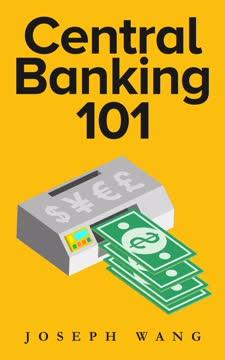
Get the complete 30-minute summary of Central Banking 101
Get the complete summary in the appMoney is a hierarchy of promises, not a fixed thing.
Commercial banks create money when they make loans.
Shadow banks create money-like instruments and are fragile.
The U.S. dollar is the world's currency.
The Fed controls short-term interest rates.
QE and forward guidance are now standard policy tools.
"Central Banking 101" is a strong fit if you want practical ideas around economics, finance, business, especially themes like money is a hierarchy of promises, not a fixed thing; commercial banks create money when they make loans. The MinuteRead summary distills these concepts into a focused read, whether you're deciding whether to buy the book or applying its lessons at work.
Joseph J Wang is a former trader at the Federal Reserve Bank of New York's open markets desk. His experience in central banking provides him with unique insights into the inner workings of monetary policy and financial markets. Wang has gained a following on social media for his real-time analysis of financial conditions and balanced views on economic issues. He is known for his ability to explain complex financial concepts in clear, understandable terms. Wang's work is respected for its thoroug…
View all summaries by Joseph J. WangContinue Reading
Access the complete 30-minute summary and thousands more nonfiction books in the MinuteRead app.

Continue reading the complete summary in the MinuteRead app.