MinuteRead
30 min
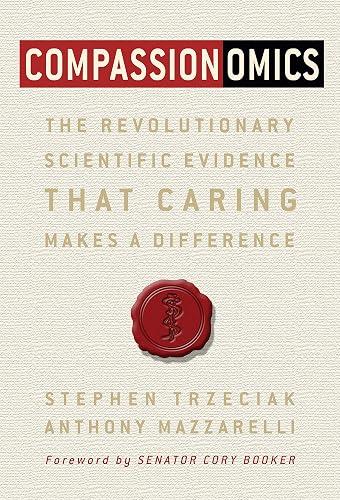
Book summary
by Stephen Trzeciak
Premium summary · Opens in the app · 30 min read
The patient was dying. He had been in the intensive care unit for weeks, his lungs failing, his body exhausted. The medical team had done everything technically possible. Machines breathed for him. Medications supported his failing organs. Yet nothing seemed to be working.
**The Revolutionary Scientific Evidence That Caring Makes a Difference**
By Stephen Trzeciak, MD, MPH
**Estimated Reading Time:** 45 minutes
**What You'll Learn:**
- Why compassion is not soft medicine but hard science - How forty seconds of genuine caring changes patient outcomes - Why compassion protects physicians from burnout - The financial case for compassionate healthcare - How to cultivate compassion as a learnable skill
**Who This Book Is For:**
This book is for healthcare providers drowning in administrative burden who wonder if the human connection still matters. It is for patients who have felt unseen in the healthcare system. It is for administrators making decisions about where to invest resources. And it is for anyone who suspects that how we treat each other has measurable, biological consequences.
The patient was dying. He had been in the intensive care unit for weeks, his lungs failing, his body exhausted. The medical team had done everything technically possible. Machines breathed for him. Medications supported his failing organs. Yet nothing seemed to be working. One afternoon, a physician sat down beside his bed. She did not adjust a ventilator setting or order another test. She simply took his hand, looked into his eyes, and said, "I want you to know that we are going to be here with you through this. You are not alone in this fight." Something shifted. Not in his lab values or his imaging studies, but in him. The next day, for the first time in weeks, he had the strength to breathe more on his own. His recovery began not with a new medication but with a moment of human connection. This is the central question of Compassionomics: Does compassion actually change outcomes, or does it merely make people feel better in the moment? For decades, medicine has operated on an unspoken assumption. Compassion is nice. Compassion is pleasant. Compassion is what you offer when the real work of medicine is done. The real work involves drugs, procedures, technologies, and protocols. Compassion is the garnish on the plate, not the meal. Stephen Trzeciak, a critical care physician and researcher, believed this assumption for much of his career. He was trained in the hard sciences. He published papers on sepsis and resuscitation. He lived in a world of evidence, data, and measurable outcomes. Compassion seemed too soft, too subjective, too unscientific to warrant serious investigation. Then he began looking at the research. What he found surprised him. Study after study demonstrated that compassion has measurable, reproducible effects on patient outcomes. It changes physiology. It alters the course of disease. It affects whether patients take their medications, how quickly they heal, and whether they survive their illnesses. The data was…
Continue reading in the MinuteRead app
Get the complete 30-minute summary of Compassionomics
Get the complete summary in the appCompassion is empathy plus action. It is not just feeling another's pain. It is moving toward helping.
Compassion activates reward pathways in the brain, while empathy activates pain centers. This is why compassion protects
Forty seconds of genuine compassion is enough to make a meaningful difference for a patient.
Compassionate care improves patient adherence to treatment by building trust and enhancing communication.
Compassion produces measurable physiological changes that promote healing.
The compassion crisis is real and has significant consequences for patient outcomes and provider well-being.
"Compassionomics" is a strong fit if you want practical ideas around medicine, science, medical, especially themes like compassion is empathy plus action. it is not just feeling another's pain. it is moving toward helping; compassion activates reward pathways in the brain, while empathy activates pain centers. this is why compassion protects. The MinuteRead summary distills these concepts into a focused read, whether you're deciding whether to buy the book or applying its lessons at work.
Motivated to help readers with "Compassion matters." Defining compassion, Stephen Trzeciak wrote “Compassionomics” to package those ideas for a fast, focused read. Through “Compassionomics”, Stephen Trzeciak distills the core ideas on medicine into lessons readers can absorb in a single short sitting. Readers turn to this work when they want Stephen Trzeciak's perspective on the subject without working through the entire original volume. The book is structured so each chapter highlights a practi…
Continue Reading
Access the complete 30-minute summary and thousands more nonfiction books in the MinuteRead app.

Continue reading the complete summary in the MinuteRead app.