MinuteRead
30 min
Book summary
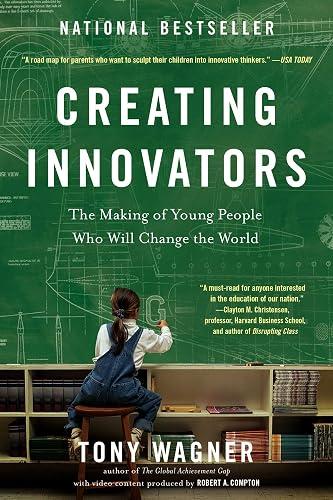
by Tony Wagner
Premium summary · Opens in the app · 30 min read
The United States has long prided itself on being the most innovative nation on earth. From the light bulb to the airplane to the personal computer to the smartphone, American ingenuity has shaped the modern world. But that dominance is no longer guaranteed. Other countries are investing heavily in education and research. The challenges we face, from climate change to global health to economic inequality, demand new ways of thinking. And yet, our education system remains largely unchanged from t
**Author:** Tony Wagner **Estimated Reading Time:** 45 minutes
**What You'll Learn:**
- Why play, passion, and purpose form the foundation of every innovator's journey - How parents can nurture creativity without stifling it - What transformative learning looks like in practice - Why mentors matter more than credentials - How schools and workplaces must change to develop innovators - Why innovation requires a moral compass
**Who This Book Is For:**
Parents who want to raise curious, resilient children. Educators who sense that traditional schooling is failing to prepare students for the future. Business leaders who need to build cultures of innovation. And anyone who has ever wondered why some people become innovators while others, equally talented, do not.
The United States has long prided itself on being the most innovative nation on earth. From the light bulb to the airplane to the personal computer to the smartphone, American ingenuity has shaped the modern world. But that dominance is no longer guaranteed. Other countries are investing heavily in education and research. The challenges we face, from climate change to global health to economic inequality, demand new ways of thinking. And yet, our education system remains largely unchanged from the industrial era model that was designed more than a century ago. Tony Wagner spent years traveling the country and the world, interviewing young innovators and the parents, teachers, and mentors who shaped them. He wanted to understand something fundamental: How do innovators come to be? What conditions allow creativity to flourish? And what can we do, as parents, educators, and leaders, to create those conditions more deliberately? The answer he discovered was both simple and profound. Innovators are not born. They are developed. And the development process follows a pattern that is remarkably consistent across fields, from science and technology to the arts and social entrepreneurship. The pattern begins with play. Children who are given time and freedom to explore, experiment, and imagine develop the creative muscles that will serve them throughout their lives. This playful exploration, when nurtured properly, evolves into passion, a deep and abiding interest in a particular domain. And passion, when connected to a larger sense of purpose, becomes the engine that drives sustained innovation. The problem is that our current systems, our schools, our workplaces, and even our parenting practices, often work against this natural progression. We prioritize standardized test scores over curiosity. We reward compliance over creativity. We push children toward safe, conventional paths instead of allowing them to discover what truly engages them. Wagner's research led him to a troubling conclusion. The culture of schooling in America, with its emphasis on memorization, testing, and individual achievement, is actively hostile to the development of the very…
Continue reading in the MinuteRead app
Get the complete 30-minute summary of Creating Innovators
Get the complete summary in the appInnovation depends on intrinsic motivation, the drive that comes from interest, satisfaction, and challenge, not externa
The innovator's journey follows a progression from play to passion to purpose.
Parents of innovators give their children unstructured time, encourage free reading, and trust them to make choices.
Transformative learning is project-based, interdisciplinary, collaborative, and hands-on.
Mentors provide confidence, competence, and connections. Find them and be one.
Social innovation is as important as technological innovation. The greatest innovations address human needs.
"Creating Innovators" is a strong fit if you want practical ideas around education, parenting, business, especially themes like innovation depends on intrinsic motivation, the drive that comes from interest, satisfaction, and challenge, not externa; the innovator's journey follows a progression from play to passion to purpose. The MinuteRead summary distills these concepts into a focused read, whether you're deciding whether to buy the book or applying its lessons at work.
Motivated to help readers with people will be most creative when they feel motivated primarily by the interest, Tony Wagner wrote “Creating Innovators” to package those ideas for a fast, focused read. In “Creating Innovators”, Tony Wagner focuses on people will be most creative when they feel motivated primarily by the interest. Through “Creating Innovators”, Tony Wagner distills the core ideas on education into lessons readers can absorb in a single short sitting. Readers turn to this work when…
Continue Reading
Access the complete 30-minute summary and thousands more nonfiction books in the MinuteRead app.

Continue reading the complete summary in the MinuteRead app.