MinuteRead
30 min
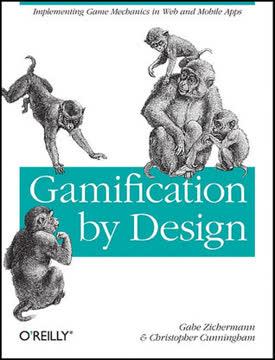
Book summary
Premium summary · Opens in the app · 30 min read
Every day, billions of people around the world play games. They solve puzzles, defeat enemies, collect items, level up characters, and compete with friends. They do this not because they are forced to, but because games are designed to be engaging. Games provide clear goals, immediate feedback, a sense of progress, and social connection. They make effort feel rewarding.
**Author:** Gabe Zichermann **Estimated Reading Time:** 45 minutes
### What You'll Learn
How to apply game mechanics and game thinking to engage users, solve real business problems, and create experiences people genuinely want to return to. You will learn the psychology behind player motivation, the core building blocks of gamified systems, how to design effective onboarding and progression, and how to measure and iterate on your designs.
### Who This Book Is For
Product managers, marketers, designers, entrepreneurs, and anyone responsible for creating digital experiences that need to capture attention and drive behavior. If you have ever wondered why people spend hours mastering games but struggle to stay engaged with software, training programs, or loyalty initiatives, this book will show you how to bridge that gap.
Every day, billions of people around the world play games. They solve puzzles, defeat enemies, collect items, level up characters, and compete with friends. They do this not because they are forced to, but because games are designed to be engaging. Games provide clear goals, immediate feedback, a sense of progress, and social connection. They make effort feel rewarding. Now consider the average enterprise software application, corporate training program, or customer loyalty initiative. Most of these experiences are functional but forgettable. They ask people to complete tasks without making those tasks feel meaningful. They provide little feedback, few rewards, and almost no sense of progression. The result is predictable: low engagement, high churn, and wasted investment. Gamification addresses this gap. It is the process of applying game thinking and game mechanics to non-game contexts. It does not mean turning everything into a video game. It means understanding what makes games compelling and using those principles to make other experiences more engaging. The problem is that most attempts at gamification fail. Companies add points and badges to their products and expect magic. They create leaderboards that only motivate the top one percent of users. They design reward systems that feel arbitrary or manipulative. They ignore the underlying psychology that makes games work in the first place. Gabe Zichermann wrote this book to provide a practical framework for doing gamification right. His approach is grounded in game design principles, behavioral psychology, and years of experience working with companies across industries. He argues that gamification is not a gimmick. It is a disciplined design practice that, when done well, creates genuine value for users and businesses alike. The stakes are high. Attention is the scarcest resource in the modern economy. Every product, service, and platform competes for a finite amount of user time and mental energy. Gamification offers a way to earn that attention by making experiences more rewarding. But it requires more than slapping game elements…
Continue reading in the MinuteRead app
Get the complete 30-minute summary of Gamification by Design
Get the complete summary in the appGamification is applying game thinking and game mechanics to non-game contexts to engage users and solve problems.
Understand your users' motivations before designing mechanics. Different players are driven by different things.
Points, badges, and leaderboards are tools, not solutions. They must be meaningful, earned, and fair.
Design progression with a curvilinear difficulty curve. Early wins build momentum, later challenges maintain engagement.
Aim for flow by balancing challenge and skill. Too easy causes boredom, too hard causes anxiety.
Onboarding is critical. Provide early wins, introduce features gradually, and personalize the experience.
"Gamification by Design" is a strong fit if you want practical ideas around design, game design, business, especially themes like gamification is applying game thinking and game mechanics to non-game contexts to engage users and solve problems; understand your users' motivations before designing mechanics. different players are driven by different things. The MinuteRead summary distills these concepts into a focused read, whether you're deciding whether to buy the book or applying its lessons at work.
Gabe Zichermann is an author, entrepreneur, and expert in gamification. He has written multiple books on the subject and is recognized as a thought leader in the field. Zichermann has spoken at numerous conferences and events, sharing his insights on how game mechanics can be applied to business and marketing strategies. He is the founder of Gamification Co. and has worked with various companies to implement gamification techniques. Zichermann's work focuses on leveraging game design principles …
View all summaries by Gabe ZichermannContinue Reading
Access the complete 30-minute summary and thousands more nonfiction books in the MinuteRead app.

Continue reading the complete summary in the MinuteRead app.