MinuteRead
30 min
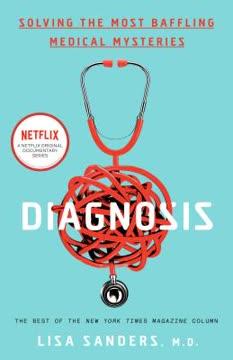
Book summary
by Lisa Sanders
Premium summary · Opens in the app · 30 min read
A young woman walks into an emergency room complaining of abdominal pain. She has seen three doctors in the past month. Each one ordered tests. Each one prescribed something different. Each one told her the pain would go away. It did not. Now she is back, exhausted, frightened, and beginning to doubt her own body.
**Author:** Lisa Sanders, M.D.
**Estimated Reading Time:** 42 minutes
**What You'll Learn:** How master diagnosticians solve the most puzzling medical cases, why the simplest tools often outperform the most advanced technology, and how the art of diagnosis applies far beyond medicine.
**Who This Book Is For:** Anyone fascinated by medical mysteries, professionals who solve complex problems, patients navigating the healthcare system, and readers who want to understand how great thinking actually works under pressure.
A young woman walks into an emergency room complaining of abdominal pain. She has seen three doctors in the past month. Each one ordered tests. Each one prescribed something different. Each one told her the pain would go away. It did not. Now she is back, exhausted, frightened, and beginning to doubt her own body. This scene plays out thousands of times every day in hospitals and clinics around the world. Most of the time, the answer is simple. An infection. A pulled muscle. A reaction to something she ate. But sometimes, the answer is not simple at all. Sometimes the answer hides behind a wall of misleading symptoms, normal test results, and assumptions that feel safe but lead nowhere. Lisa Sanders has spent her career exploring what happens when medicine gets hard. As an internist at Yale and the author of a beloved column in The New York Times Magazine, she has collected stories of diagnostic triumphs and failures that reveal something profound about how doctors think. Her book Diagnosis is not a collection of medical oddities. It is a meditation on uncertainty, a field guide to the art of paying attention, and a reminder that the most powerful diagnostic tool in medicine is not a machine. It is a mind that refuses to stop asking questions. The problem Sanders addresses is one that affects everyone. Diagnostic errors occur in roughly ten to fifteen percent of medical encounters. Some of these errors are minor. Others are catastrophic. A missed heart attack. A cancer dismissed as stress. An infection mistaken for anxiety. The consequences can be devastating, and they often stem not from ignorance but from the way human minds work. We jump to conclusions. We anchor on first impressions. We stop looking once we find an answer that feels comfortable. Sanders argues that the solution is not more technology. It is better thinking. The doctors who solve the hardest cases share certain habits of mind. They listen more carefully. They question their own assumptions. They embrace uncertainty rather than rushing to eliminate it. They treat every patient as a puzzle that deserves their full attention, not as a problem to be processed as quickly as possible. This book matters because diagnosis is not just a…
Continue reading in the MinuteRead app
Get the complete 30-minute summary of Diagnosis
Get the complete summary in the appThe patient history leads to the correct diagnosis in most cases. Listen carefully.
The physical exam provides information that no machine can replicate. Examine thoroughly.
Technology provides data, not understanding. Use it wisely.
Cognitive biases cause most diagnostic errors. Be aware of them.
Collaboration is a powerful diagnostic tool. Seek fresh perspectives.
Follow-up is essential for learning. Track your results.
"Diagnosis" is a strong fit if you want practical ideas around medicine, science, medical, especially themes like the patient history leads to the correct diagnosis in most cases. listen carefully; the physical exam provides information that no machine can replicate. examine thoroughly. The MinuteRead summary distills these concepts into a focused read, whether you're deciding whether to buy the book or applying its lessons at work.
Lisa Sanders, M.D. is an accomplished internist and faculty member at Yale University School of Medicine. She gained recognition for her monthly "Diagnosis" column in The New York Times Magazine, which inspired this book. Sanders' expertise in medical mysteries led to her role as a technical advisor for the popular TV series House, M.D. Her previous book, "Every Patient Tells a Story," was well-received. Sanders' work combines her medical knowledge with storytelling, making complex cases accessi…
View all summaries by Lisa SandersContinue Reading
Access the complete 30-minute summary and thousands more nonfiction books in the MinuteRead app.

Continue reading the complete summary in the MinuteRead app.