MinuteRead
30 min
Book summary
by Alfred Mill
Premium summary · Opens in the app · 30 min read
Every day you make economic decisions. You decide whether to buy coffee or save the money. You choose between taking a job that pays more or one that offers more flexibility. You weigh whether to spend an hour exercising or an hour working. These choices feel personal, even mundane. Yet each one connects to a vast web of decisions made by billions of other people, all responding to the same fundamental problem.
**Author:** Alfred Mill
**Estimated Reading Time:** 90 minutes
**What You'll Learn:**
- Why scarcity is the foundation of all economic thinking - How opportunity cost shapes every decision you make - Why trade creates wealth even when one party is better at everything - How money, banks, and interest rates actually work - What GDP, unemployment, and inflation really measure - How governments use policy tools to manage the economy
**Who This Book Is For:**
Anyone who has ever wondered why prices rise, what banks actually do, or how nations become wealthy. This book is for curious readers who want to understand the economic forces shaping their daily lives without wading through dense academic textbooks. No prior knowledge of economics is required.
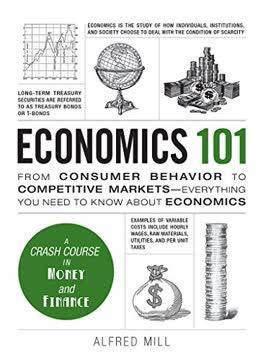
Every day you make economic decisions. You decide whether to buy coffee or save the money. You choose between taking a job that pays more or one that offers more flexibility. You weigh whether to spend an hour exercising or an hour working. These choices feel personal, even mundane. Yet each one connects to a vast web of decisions made by billions of other people, all responding to the same fundamental problem. That problem is scarcity. Human wants are effectively unlimited. We always desire more: more time, more comfort, more security, more experiences. But the resources available to satisfy those wants are limited. There are only so many hours in a day, only so much land on Earth, only so much labor any person can provide. This tension between unlimited wants and limited resources is the starting point for all economic thinking. Economics is the study of how individuals, institutions, and societies choose to deal with the condition of scarcity. It is not primarily about money, stock markets, or government budgets, though those are important applications. At its core, economics is about choice. How do people decide what to do when they cannot do everything? How do businesses decide what to produce when resources are finite? How do governments allocate tax revenue among competing priorities? The answers to these questions shape the world you live in. They determine whether you can afford a home, whether your job will exist in a decade, whether the currency in your pocket holds its value. They influence wars, elections, technological innovation, and the quality of your daily life. Understanding economics does not make these forces disappear, but it gives you a framework for navigating them intelligently. Alfred Mill wrote this book for people who want that framework without the intimidation of a college textbook. His approach is straightforward: explain the core concepts clearly, use concrete examples, and show how the pieces fit together. The goal is not to turn you into a…
Continue reading in the MinuteRead app
Get the complete 30-minute summary of Economics 101
Get the complete summary in the appScarcity is permanent. Resources are limited, wants are unlimited, and every choice involves a trade-off.
Opportunity cost is the true cost of any decision. It is the value of the next best alternative you give up.
Trade creates wealth. Specialization plus exchange allows everyone to consume more than they could produce on their own.
Comparative advantage drives trade. Even a country that is better at everything benefits from specializing in what it do
Markets coordinate through prices. Prices signal scarcity and guide resources toward their most valued uses.
Money is a tool, not wealth. It solves the double coincidence of wants problem and makes exchange efficient.
"Economics 101" is a strong fit if you want practical ideas around economics, finance, business, especially themes like scarcity is permanent. resources are limited, wants are unlimited, and every choice involves a trade-off; opportunity cost is the true cost of any decision. it is the value of the next best alternative you give up. The MinuteRead summary distills these concepts into a focused read, whether you're deciding whether to buy the book or applying its lessons at work.
Alfred Mill is an economic expert known for his work in explaining complex economic concepts to a general audience. His writing style is characterized by simplicity and the use of relatable examples to illustrate abstract ideas. Mill's approach to economics is rooted in capitalist and neoliberal ideologies, which is evident in his explanations and interpretations of economic phenomena. While praised for making economics accessible to beginners, some critics argue that his perspective lacks criti…
View all summaries by Alfred MillContinue Reading
Access the complete 30-minute summary and thousands more nonfiction books in the MinuteRead app.

Continue reading the complete summary in the MinuteRead app.