MinuteRead
30 min
Book summary
by Yaron Brook
Premium summary · Opens in the app · 30 min read
Something strange has happened in the modern world. Capitalism has lifted billions out of poverty. It has extended human lifespans, cured diseases, connected continents, and produced a material abundance that would have seemed like sorcery to previous generations. Yet the system responsible for this transformation is treated with suspicion, contempt, and outright hostility.
**Author:** Yaron Brook **Estimated Reading Time:** 45 minutes
**What You'll Learn:** Why capitalism remains the most misunderstood and unfairly maligned system in human history. How the moral arguments against free markets are built on a foundation of sand. What rational self-interest actually means and why it leads to human flourishing rather than exploitation. How government intervention systematically destroys the very prosperity it claims to protect. And why Ayn Rand's philosophy offers the only consistent moral defense of capitalism ever developed.
**Who This Book Is For:** Anyone who has ever felt uneasy defending free markets in moral terms. Anyone who suspects that something is deeply wrong with the arguments used to justify ever-expanding government. Anyone who wants to understand why capitalism produces unprecedented prosperity while remaining culturally despised. And anyone ready to discover that selfishness, properly understood, is not a vice but a virtue.
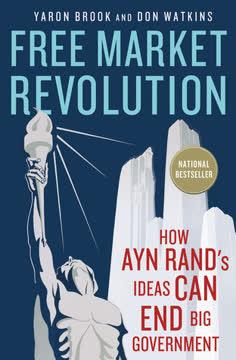
Something strange has happened in the modern world. Capitalism has lifted billions out of poverty. It has extended human lifespans, cured diseases, connected continents, and produced a material abundance that would have seemed like sorcery to previous generations. Yet the system responsible for this transformation is treated with suspicion, contempt, and outright hostility. Ask the average person to describe a capitalist and you will hear words like greedy, exploitative, and selfish. Ask them whether government should regulate business and they will say of course, someone has to keep those people in check. The moral case against free markets has become so deeply embedded in our culture that most people do not even realize they hold it. This book exists because that moral case is wrong. Not just slightly wrong or wrong in its excesses. Wrong at its foundation. The arguments used to justify government control over economic life are built on premises that cannot withstand serious scrutiny. And the consequences of accepting those premises have been devastating. The steady expansion of government over the past century has not been driven by careful analysis of what works and what does not. It has been driven by moral arguments that frame any limitation on state power as heartless, any defense of profit as greedy, and any opposition to redistribution as selfish in the worst sense of the word. These arguments have proven remarkably effective because they appeal to deeply held beliefs about right and wrong. Consider the two most common justifications for government intervention. The first is what we might call the Argument from Greed. It goes like this: businessmen are motivated by profit. Profit is a form of greed. Greed is bad. Therefore, businessmen must be restrained by government regulation to prevent them from exploiting everyone else. This argument is so widely accepted that it rarely needs to…
Continue reading in the MinuteRead app
Get the complete 30-minute summary of Free Market Revolution
Get the complete summary in the appSelfishness properly understood means pursuing your own life and happiness through productive work and voluntary trade.
Altruism, the doctrine that self-sacrifice is the highest moral ideal, is the foundation of every argument for governmen
Capitalism is the only moral social system because it is the only system that respects individual rights.
The price system coordinates economic activity without central planning. Government intervention distorts price signals
Creative destruction drives economic progress by replacing old products and technologies with better ones. Protecting es
Profit is the signal that resources are being used effectively. The profit motive directs resources to their most valued
"Free Market Revolution" is a strong fit if you want practical ideas around economics, politics, philosophy, especially themes like selfishness properly understood means pursuing your own life and happiness through productive work and voluntary trade; altruism, the doctrine that self-sacrifice is the highest moral ideal, is the foundation of every argument for governmen. The MinuteRead summary distills these concepts into a focused read, whether you're deciding whether to buy the book or applying its lessons at work.
Yaron Brook is an intellectual and political activist serving as the president and executive director of the Ayn Rand Institute. Born in 1961, he is a prominent advocate for Objectivism, Ayn Rand's philosophy. Brook frequently lectures, debates, and writes on philosophical and current issues from an Objectivist perspective. He contributes to Forbes.com and The Objective Standard, and is a regular guest on various radio and television programs, including Fox Business Network and CNBC. His experti…
View all summaries by Yaron BrookContinue Reading
Access the complete 30-minute summary and thousands more nonfiction books in the MinuteRead app.

Continue reading the complete summary in the MinuteRead app.