MinuteRead
30 min
Book summary
by David Haig
Premium summary · Opens in the app · 30 min read
Modern biology has a strange relationship with meaning. On one hand, biologists speak constantly about function, purpose, and adaptation. They say the heart is for pumping blood, that the eye is for seeing, that a bird’s song is for attracting mates. On the other hand, the official philosophical stance of biology insists that such language is merely convenient shorthand. Strictly speaking, nature has no purposes. There is only mechanism. There is only cause and effect.
**Author:** David Haig **Estimated Reading Time:** 45 minutes
**What You'll Learn:**
Why natural selection is not merely a physical process but a generator of meaning. How genes function as both physical molecules and informational texts shaped by history. Why organisms are interpreters, not passive machines. How internal genetic conflicts shape development and behavior. Where cultural evolution mirrors biological evolution. And why biologists cannot live without teleology, even when they claim to reject it.
**Who This Book Is For:**
Anyone who has sensed that the standard explanations of evolution leave something important unsaid. Readers who want to understand the deeper philosophical implications of Darwin’s theory. Those curious about how meaning, purpose, and interpretation arise in a world governed by blind physical processes. And anyone willing to think carefully about the relationship between genes, organisms, minds, and culture.
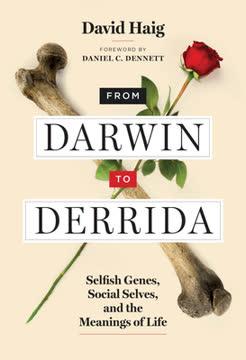
Modern biology has a strange relationship with meaning. On one hand, biologists speak constantly about function, purpose, and adaptation. They say the heart is for pumping blood, that the eye is for seeing, that a bird’s song is for attracting mates. On the other hand, the official philosophical stance of biology insists that such language is merely convenient shorthand. Strictly speaking, nature has no purposes. There is only mechanism. There is only cause and effect. This tension creates a problem. If we take the official stance seriously, we must treat the apparent purposefulness of living things as an illusion. But if we treat it as an illusion, we lose something essential about what it means to study life. The biologist who studies the heart cannot help but think about what the heart is for. The evolutionary theorist who models adaptation cannot help but speak as if natural selection were solving problems. Purpose language keeps creeping back in. David Haig confronts this tension directly. As a professor at Harvard and a distinguished evolutionary biologist known for his work on genetic conflict and genomic imprinting, Haig has spent decades thinking about the philosophical foundations of his field. In *From Darwin to Derrida*, he argues that the tension between mechanism and purpose is not a bug in biological thinking but a feature. It points toward something real, something that requires careful philosophical analysis to understand. The book’s title signals its ambition. Darwin represents the mechanistic explanation of life through natural selection. Derrida represents the philosophical tradition of deconstruction, which examines how meaning is generated through systems of differences and interpretations. Haig’s project is to bring these two traditions into conversation, showing how evolutionary biology can illuminate questions about meaning, interpretation, and purpose that have traditionally belonged to philosophy. The central problem Haig addresses is this: How does meaning arise in a world of meaningless physical processes? Natural…
Continue reading in the MinuteRead app
Get the complete 30-minute summary of From Darwin to Derrida
Get the complete summary in the appNatural selection is a blind process that generates meaning by accumulating information about past environments.
Genes are both material molecules and informational texts shaped by evolutionary history.
Organisms are interpreters that read genetic and environmental information and make decisions.
Different genes within an organism can have conflicting evolutionary interests, shaping development and behavior.
Cultural evolution through memes parallels biological evolution but operates much faster.
Biological explanation requires both mechanistic accounts of how things work and functional accounts of why they exist.
"From Darwin to Derrida" is a strong fit if you want practical ideas around philosophy, science, evolution, especially themes like natural selection is a blind process that generates meaning by accumulating information about past environments; genes are both material molecules and informational texts shaped by evolutionary history. The MinuteRead summary distills these concepts into a focused read, whether you're deciding whether to buy the book or applying its lessons at work.
David Haig is a professor at Harvard University and a distinguished scientist in the field of evolutionary biology. His work focuses on genetic conflicts and the intersection of biology and philosophy. Haig is known for his ability to connect complex scientific concepts with broader philosophical ideas, as demonstrated in "From Darwin to Derrida." His writing style is described as dense and intellectually challenging, requiring readers to have a strong background in both biology and philosophy. …
View all summaries by David HaigContinue Reading
Access the complete 30-minute summary and thousands more nonfiction books in the MinuteRead app.

Continue reading the complete summary in the MinuteRead app.