MinuteRead
30 min
Book summary
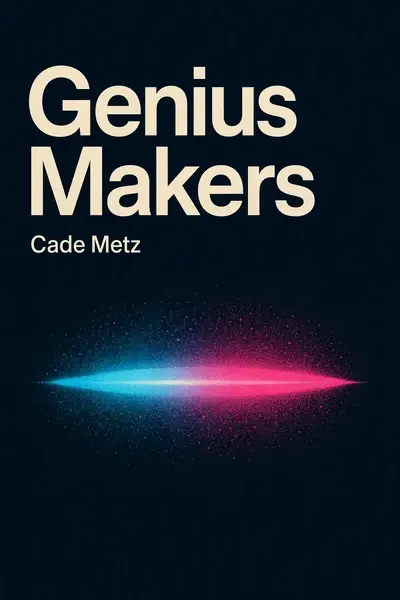
by Cade Metz
Premium summary · Opens in the app · 30 min read
For decades, the idea of building machines that could learn on their own was considered a scientific dead end. The most respected minds in artificial intelligence dismissed neural networks as a fantasy, a relic of failed ambitions from the 1950s and 1960s. Young researchers who dared to work on them were warned they would ruin their careers. Funding dried up. Conferences rejected their papers. The field moved on to other approaches, convinced that neural networks were a historical footnote.
**The Mavericks Who Brought AI to Google, Facebook, and the World**
By Cade Metz
**Estimated Reading Time:** 2 hours 15 minutes
**What You'll Learn**
The untold story of how a small group of researchers defied decades of skepticism to revive neural networks, trigger a global technology arms race, and reshape the modern world. You will meet the pioneers, understand the breakthroughs, witness the corporate battles, and confront the ethical questions that now define artificial intelligence.
**Who This Book Is For**
Anyone who wants to understand how artificial intelligence actually happened. This book is for readers curious about the people behind the technology, the ideas that drove them, the companies that funded them, and the consequences we are all now living with.
For decades, the idea of building machines that could learn on their own was considered a scientific dead end. The most respected minds in artificial intelligence dismissed neural networks as a fantasy, a relic of failed ambitions from the 1950s and 1960s. Young researchers who dared to work on them were warned they would ruin their careers. Funding dried up. Conferences rejected their papers. The field moved on to other approaches, convinced that neural networks were a historical footnote. Then everything changed. In 2012, a small team from the University of Toronto stunned the world by winning the ImageNet competition, a contest designed to measure how well machines could recognize objects in photographs. Their neural network did not just win. It crushed the competition by a margin so large that it forced the entire field of artificial intelligence to reconsider everything it thought it knew. Within months, Google, Facebook, Microsoft, and Baidu were scrambling to hire anyone who understood this forgotten technology. The race had begun. This book tells the story of how that happened. It is a story about a handful of stubborn believers who spent years in the wilderness, convinced that their ideas were right even when almost everyone else told them they were wrong. It is a story about Geoffrey Hinton, the British-born researcher who became the intellectual godfather of the movement. It is a story about Yann LeCun, the French scientist who built machines that could read handwriting when no one else thought it was possible. It is a story about Yoshua Bengio, the Canadian professor who quietly trained a generation of researchers. And it is a story about the corporations and governments that eventually recognized the power of their ideas and fought to control them. But this is not just a story about technology. It is a story about people. It is about the personalities, rivalries, friendships, and ambitions that shaped the development of artificial intelligence. It is about the tension between scientific openness…
Continue reading in the MinuteRead app
Get the complete 30-minute summary of Genius Makers
Get the complete summary in the appNeural networks were dismissed for decades before they transformed the world.
The ImageNet victory in 2012 was the turning point that triggered the AI revolution.
Geoffrey Hinton, Yann LeCun, and Yoshua Bengio persisted through years of rejection to build the foundations of modern A
The combination of massive datasets, powerful GPUs, and refined algorithms enabled the deep learning breakthrough.
The gold rush for AI talent shifted research from academia to industry and changed the nature of the field.
AI systems can be biased, and the biases often reflect the biases in their training data.
"Genius Makers" is a strong fit if you want practical ideas around artificial intelligence, technology, business, especially themes like neural networks were dismissed for decades before they transformed the world; the imagenet victory in 2012 was the turning point that triggered the ai revolution. The MinuteRead summary distills these concepts into a focused read, whether you're deciding whether to buy the book or applying its lessons at work.
Cade Metz is a technology reporter for The New York Times, covering artificial intelligence, driverless cars, robotics, virtual reality, and other emerging technologies. Previously, he worked for Wired magazine for eight years. Metz's extensive experience in technology journalism is evident in Genius Makers, his first book, which draws from hundreds of interviews conducted over nearly a decade. His writing style is praised for its accessibility and ability to make complex subjects engaging for a…
View all summaries by Cade MetzContinue Reading
Access the complete 30-minute summary and thousands more nonfiction books in the MinuteRead app.

Continue reading the complete summary in the MinuteRead app.