MinuteRead
30 min
Book summary
Premium summary · Opens in the app · 30 min read
In the early 1990s, the world stood at what seemed like a moment of unprecedented possibility. The Cold War had ended. Markets were opening. Technology was connecting people across continents. The promise of globalization was intoxicating: a world where goods, capital, and ideas would flow freely, lifting billions out of poverty and ushering in an era of shared prosperity.
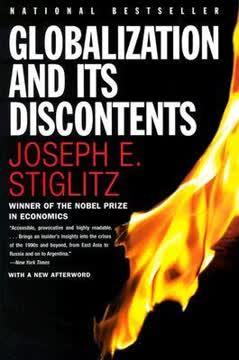
**Author:** Joseph E. Stiglitz **Estimated Reading Time:** 45 minutes
The real story behind the global economic system, why it has failed so many people, and what can be done to create a fairer world economy. You will understand the inner workings of institutions like the IMF and World Bank, discover why well-intentioned policies often produced disastrous results, and explore alternative approaches that have actually worked.
This book is for anyone who has sensed that something is wrong with the global economy but could not quite articulate what. It is for readers curious about why poverty persists despite decades of promised progress, for students of economics who want to understand the human consequences of policy decisions, and for citizens who want to engage meaningfully in debates about trade, development, and international cooperation.
In the early 1990s, the world stood at what seemed like a moment of unprecedented possibility. The Cold War had ended. Markets were opening. Technology was connecting people across continents. The promise of globalization was intoxicating: a world where goods, capital, and ideas would flow freely, lifting billions out of poverty and ushering in an era of shared prosperity. Joseph Stiglitz watched this promise unfold from a unique vantage point. As a Nobel Prize-winning economist who served as Chairman of the Council of Economic Advisers under President Clinton and later as Chief Economist at the World Bank, he was not an outsider throwing stones. He was inside the system, helping to shape the policies that would define the global economic order. What he saw from that position troubled him deeply. The problem was not globalization itself. Stiglitz is careful to make this distinction. The problem was the way globalization was managed. The rules were written by the powerful, for the powerful. The institutions charged with overseeing the global economy operated with a narrow ideological vision that often ignored the human consequences of their prescriptions. And the people who paid the price were the world's most vulnerable. This book is Stiglitz's account of what went wrong and why. It is also his argument for a different path forward. Drawing on his experiences at the highest levels of economic policymaking, he documents case after case where policies intended to help developing countries ended up hurting them. The East Asian financial crisis. Russia's disastrous transition to capitalism. The painful structural adjustment programs imposed across Africa and Latin America. What makes Stiglitz's critique so powerful is that it comes not from a place of anti-market sentiment, but from a deep understanding of how markets actually work. He is not arguing against trade or international cooperation. He is arguing against a rigid ideology that treats free markets as an end in themselves rather than…
Continue reading in the MinuteRead app
Get the complete 30-minute summary of Globalization and Its Discontents Revisited
Get the complete summary in the appGlobalization has brought real benefits, but those benefits have been unevenly distributed, with the costs falling dispr
The IMF's standard policy prescriptions have often made economic crises worse, not better.
Capital market liberalization exposes developing countries to volatile capital flows that can devastate their economies.
Russia's shock therapy transition to capitalism produced economic collapse and social catastrophe.
The governance of international economic institutions is dominated by developed countries and lacks transparency.
Countries that pursued pragmatic, gradual approaches to economic reform often achieved better outcomes than those that f
"Globalization and Its Discontents Revisited" is a strong fit if you want practical ideas around economics, politics, history, especially themes like globalization has brought real benefits, but those benefits have been unevenly distributed, with the costs falling dispr; the imf's standard policy prescriptions have often made economic crises worse, not better. The MinuteRead summary distills these concepts into a focused read, whether you're deciding whether to buy the book or applying its lessons at work.
Joseph Eugene Stiglitz is a renowned American economist and Columbia University professor. He won the Nobel Prize in Economics in 2001 and the John Bates Clark Medal in 1979. Stiglitz served as the World Bank's Chief Economist and is known for his critical views on globalization management and free-market fundamentalism. He founded the Initiative for Policy Dialogue and holds positions at various institutions worldwide. Stiglitz is a highly cited economist who has authored numerous influential w…
View all summaries by Joseph E. StiglitzContinue Reading
Access the complete 30-minute summary and thousands more nonfiction books in the MinuteRead app.

Continue reading the complete summary in the MinuteRead app.