MinuteRead
30 min
Book summary
by Dan Hotchkiss
Premium summary · Opens in the app · 30 min read
Every congregation lives with a paradox. Religion changes people. No one touches holy ground and stays the same. A genuine encounter with the sacred disrupts assumptions, reorders priorities, and sends people back into the world with new eyes. Yet the institutions that house these encounters are built to last. They have budgets, buildings, bylaws, and boards. They resist change by design.
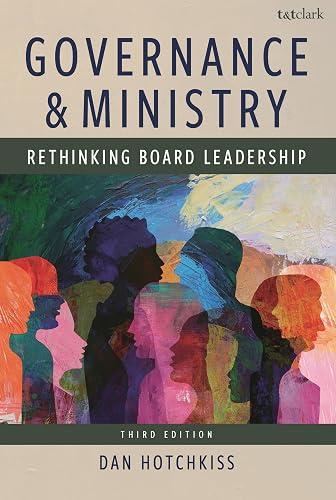
### Rethinking Board Leadership
**Author:** Dan Hotchkiss **Estimated Reading Time:** 45 minutes
**What You'll Learn:** - Why the tension between stability and transformation defines congregational life - How to distinguish governance from ministry without creating harmful silos - Which governance model fits your congregation's size and culture - How to delegate authority while maintaining accountability - What a healthy annual planning cycle looks like - How to navigate governance change without triggering destructive conflict
**Who This Book Is For:** Congregational board members, clergy, lay leaders, denominational executives, and anyone who has ever sat through a church meeting wondering why decisions take so long and accomplish so little. If you care about religious institutions and want them to function with clarity, purpose, and grace, this book is for you.
Every congregation lives with a paradox. Religion changes people. No one touches holy ground and stays the same. A genuine encounter with the sacred disrupts assumptions, reorders priorities, and sends people back into the world with new eyes. Yet the institutions that house these encounters are built to last. They have budgets, buildings, bylaws, and boards. They resist change by design. This tension between transformation and stability is not a flaw in organized religion. It is its defining challenge. A congregation that tilts too far toward stability becomes a museum, preserving forms whose spiritual vitality has long since evaporated. A congregation that tilts too far toward transformation becomes chaos, burning through people and resources without building anything lasting. The art of congregational leadership lies in holding both impulses in creative tension. Dan Hotchkiss wrote this book because he saw too many congregations failing at this balancing act. As a consultant who has worked with hundreds of religious organizations across denominations, he witnessed the same patterns repeating themselves. Boards mired in operational minutiae. Clergy frustrated by unclear authority. Lay leaders burning out from overwork. Congregations paralyzed by conflict over decisions that should have been straightforward. The root cause, he argues, is not lack of commitment or intelligence. It is confusion about governance. Most congregations operate with governance structures inherited from earlier eras, designed for different sizes and different cultural conditions. They have never clearly articulated what the board is for, how authority flows, or where accountability rests. As a result, every decision becomes a negotiation, every conflict becomes personal, and every meeting becomes a struggle. Hotchkiss offers a different vision. He argues that governance and ministry are distinct but interconnected functions. Governance involves the top-level tasks of articulating mission, selecting strategies, ensuring accountability, and protecting people and property. Ministry is everything else: the daily work of teaching, serving, caring, and building community. When these roles are clear, congregations can focus their energy where…
Continue reading in the MinuteRead app
Get the complete 30-minute summary of Governance and Ministry
Get the complete summary in the appGovernance and ministry are distinct but interconnected. Governance sets direction; ministry does the daily work.
The board's four tasks are mission articulation, strategy selection, accountability, and protection.
A congregation's bottom line is mission achievement, not financial balance or member happiness.
Size is the single most important fact about a congregation. Governance structures must match size.
Effective delegation requires both clear authority and consistent accountability.
The annual planning cycle aligns board and staff efforts through planning, implementation, exploration, and evaluation.
"Governance and Ministry" is a strong fit if you want practical ideas around religion, leadership, business, especially themes like governance and ministry are distinct but interconnected. governance sets direction; ministry does the daily work; the board's four tasks are mission articulation, strategy selection, accountability, and protection. The MinuteRead summary distills these concepts into a focused read, whether you're deciding whether to buy the book or applying its lessons at work.
Motivated to help readers with "Religion changes people; no one touches holy ground and stays the same." Paradox of organized religion, Dan Hotchkiss wrote “Governance and Ministry” to package those ideas for a fast, focused read. In “Governance and Ministry”, Dan Hotchkiss focuses on "Religion changes people; no one touches holy ground and stays the same." Paradox of organized religion. Through “Governance and Ministry”, Dan Hotchkiss distills the core ideas on religion into lessons readers can…
Continue Reading
Access the complete 30-minute summary and thousands more nonfiction books in the MinuteRead app.

Continue reading the complete summary in the MinuteRead app.