MinuteRead
30 min
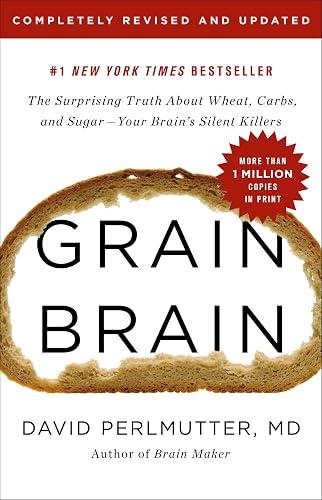
Grain Brain takes a look at the impact carbohydrates have on the structure and development of your brain, arriving at the conclusion that a diet high in fat, low in carbs and especially sugar, combined with fasting, lots of activity and more sleep could provide you with a much higher quality of life.
Grain Brain takes a look at the impact carbohydrates have on the structure and development of your brain, arriving at the conclusion that a diet high in fat, low in carbs and especially sugar, combined with fasting, lots of activity and more sleep could provide you with a much higher quality of life.
My grandma used to say: “Don’t eat more than one egg per day, it’s bad for your cholesterol,” when I was a kid. I distinctly remember having one boiled egg every Sunday morning for breakfast, and that was it. High cholesterol had been linked to lots of incidents of heart diseases for decades – but as it turns out, cholesterol isn’t the problem.
It’s the kinds of cholesterol and their ratio. You have two types of cholesterol in your body. They’re called LDL and HDL. LDL stands for low-density lipoprotein, while HDL equates to high-density lipoprotein. You can remember it by thinking of the L as low-quality and the H as high-quality, because LDL is the “bad” cholesterol, while HDL is the “good” cholesterol.
The total number of these two values combined + 20% of your triglycerides (a type of fat in your bloodstream) was always to be kept below 200 to avoid increased risk of heart disease. Actually, doctors now know that the ratio of HDL compared to your total is more important. Dividing your total cholesterol, say 150, by your HDL, say 50, should never yield a number higher than 5, and ideally stay at 3.5 or below.
However, eating lots of eggs, cheese or butter won’t hurt you in this regard. Only eating low-quality eggs, cheese and butter will, because of the other health-threatening ingredients they contain.
Your body regulates your cholesterol on how much you take in with your food. If you eat 5 eggs every day, your body simply produces less. Only if you completely overload (or lack) cholesterol will your body try to dial back (or overcompensate) – and that’s what causes problems.
If our ancestors survived on a diet that was 70% fats, chances are, so can we.
This is a classic example of a book blowing the results of a study out of proportion. When your brain creates new neurons, this process is called neurogenesis. An important part of this process is BDNF – brain-derived neurotrophic factor protein. The book states that by eating less, you can increase the amount of BDNF your brain produces, and therefore get it to create more neurons. There are currently no studies out there that prove this effect in humans. So far, this has only been observed in diabetic mice and other animals, but not in humans. The study the book quotes is…
Continue reading in the MinuteRead app
Get the complete 5-minute summary of Grain Brain
Get the complete summary in the appYour body regulates your cholesterol, depending on your intake, so cholesterol itself isn’t a problem.
You might get smarter by eating right, because it could allow your brain to create more neurons.
How much you sleep affects your leptin levels, which in turn control your hunger.
"Grain Brain" is a strong fit if you want practical ideas around health, nutrition, productivity, especially themes like your body regulates your cholesterol, depending on your intake, so cholesterol itself isn’t a problem; you might get smarter by eating right, because it could allow your brain to create more neurons. The MinuteRead summary distills these concepts into a focused read, whether you're deciding whether to buy the book or applying its lessons at work.
David Perlmutter, MD, FACN, ABIHM is a Board-Certified Neurologist, Fellow of the American College of Nutrition and six-time New York Times bestselling author. He received his M.D. degree from the University of Miami School of Medicine where he was awarded the Leonard G. Rowntree Research Award. Dr. Perlmutter is a frequent lecturer at symposia sponsored by such medical institutions as Columbia University, the University of Arizona, Scripps Institute, and Harvard University. He has contributed e…
View all summaries by David PerlmutterContinue Reading
Access the complete 5-minute summary and thousands more nonfiction books in the MinuteRead app.

Continue reading the complete summary in the MinuteRead app.