MinuteRead
30 min
Book summary
Premium summary · Opens in the app · 5 min read
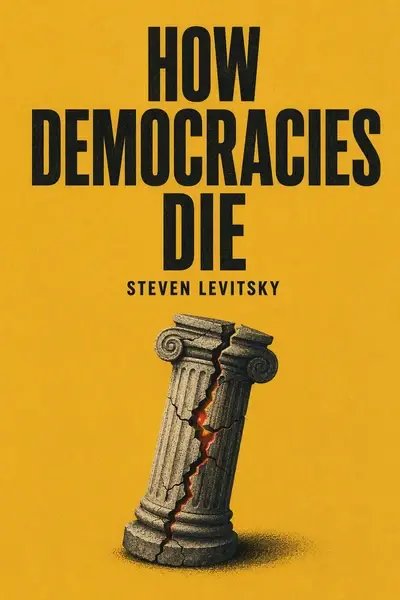
How Democracies Die lays out the foundational principles of working democracies by looking at historical events, especially in Latin America, that show how democracies have failed in the past, how it could happen again, and how we can protect democracy from threats like bad leadership, inequality, and extremism.
How Democracies Die lays out the foundational principles of working democracies by looking at historical events, especially in Latin America, that show how democracies have failed in the past, how it could happen again, and how we can protect democracy from threats like bad leadership, inequality, and extremism.
You might not think of a political party as a protector of democracy, but actually, this is exactly what they do. Parties have the power to accept candidates. That means they essentially decide who they allow to come into mainstream politics.
But while it’s their job to gate-keep, this doesn’t mean they don’t fail at this every once in a while. One example is when Venezuelan populist dictator Hugo Chavez rose to power.
Chavez was already known to be a threat to democracy. Not long before, he led a failed takeover of the Democratic Action Party and was arrested for treason. But this didn’t stop him from being a popular public figure. Especially when president Rafael Caldera endorsed and eventually released him. It made him both a hero and a real political contender.
Soon, he won the 1998 election by a landslide and dismantled the democratic system that Venezuela had put in place. Some of the ways he did this were by packing the supreme court with sycophants, silencing independent media, and exiling or imprisoning his rivals.
This is just one example of why gatekeepers need to keep extremists out of the public view. Political parties can do this is by quickly rejecting extremists so they don’t become normalized. The Swedish Conservative Party did this when they ousted fascist sympathizers in 1933. It cost them party votes, but the most important thing to them was protecting democracy by rejecting any anti-democratic influence. German Conservatives, on the other hand, made a mistake in the 1930s when they allowed joint rallies that included Hitler supporters, essentially normalizing their extremism.
So how was Trump able to get past the gatekeeping system? He had two important assets: fame and money. Those two things allowed him to enter politics without needing the Republican establishment’s approval. Not only could he pay for his own campaign, but he’s also a widely recognized person. And it only helped that he was constantly in the news. Soon Republicans began to approve of him, and he basically had it made. But, along the way, there were many red flags, such as how he questioned the democratic process by saying the election would be rigged. He also encouraged violence and attempted to restrict the free press by suing journalists. All of these red flags and the gatekeepers of the Republican Party still failed to do anything to stop him. Not long after moving…
Continue reading in the MinuteRead app
Get the complete 5-minute summary of How Democracies Die
Get the complete summary in the appStrong gatekeepers are required to keep democracy safe.
Trump bypassed the gatekeepers and began to tear down democratic institutions.
If we hold fast to our democratic norms, we have a chance at resisting authoritarianism.
"How Democracies Die" is a strong fit if you want practical ideas around education, history, leadership, especially themes like strong gatekeepers are required to keep democracy safe; trump bypassed the gatekeepers and began to tear down democratic institutions. The MinuteRead summary distills these concepts into a focused read, whether you're deciding whether to buy the book or applying its lessons at work.
Steven Levitsky is a Professor of Government at Harvard University. Levitsky’s research focuses on Latin America and the developing world. He is the author of Competitive Authoritarianism and is the recipient of numerous teaching awards. Levitsky has written for Vox and The New York Times, among other publications.
View all summaries by Steven LevitskyContinue Reading
Access the complete 5-minute summary and thousands more nonfiction books in the MinuteRead app.

Continue reading the complete summary in the MinuteRead app.