MinuteRead
30 min
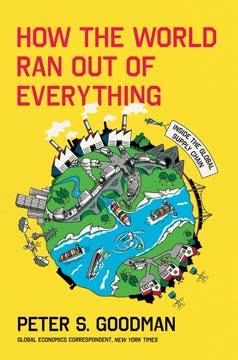
Book summary
Premium summary · Opens in the app · 30 min read
In the spring of 2020, something strange happened across the developed world. Store shelves that had always been full suddenly stood empty. Not just of hand sanitizer and face masks, but of flour, yeast, bicycles, dumbbells, and toilet paper. The modern promise of abundance, the quiet assumption that whatever you wanted would be available whenever you wanted it, evaporated in a matter of weeks.
**Author:** Peter S. Goodman
**Estimated Reading Time:** 45 minutes
**What You'll Learn:**
- Why the global supply chain collapsed so dramatically during the pandemic - How decades of efficiency-obsessed business decisions created hidden vulnerabilities - Who actually profited from the chaos while consumers faced empty shelves - What the future of global manufacturing and trade might look like - How ordinary people can understand and navigate a world of persistent uncertainty
**Who This Book Is For:**
Anyone who wondered why toilet paper vanished in March 2020. Anyone who waited months for a refrigerator or a car. Anyone curious about how the things they buy actually reach them, and why the system that delivers those things proved so fragile. This book is for readers who want to understand the hidden machinery of global commerce and the human beings who keep it running.
In the spring of 2020, something strange happened across the developed world. Store shelves that had always been full suddenly stood empty. Not just of hand sanitizer and face masks, but of flour, yeast, bicycles, dumbbells, and toilet paper. The modern promise of abundance, the quiet assumption that whatever you wanted would be available whenever you wanted it, evaporated in a matter of weeks. Peter S. Goodman spent the pandemic years chasing the story behind those empty shelves. What he found was not a simple tale of a virus disrupting business as usual. He found a system that had been quietly building fragility into its foundations for decades. A system that prized efficiency above all else, that squeezed every possible cost out of production and transportation, that concentrated power in fewer and fewer hands, and that treated the human beings doing the actual work as disposable inputs rather than essential participants. The result was a global economy that looked impressive on spreadsheets but could be brought to its knees by a single factory closure in China or a single outbreak at a meatpacking plant in South Dakota. Goodman's book is not an academic treatise on supply chain management. It is a work of journalism that follows real people through the crisis. A truck driver in Pennsylvania who suddenly found himself treated as an essential worker after years of being treated as a cost to be minimized. A factory owner in Ohio trying to make ventilators when the parts he needed were stuck on container ships. A shipping executive in Denmark watching his company earn more money in a single quarter than it had in the previous decade. A worker at a meatpacking plant in Nebraska who had to choose between her health and her paycheck. Through these stories, Goodman reveals something uncomfortable. The supply chain crisis was not an…
Continue reading in the MinuteRead app
Get the complete 30-minute summary of How the World Ran Out of Everything
Get the complete summary in the appThe supply chain crisis was caused by decades of efficiency-obsessed decisions that eliminated resilience, not by the pa
Just-in-time manufacturing works well under normal conditions but fails catastrophically when conditions change.
China's dominance in manufacturing created geopolitical risks that the pandemic exposed.
The shipping and meatpacking industries became highly concentrated, giving a few companies enormous power over global tr
Essential workers, from truck drivers to meatpackers, were treated as disposable for years and paid the price during the
The pandemic produced record profits for some companies while causing widespread suffering, revealing the power dynamics
"How the World Ran Out of Everything" is a strong fit if you want practical ideas around economics, business, history, especially themes like the supply chain crisis was caused by decades of efficiency-obsessed decisions that eliminated resilience, not by the pa; just-in-time manufacturing works well under normal conditions but fails catastrophically when conditions change. The MinuteRead summary distills these concepts into a focused read, whether you're deciding whether to buy the book or applying its lessons at work.
Peter S. Goodman is a distinguished journalist and author known for his incisive reporting on global economic issues. As a writer for the New York Times, he has covered major financial events and their impact on societies worldwide. Goodman's work often focuses on the human stories behind economic trends, making complex topics accessible to a broad audience. His investigative approach and ability to weave personal narratives into larger economic contexts have earned him recognition in the field …
View all summaries by Peter S. GoodmanContinue Reading
Access the complete 30-minute summary and thousands more nonfiction books in the MinuteRead app.

Continue reading the complete summary in the MinuteRead app.