MinuteRead
30 min
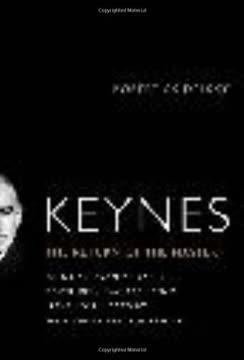
The 2008 financial crisis arrived like a thunderclap on a clear day. The world's largest banks teetered on the edge of collapse. Stock markets plunged. Millions lost their homes, their jobs, their savings. Governments scrambled to bail out institutions that had been celebrated as paragons of sophisticated risk management. And the economics profession, with few exceptions, never saw it coming.
**Author:** Robert Skidelsky **Estimated Reading Time:** 45 minutes
**What You'll Learn:** Why the 2008 financial crisis was not an accident but a predictable consequence of abandoning Keynesian economics. You will understand the radical distinction between risk and uncertainty, why markets do not automatically self-correct, and how a return to Keynes's deeper philosophical insights can reshape economic policy, education, and society.
**Who This Book Is For:** Anyone who sensed that the 2008 meltdown was more than a technical glitch. This book is for readers who want to understand why mainstream economics failed so spectacularly and what a genuine alternative looks like. It is for citizens, students, policymakers, and investors who need a clear, historically grounded account of the ideas that can prevent the next crisis.
The 2008 financial crisis arrived like a thunderclap on a clear day. The world's largest banks teetered on the edge of collapse. Stock markets plunged. Millions lost their homes, their jobs, their savings. Governments scrambled to bail out institutions that had been celebrated as paragons of sophisticated risk management. And the economics profession, with few exceptions, never saw it coming. This was not a failure of intelligence. It was a failure of ideas. The dominant economic framework of the preceding three decades rested on a seductive premise: that financial markets, left to their own devices, would allocate capital efficiently, price risk accurately, and generate stable growth. The so-called Great Moderation, the period of low inflation and steady growth from the mid-1980s to 2007, seemed to confirm this view. Central bankers congratulated themselves. Regulators stepped back. Financial innovation was presumed to be benign. Then the system imploded from within. Robert Skidelsky, the preeminent biographer of John Maynard Keynes, argues that the crisis was not an external shock, a black swan event that no one could have predicted. It was generated by the system itself. The very mechanisms that were supposed to disperse risk throughout the global economy instead concentrated it in ways that no model captured. When the housing market turned, the intricate web of derivatives, securitized mortgages, and leveraged bets unraveled with terrifying speed. Why did the experts miss it? Because they had discarded the intellectual tools that might have allowed them to see it coming. They had abandoned Keynes. Keynes died in 1946, but his ideas dominated economic policy for a generation after the war. The thirty years that followed saw unprecedented prosperity, low unemployment, and narrowing inequality across the developed world. Then, in the 1970s, stagflation and oil shocks discredited the Keynesian consensus. A counterrevolution swept the field. Economists rebuilt their models on the assumption that people are rational, markets are efficient, and government intervention usually makes things worse. This book is not a…
Continue reading in the MinuteRead app
Get the complete 30-minute summary of Keynes
Get the complete summary in the appThe future is radically uncertain, not just risky. Most important economic decisions cannot be reduced to calculable pro
In the face of uncertainty, people rely on conventions, social proof, and animal spirits, not rational optimization.
Financial markets are beauty contests. Prices are driven by conventional opinion about conventional opinion, not by fund
Economies do not automatically self-correct. They can get stuck in underemployment equilibria that require government in
One person's spending is another person's income. The multiplier amplifies initial changes in spending throughout the ec
The paradox of thrift means that what is prudent for an individual, saving more in hard times, can be destructive for th
"Keynes" is a strong fit if you want practical ideas around economics, biography, history, especially themes like the future is radically uncertain, not just risky. most important economic decisions cannot be reduced to calculable pro; in the face of uncertainty, people rely on conventions, social proof, and animal spirits, not rational optimization. The MinuteRead summary distills these concepts into a focused read, whether you're deciding whether to buy the book or applying its lessons at work.
Robert Skidelsky is an Emeritus Professor of Political Economy at the University of Warwick and a renowned biographer of John Maynard Keynes. Born in 1939 in Manchuria, he studied history at Oxford and has held academic positions at various institutions. Skidelsky's three-volume biography of Keynes received numerous awards. He has authored several books on economics and history, and currently writes a monthly column for Project Syndicate. A life peer since 1991 and Fellow of the British Academy …
View all summaries by Robert SkidelskyContinue Reading
Access the complete 30-minute summary and thousands more nonfiction books in the MinuteRead app.

Continue reading the complete summary in the MinuteRead app.