MinuteRead
30 min
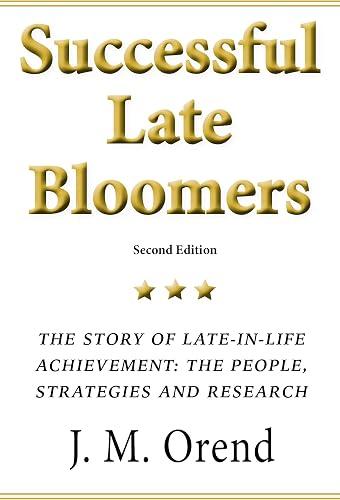
Late Bloomers will help you become more patient with the speed of your progress by identifying the damaging influences of early achievement culture and societal pressure and how to be proud of reaching your peak later in life.
Late Bloomers will help you become more patient with the speed of your progress by identifying the damaging influences of early achievement culture and societal pressure and how to be proud of reaching your peak later in life.
When we obsess over this unrealistic ideal that we need to be successful at a young age, we send a dangerous message to young people. The message is if you haven’t started a successful international company, made seven figures, or completely disrupted an industry by the time you’re 30, you’re a failure.
Chasing after this ideal is leading to an increased obsession with test scores and college rankings. Most teens will take SAT exams many times to get the score they need to be accepted into a good university.
This costs parents thousands in tutors, test prep, and testing fees. But as for the students, they pay the price by having added stress that is harmful to their mental health. Depression is now the number one illness among adolescents, and suicide rates continue to rise.
Scientific author Jean M. Twenge has a theory that the reason we see this decline in the mental health of adolescents is that there has been a society shift from intrinsic goals to extrinsic ones. Intrinsic goals focus on your own personal development such as establishing a strong sense of self. Extrinsic goals, however, tend to focus on things that are material such as money, good looks, or test scores.
The author certainly wasn’t an early bloomer. By 25, he was floundering. He graduated college with few career prospects and held a job as a security guard.
But in his late twenties, he described the feeling like his brain had “woken up.” Suddenly he had the patience to read publications like the New York Times instead of just watching TV news. He had a flow of entrepreneurial ideas and was able to write complex business proposals.
What had caused the awakening, he wondered? The research shows that most young people between 18 and 25 just aren’t fully adult yet. They actually lack a few cognitive processes that a fully functioning adult brain would have.
The prefrontal cortex, or the rational part of the brain that organizes, plans, and problem-solves, is actually the last part to fully develop. So you can rest easy knowing that your brain just may not be ready to bloom until a little later.
Karlgaard suggests that we stop pushing kids to be cognitively exceptional when their brains simply aren’t fully developed yet. Instead, parents should let kids bloom in their own time and allow them to do what interests them.
Continue reading in the MinuteRead app
Get the complete 5-minute summary of Late Bloomers
Get the complete summary in the appYoung people are suffering from the new standard of early achievement.
The rate of mental progression differs from person to person.
You can grow as slowly as you want, don’t let societal expectations hold you back from taking the time you need to reach your full potential.
"Late Bloomers" is a strong fit if you want practical ideas around culture, business, happiness, especially themes like young people are suffering from the new standard of early achievement; the rate of mental progression differs from person to person. The MinuteRead summary distills these concepts into a focused read, whether you're deciding whether to buy the book or applying its lessons at work.
Motivated to help readers with late Bloomers will help you become more patient with the speed of your progress by identifying the damaging, revealing the science of how much time people need to grow and develop wrote “Late Bloomers” to package those ideas for a fast, focused read. In “Late Bloomers”, revealing the science of how much time people need to grow and develop focuses on late Bloomers will help you become more patient with the speed of your progress by identifying the damaging. Through…
View all summaries by Rich KarlgaardContinue Reading
Access the complete 5-minute summary and thousands more nonfiction books in the MinuteRead app.

Continue reading the complete summary in the MinuteRead app.