MinuteRead
30 min
Book summary
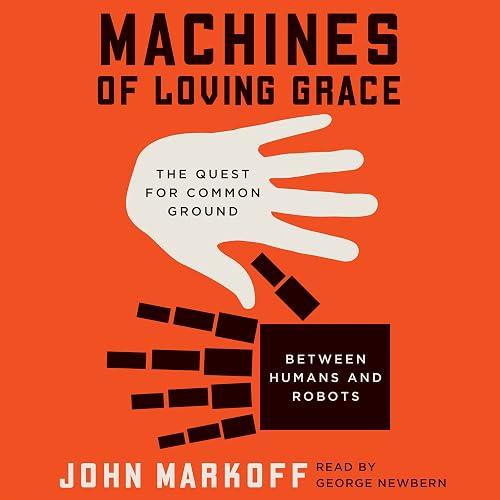
by John Markoff
Premium summary · Opens in the app · 30 min read
In the fall of 1962, a young engineer named Douglas Engelbart sat down to write a paper that would change the course of computing history. He described a vision of computers not as giant calculating machines locked in climate-controlled rooms, but as intimate tools for extending human intellect. He imagined knowledge workers collaborating through shared screens, navigating information through linked documents, and using computers to amplify their collective intelligence.
**Author:** John Markoff
**Estimated Reading Time:** 45 minutes
**What You'll Learn:** How two competing visions for computing shaped Silicon Valley and the modern world. One vision sought to replace humans with intelligent machines. The other sought to extend human capabilities. This book traces both paths, reveals their consequences, and explains why the choices designers make today will determine the future of human-machine relationships.
**Who This Book Is For:** Anyone who uses technology and wonders where it is heading. Anyone concerned about automation, artificial intelligence, and the future of work. Anyone who wants to understand the deeper forces shaping the tools that increasingly surround us.
In the fall of 1962, a young engineer named Douglas Engelbart sat down to write a paper that would change the course of computing history. He described a vision of computers not as giant calculating machines locked in climate-controlled rooms, but as intimate tools for extending human intellect. He imagined knowledge workers collaborating through shared screens, navigating information through linked documents, and using computers to amplify their collective intelligence. Around the same time, a mathematician named John McCarthy was pursuing a very different dream. He wanted to build machines that could think. Not machines that helped humans think better, but machines that could reason, learn, and eventually replace human cognitive labor entirely. He called his vision artificial intelligence. These two men worked within miles of each other near Stanford University. They knew each other. They sometimes shared students and resources. Yet they represented fundamentally different answers to a question that would define the next half century of technological development: Should machines replace humans or empower them? John Markoff spent decades covering Silicon Valley for The New York Times, watching this tension play out in laboratories, boardrooms, and product launches. He witnessed the rise of personal computing, the birth of the Internet, the resurrection of artificial intelligence, and the emergence of robots that walk, drive, and make decisions. Throughout it all, he saw the same philosophical divide shaping the tools that now surround us. The stakes could not be higher. Every time a company designs a system that automates a task previously performed by a person, it makes a choice. Every time an engineer builds an interface that keeps a human in the loop, it makes a different choice. These choices accumulate. They determine whether technology serves human flourishing or gradually renders humans unnecessary. The problem is that most people never see these choices being made. The engineers and designers who shape our technological future work in relative obscurity, driven by economic incentives, intellectual curiosity, and philosophical assumptions they rarely articulate. By the time their creations reach the public, the fundamental decisions have already been baked into…
Continue reading in the MinuteRead app
Get the complete 30-minute summary of Machines of Loving Grace
Get the complete summary in the appThere are two fundamentally different approaches to intelligent technology: artificial intelligence, which aims to repla
The choice between AI and IA is a design decision, not a technical necessity.
Douglas Engelbart's 1968 demonstration established the foundation for personal computing, introducing the mouse, graphic
The personal computer and the Internet were triumphs of the augmentation philosophy, demonstrating the power of tools de
The AI winters were caused by overpromising and underdelivering, but they forced the field to develop new approaches.
The resurrection of AI was driven by machine learning, big data, and cheap computing power.
"Machines of Loving Grace" is a strong fit if you want practical ideas around artificial intelligence, technology, science, especially themes like there are two fundamentally different approaches to intelligent technology: artificial intelligence, which aims to repla; the choice between ai and ia is a design decision, not a technical necessity. The MinuteRead summary distills these concepts into a focused read, whether you're deciding whether to buy the book or applying its lessons at work.
Motivated to help readers with one researcher attempted to replace human beings with intelligent machines, John Markoff wrote “Machines of Loving Grace” to package those ideas for a fast, focused read. In “Machines of Loving Grace”, John Markoff focuses on one researcher attempted to replace human beings with intelligent machines. Through “Machines of Loving Grace”, John Markoff distills the core ideas on artificial intelligence into lessons readers can absorb in a single short sitting. Readers …
Continue Reading
Access the complete 30-minute summary and thousands more nonfiction books in the MinuteRead app.

Continue reading the complete summary in the MinuteRead app.