MinuteRead
30 min
Book summary
by David Didau
Premium summary · Opens in the app · 30 min read
Every parent wants their child to be happy. Every teacher wants their students to succeed. Every society wants its citizens to flourish. Yet for decades, education has been caught in a strange paradox: we want children to think critically and creatively, but we have been strangely reluctant to give them the knowledge that makes such thinking possible.
**Author:** David Didau
**Estimated Reading Time:** 45 minutes
**What You'll Learn:**
Why intelligence is not fixed, how knowledge builds the foundation for all higher thinking, what actually works in the classroom, and why making children cleverer should be the central purpose of education.
**Who This Book Is For:**
Parents who want to understand how their children learn, teachers who want evidence-based approaches that actually work, school leaders shaping curriculum and culture, and anyone interested in the science of learning and cognitive development.
Every parent wants their child to be happy. Every teacher wants their students to succeed. Every society wants its citizens to flourish. Yet for decades, education has been caught in a strange paradox: we want children to think critically and creatively, but we have been strangely reluctant to give them the knowledge that makes such thinking possible. The problem begins with a seductive myth. The myth says that intelligence is something you are born with, a fixed quantity distributed by genetics, immune to intervention. According to this view, schools cannot make children cleverer. They can only sort them, measure them, and perhaps help them make the most of whatever nature provided. This belief has shaped educational practice for generations. It has lowered expectations. It has justified inequality. It has discouraged effort. But the myth is wrong. David Didau argues that intelligence is far more malleable than most people believe. While some aspects of cognitive capacity may be relatively stable, the knowledge we accumulate, the skills we develop, and the mental frameworks we build can dramatically improve our ability to think, reason, and solve problems. Education can make children cleverer. In fact, that is precisely what education should do. The stakes could hardly be higher. Research consistently shows that more intelligent people tend to live longer, healthier lives. They earn more. They report greater life satisfaction. They are more likely to participate in civic life and less likely to commit crimes. The correlation between intelligence and positive life outcomes is one of the most robust findings in social science. If we can make children cleverer, we can improve their lives in measurable, meaningful ways. But this requires us to rethink some deeply held assumptions about teaching and learning. For decades, progressive educational theory has emphasized discovery learning, student-led inquiry, and the development of generic skills like critical thinking and creativity. The idea is appealing: children should learn by doing, explore their interests, and develop transferable abilities that will serve them in any context. The problem is that this approach does not work very well for most students, particularly those who come to school with less background knowledge. The alternative, Didau argues, is not a return to rote memorization or…
Continue reading in the MinuteRead app
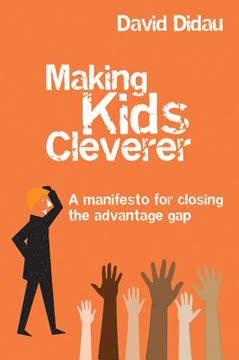
Get the complete 30-minute summary of Making Kids Cleverer
Get the complete summary in the appIntelligence is malleable. Education can make children cleverer.
Knowledge is the foundation of thinking. Critical thinking and creativity are domain-specific, not generic skills.
Working memory is limited to about four chunks. Knowledge expands effective capacity through chunking.
Explicit instruction works better than discovery learning for novices.
Deliberate practice with goals, focus, and feedback leads to mastery.
Desirable difficulties like spacing, interleaving, and retrieval practice enhance learning.
"Making Kids Cleverer" is a strong fit if you want practical ideas around education, teaching, especially themes like intelligence is malleable. education can make children cleverer; knowledge is the foundation of thinking. critical thinking and creativity are domain-specific, not generic skills. The MinuteRead summary distills these concepts into a focused read, whether you're deciding whether to buy the book or applying its lessons at work.
David Didau is a former English teacher turned author and education expert. He has written several books on education, including "Making Kids Cleverer," which focuses on improving student intelligence through knowledge-rich curricula. Didau's work draws from cognitive science, educational psychology, and general educational research to support his arguments. He is known for challenging traditional teaching methods and advocating for evidence-based approaches to education. Didau's writing style i…
View all summaries by David DidauContinue Reading
Access the complete 30-minute summary and thousands more nonfiction books in the MinuteRead app.

Continue reading the complete summary in the MinuteRead app.