MinuteRead
30 min
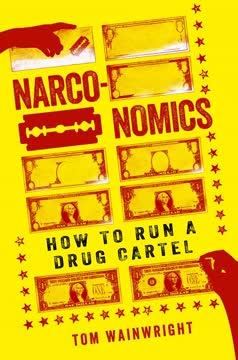
The global war on drugs costs taxpayers more than one hundred billion dollars every year. Armies patrol jungles. Helicopters spray herbicide over coca fields. Navies intercept smuggling vessels. Police officers raid laboratories and warehouses. Politicians declare victory. And yet cocaine, heroin, methamphetamine, and marijuana remain as available as ever in cities across the world. Prices have barely moved in decades. The cartels grow richer. The violence continues.
By Tom Wainwright
**Estimated Reading Time:** 45 minutes
**What You'll Learn:**
- Why drug cartels operate like multinational corporations - How supply-side drug enforcement fails and what works instead - Why competition between cartels creates violence while collusion creates peace - How cartels manage human resources, public relations, and offshoring - What legalization does to criminal business models - How economic thinking can transform drug policy
**Who This Book Is For:**
This book is for anyone who wants to understand the economics of organized crime beyond headlines and moral panic. It is for policymakers frustrated by decades of failed drug war strategies, for business readers curious about how illegal enterprises solve universal commercial problems, and for citizens who sense that something fundamental is wrong with current approaches to drugs and violence. If you have ever wondered why cartels behave the way they do, this book will change how you see them.
The global war on drugs costs taxpayers more than one hundred billion dollars every year. Armies patrol jungles. Helicopters spray herbicide over coca fields. Navies intercept smuggling vessels. Police officers raid laboratories and warehouses. Politicians declare victory. And yet cocaine, heroin, methamphetamine, and marijuana remain as available as ever in cities across the world. Prices have barely moved in decades. The cartels grow richer. The violence continues. Something is deeply wrong with this picture. Tom Wainwright spent years as the Mexico City bureau chief for The Economist, covering the drug trade at its most violent and most visible. He interviewed hitmen, growers, traffickers, police officers, politicians, and the economists who study criminal markets. What he discovered surprised him. The people running drug cartels are not irrational psychopaths operating on pure brutality. They are businesspeople. They face the same problems as the managers of Walmart, McDonald's, and Coca-Cola. They worry about supply chains, labor costs, franchise agreements, brand reputation, and market competition. They read business books. They study corporate strategy. They adapt to changing market conditions with remarkable speed. The difference is that when a legitimate business faces a competitor, it cuts prices or improves its product. When a cartel faces a competitor, it sends armed men to settle the dispute. Violence is not a sign of cartel irrationality. It is a rational response to a market without courts, contracts, or regulators. This book approaches the drug trade as an economist would approach any industry. It examines how cartels structure their organizations, manage their employees, market their products, and respond to government interference. It asks uncomfortable questions. Why does eradicating coca fields fail to raise cocaine prices? Why did murder rates in El Salvador collapse after rival gangs signed a truce? Why do prisons function as recruitment centers for organized…
Continue reading in the MinuteRead app
Get the complete 30-minute summary of Narconomics
Get the complete summary in the appDrug cartels are businesses that follow the same economic principles as legitimate companies.
The markup between production cost and retail price makes supply-side enforcement ineffective.
Competition among cartels drives violence; collusion reduces it.
Prisons are recruitment centers for organized crime.
Cartels invest in public relations to build community support.
Offshoring allows cartels to reduce costs and evade enforcement.
"Narconomics" is a strong fit if you want practical ideas around economics, business, crime, especially themes like drug cartels are businesses that follow the same economic principles as legitimate companies; the markup between production cost and retail price makes supply-side enforcement ineffective. The MinuteRead summary distills these concepts into a focused read, whether you're deciding whether to buy the book or applying its lessons at work.
Tom Wainwright is the Britain Editor of The Economist, having joined the publication in 2007. He has covered various beats, including crime, justice, and social affairs. Wainwright served as the Mexico City bureau chief from 2010 to 2013, overseeing coverage of Mexico, Central America, and the Caribbean. He has held roles such as Homepage Editor and International Correspondent. Prior to The Economist, Wainwright contributed to several UK newspapers and studied philosophy, politics, and economics…
View all summaries by Tom WainwrightContinue Reading
Access the complete 30-minute summary and thousands more nonfiction books in the MinuteRead app.

Continue reading the complete summary in the MinuteRead app.