MinuteRead
30 min
Book summary
Premium summary · Opens in the app · 30 min read
Something strange happened in 2008. The global financial system nearly collapsed, and the economists who had built sophisticated models to predict such events largely failed to see it coming. Their equations contained interest rates, employment figures, housing starts, and GDP growth. But they contained no stories. They had no way to measure the fear spreading through kitchen conversations, the whispered worries about bank failures, or the sudden loss of faith in institutions that had seemed sol
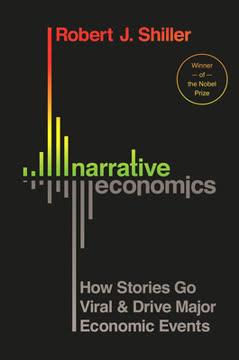
**Author:** Robert J. Shiller
**Estimated Reading Time:** 45 minutes
**What You'll Learn**
Why do stock markets crash? What makes Bitcoin worth anything? Why do recessions happen even when the numbers look fine? The answer lives in the stories we tell. This book reveals how popular narratives spread like viruses, reshaping economies, driving booms and busts, and altering the course of history. You will learn to see the hidden story behind every economic event and understand why human beings, armed with the same data, so often make wildly different decisions.
**Who This Book Is For**
This book is for anyone who has ever felt that traditional economics misses something essential about human behavior. It is for investors trying to understand market manias, policymakers seeking to communicate effectively, business leaders navigating consumer sentiment, and curious readers who want to understand why certain ideas capture the world's imagination while others fade into silence. If you have ever wondered why people act the way they do with money, this book provides the missing piece.
Something strange happened in 2008. The global financial system nearly collapsed, and the economists who had built sophisticated models to predict such events largely failed to see it coming. Their equations contained interest rates, employment figures, housing starts, and GDP growth. But they contained no stories. They had no way to measure the fear spreading through kitchen conversations, the whispered worries about bank failures, or the sudden loss of faith in institutions that had seemed solid for generations. Robert Shiller, a Nobel laureate who predicted both the dot-com bubble and the housing crash, argues that economics has been missing a fundamental force: narrative. The stories people tell each other, the tales that go viral through newspapers, social media, and dinner table conversations, are not mere background noise. They are causal. They change how people spend, save, invest, and hire. They can trigger recessions and fuel speculative manias. They can convince entire societies that the future is either hopeless or golden. The problem is that economists have traditionally treated storytelling as something outside their discipline. Stories seemed too soft, too subjective, too difficult to quantify. Better to focus on hard data, on numbers that can be plugged into models. But Shiller argues this is a catastrophic mistake. The hard data tells you what happened. The stories tell you why. And without understanding why, you cannot anticipate what comes next. Consider the question of consumer confidence. Every month, surveys ask people whether they think the economy will improve or decline. Traditional economics assumes these answers reflect rational assessments of objective conditions. But Shiller points to a troubling finding: when people assess the probability that GDP growth will be negative a year in…
Continue reading in the MinuteRead app
Get the complete 30-minute summary of Narrative Economics
Get the complete summary in the appEconomic narratives spread like epidemics. They have contagion rates, recovery rates, and mutations. They rise, peak, an
Stories override statistics. A single vivid anecdote will influence economic behavior more than volumes of data. This is
Narratives can be self-fulfilling. When enough people believe a story about the economy, their actions make the story co
Many economic narratives are perennial. They recur throughout history in mutated forms. Recognizing them provides protec
The technological unemployment narrative has recurred for over two centuries. Each wave feels unprecedented. Each wave e
Speculative bubbles are narrative-driven. They involve new paradigm stories, tales of ordinary people getting rich, dism
"Narrative Economics" is a strong fit if you want practical ideas around economics, finance, business—especially themes like economic narratives spread like epidemics. they have contagion rates, recovery rates, and mutations. they rise, peak, an; stories override statistics. a single vivid anecdote will influence economic behavior more than volumes of data. this is. The MinuteRead summary distills these concepts into a focused read, whether you're deciding whether to buy the book or applying its lessons at work.
Robert James "Bob" Shiller is an American economist and bestselling author. Born in 1946 in Detroit, he currently serves as the Arthur M. Okun Professor of Economics at Yale University. Shiller is a fellow at Yale's International Center for Finance and School of Management. He has been associated with the National Bureau of Economic Research since 1980 and held leadership positions in prominent economic associations. Shiller co-founded the investment management firm MacroMarkets LLC, where he se…
View all summaries by Robert J. ShillerContinue Reading
Access the complete 30-minute summary and thousands more nonfiction books in the MinuteRead app.

Continue reading the complete summary in the MinuteRead app.