MinuteRead
30 min
Book summary
Premium summary · Opens in the app · 30 min read
Every day, somewhere in the world, a shipment of oil changes hands. A factory in Vietnam invoices a retailer in Germany. A central bank in Brazil decides where to park its reserves. A cryptocurrency trader in Nigeria moves funds across borders. And in nearly every one of these transactions, there is a quiet constant: the U.S. dollar.
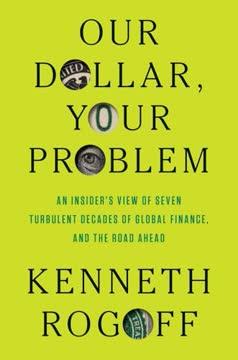
**Author:** Kenneth Rogoff
**Estimated Reading Time:** 45 minutes
**What You'll Learn:**
* Why the U.S. dollar remains the undisputed king of global finance despite repeated predictions of its demise * How past challengers failed and why China faces steeper obstacles than most people realize * The hidden costs America pays for its "exorbitant privilege" * Why fixed exchange rates keep luring countries into disaster * What could actually threaten dollar dominance in the coming decades
**Who This Book Is For:**
Anyone who wants to understand the invisible architecture of global finance. Whether you are an investor, business leader, policy enthusiast, or simply someone curious about why the dollar matters so much to your daily life, this book explains the forces shaping international money in clear, compelling terms.
Every day, somewhere in the world, a shipment of oil changes hands. A factory in Vietnam invoices a retailer in Germany. A central bank in Brazil decides where to park its reserves. A cryptocurrency trader in Nigeria moves funds across borders. And in nearly every one of these transactions, there is a quiet constant: the U.S. dollar. The dollar is not just America's currency. It is the world's currency. It is the unit in which global trade is priced, the asset in which central banks store their wealth, the safe harbor where capital flees during crises, and the instrument through which Washington projects power without firing a shot. This arrangement has lasted for over a century, surviving wars, recessions, financial collapses, and repeated predictions of its imminent demise. Kenneth Rogoff has spent decades studying this system from the inside. A former chief economist at the International Monetary Fund and now a professor at Harvard, he has watched the dollar's reign from every angle: as an academic, as a policy insider, and as a chess grandmaster who understands strategic competition. His conclusion is both reassuring and unsettling. The dollar's dominance is real, deeply entrenched, and unlikely to end anytime soon. But it is not eternal, and the greatest threats to it come not from foreign rivals but from within the United States itself. The problem with understanding the dollar's global role is that it is simultaneously everywhere and invisible. We use dollars without thinking about them. We accept dollar pricing in oil markets, dollar invoicing in trade, and dollar denomination in international loans as if these were facts of nature rather than choices shaped by history, politics, and power. Rogoff's book pulls back the curtain on this system, explaining how it emerged, why it persists, and what could unravel it. The stakes are enormous. For Americans, dollar dominance means lower borrowing costs, the ability to run persistent trade deficits, and extraordinary geopolitical leverage. For…
Continue reading in the MinuteRead app
Get the complete 30-minute summary of Our Dollar, Your Problem
Get the complete summary in the appThe dollar is the world's currency, involved in 90 percent of foreign exchange transactions and nearly 60 percent of glo
Network effects make the dollar's position self-reinforcing and difficult to dislodge.
Past challengers failed because they lacked the institutional foundations of currency trust: deep markets, rule of law,
China is the most plausible challenger but faces severe economic headwinds and institutional constraints.
Fixed exchange rates offer stability but often end in crisis because of the impossible trinity.
The exorbitant privilege allows the U.S. to borrow cheaply and project power, but it comes with significant costs.
"Our Dollar, Your Problem" is a strong fit if you want practical ideas around economics, finance, history, especially themes like the dollar is the world's currency, involved in 90 percent of foreign exchange transactions and nearly 60 percent of glo; network effects make the dollar's position self-reinforcing and difficult to dislodge. The MinuteRead summary distills these concepts into a focused read, whether you're deciding whether to buy the book or applying its lessons at work.
Kenneth Rogoff is a renowned economist and former chief economist at the International Monetary Fund. He is currently a professor at Harvard University, where he teaches economics. Rogoff has extensive experience in research and policy-making related to international finance, government debt, and monetary policy. He is known for his accurate predictions of economic crises, including the 2008 global financial crisis and China's property market bubble. Rogoff's expertise extends beyond economics; …
View all summaries by Kenneth RogoffContinue Reading
Access the complete 30-minute summary and thousands more nonfiction books in the MinuteRead app.

Continue reading the complete summary in the MinuteRead app.