MinuteRead
30 min
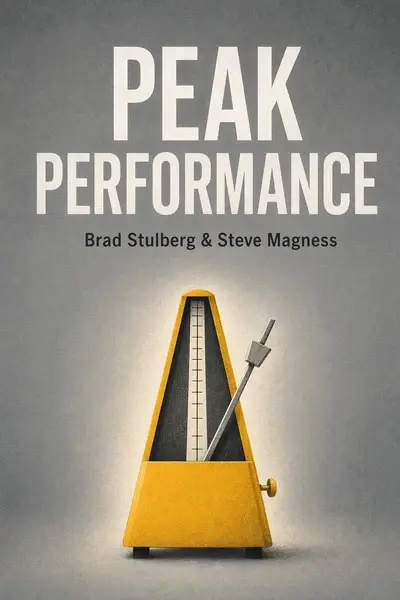
Peak Performance shows you how to perform at your highest level by exploring the most significant factors that contribute to delivering our best work, such as stress, rest, focus, and purpose.
Peak Performance shows you how to perform at your highest level by exploring the most significant factors that contribute to delivering our best work, such as stress, rest, focus, and purpose.
1. If people appear to get ahead more easily, they might be using performance-enhancing drugs, which have a high price. 2. Rest is just as beneficial for growth as stress, and, in fact, absolutely necessary. 3. Multitasking seems like it works but actually prevents peak performance.
After working 72 hours straight as an intern at Bank of America, Moritz Erhardt died. He is an extreme but, ultimately, one of many examples of how much we are pushed to overwork ourselves to compete. Burnout is real. Today, many people say they experience it frequently, if not constantly. And it’s only getting worse.
In the information age we live in, it’s easy to find resources that help us perform at peak levels. Unfortunately, however, this same connection gives us access to performance-enhancing drugs we wouldn’t otherwise have. About 30% of college students, for example, use Adderall, a drug originally designed to help people with ADHD focus. And yet, the Center For Disease Control estimates that only 6% of people actually suffer from ADHD.
While using performance-enhancing drugs is a symptom of people’s commitment to do whatever it takes to succeed, ultimately, it just leads to burnout.
However, there’s still hope for those of us who want to perform at peak levels but do so in a healthy, legal, and sustainable way.
Olympic runner and bronze medalist Deena Kastor has a rigorous training routine. One unexpected part of this routine is to sleep 10-12 hours every night. Kastor believes the real growth and formation of her ability to perform at her peak state don’t lie in the training itself, but in what happens in between training sessions.
Whenever you physically perform at high levels, your muscles break down. It’s when our muscles reform, however, that we actually gain strength. If we are constantly trying to train and perform, we never give our bodies the time they need to recover and rebuild the parts that have broken down.
The same is true for the brain and other components necessary for our success. What most of us don’t realize, however, is that this rebuilding process takes time, often more time than we initially assume. The next time you think you should be training when you are resting, think again. Recharging may be exactly what you need right now to keep building your strength.
Multitasking is connected to worsened long-term memory, a poor ability to filter information, and greater difficulty with pattern recognition. Multiple studies have shown that our ability to produce high quantities of…
Continue reading in the MinuteRead app
Get the complete 5-minute summary of Peak Performance
Get the complete summary in the appIf people appear to get ahead more easily, they might be using performance-enhancing drugs, which have a high price.
Rest is just as beneficial for growth as stress, and, in fact, absolutely necessary.
Multitasking seems like it works but actually prevents peak performance.
"Peak Performance" is a strong fit if you want practical ideas around health, motivation & inspiration, productivity, especially themes like if people appear to get ahead more easily, they might be using performance-enhancing drugs, which have a high price; rest is just as beneficial for growth as stress, and, in fact, absolutely necessary. The MinuteRead summary distills these concepts into a focused read, whether you're deciding whether to buy the book or applying its lessons at work.
Brad Stulberg researches, writes, and coaches on performance, well-being, and sustainable excellence. He is the bestselling author of The Practice of Groundedness, Master of Change, and co-author of Peak Performance. Stulberg regularly contributes to the New York Times, and his work has been featured in The Wall Street Journal and The Atlantic among many other outlets. He serves as the co-host of the podcast "excellence, actually" and is on faculty at the University of Michigan. He lives in Ashe…
View all summaries by Brad StulbergContinue Reading
Access the complete 5-minute summary and thousands more nonfiction books in the MinuteRead app.

Continue reading the complete summary in the MinuteRead app.