MinuteRead
30 min
Book summary
Premium summary · Opens in the app · 30 min read
For much of the twentieth century, the United States told itself a story. It was a story about opportunity, about hard work leading to a better life, about each generation doing better than the one before. It was a story backed by reality. From the end of World War II through the 1970s, productivity gains translated into wage gains. The middle class grew. Inequality narrowed. The American dream was not just rhetoric; it was a lived experience for millions of families.
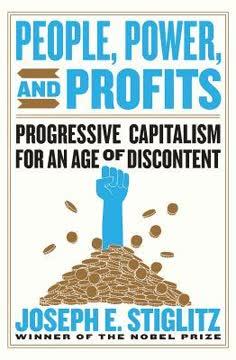
**Author:** Joseph E. Stiglitz **Estimated Reading Time:** 45 minutes
**What You'll Learn:** - Why the American economy stopped working for most Americans - How market power, not merit, drives today's inequality - The real sources of national wealth and prosperity - What a progressive agenda for shared prosperity looks like - How to restore the link between productivity and wages
**Who This Book Is For:** Readers who want to understand the structural forces behind economic inequality, citizens concerned about the health of democracy, and anyone seeking a clear-eyed explanation of why the economy feels broken and what can be done about it.
For much of the twentieth century, the United States told itself a story. It was a story about opportunity, about hard work leading to a better life, about each generation doing better than the one before. It was a story backed by reality. From the end of World War II through the 1970s, productivity gains translated into wage gains. The middle class grew. Inequality narrowed. The American dream was not just rhetoric; it was a lived experience for millions of families. That story has collapsed. Over the past four decades, something fundamental changed in the American economy. Productivity continued to rise. The economy continued to grow. But the gains from that growth stopped being shared. Instead of flowing to workers and families, the benefits of economic expansion flowed overwhelmingly to a small sliver of the population. The top 1 percent now controls more wealth than the bottom 90 percent combined. Wages for the typical worker have barely budged in real terms since the late 1970s. The middle class has hollowed out. Social mobility, once America's defining characteristic, now lags behind that of many European countries. Joseph Stiglitz, a Nobel Prize-winning economist who has spent decades studying the relationship between markets, government, and society, argues that this outcome was not inevitable. It was not the natural result of technological change or globalization. It was, in large part, the result of deliberate policy choices. Choices about how to structure markets. Choices about who gets to exercise power. Choices about whose interests the government serves. This book is an attempt to explain how those choices were made, why they were wrong, and what can be done to reverse them. The central problem, as Stiglitz sees it, is that the American economy has been restructured to serve the interests of a few at the expense of the many. This restructuring did not happen by accident. It happened because of a set of ideas about how economies work, ideas that Stiglitz calls market fundamentalism. These ideas held that markets are always efficient, that government intervention is always harmful, and that the best thing…
Continue reading in the MinuteRead app
Get the complete 30-minute summary of People, Power, and Profits
Get the complete summary in the appThe American economy has been restructured to serve the interests of the wealthy at the expense of everyone else.
Inequality is not inevitable; it is the result of policy choices.
Market power has increased dramatically, allowing firms to extract wealth from consumers and workers.
Rent-seeking, not value creation, has become a dominant feature of the American economy.
The true sources of wealth are people, science, and institutions.
Worker power has been systematically dismantled, leading to stagnant wages.
"People, Power, and Profits" is a strong fit if you want practical ideas around economics, politics, business, especially themes like the american economy has been restructured to serve the interests of the wealthy at the expense of everyone else; inequality is not inevitable; it is the result of policy choices. The MinuteRead summary distills these concepts into a focused read, whether you're deciding whether to buy the book or applying its lessons at work.
Joseph Eugene Stiglitz is a renowned American economist and Columbia University professor. He won the Nobel Prize in Economic Sciences in 2001 and the John Bates Clark Medal in 1979. Stiglitz has held prominent positions, including Chief Economist at the World Bank. Known for his critical views on globalization and free-market fundamentalism, he founded the Initiative for Policy Dialogue and is a member of various academic institutions. Stiglitz is highly cited in the field of economics and cont…
View all summaries by Joseph E. StiglitzContinue Reading
Access the complete 30-minute summary and thousands more nonfiction books in the MinuteRead app.

Continue reading the complete summary in the MinuteRead app.