MinuteRead
30 min
Book summary
Premium summary · Opens in the app · 30 min read
For generations, we have been told a comforting story about technology. The story goes like this: human ingenuity produces new tools and machines. Those tools make us more productive. Greater productivity creates wealth. And that wealth, eventually, lifts everyone. The rising tide floats all boats. Progress is inevitable. Prosperity follows innovation as naturally as spring follows winter.
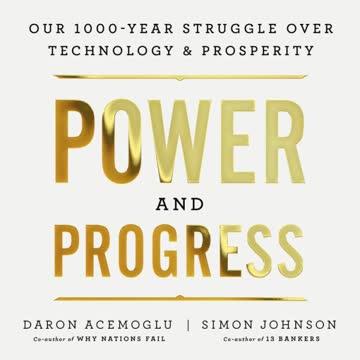
**Author:** Daron Acemoğlu **Estimated Reading Time:** 45 minutes
**What You'll Learn:** Why technological progress does not automatically create shared prosperity, how power shapes the direction of innovation, and what it would take to redirect technology toward genuine human benefit.
**Who This Book Is For:** Readers who want to understand the deeper forces behind economic inequality, the real stakes of artificial intelligence, and how ordinary people can influence the future of technology.
For generations, we have been told a comforting story about technology. The story goes like this: human ingenuity produces new tools and machines. Those tools make us more productive. Greater productivity creates wealth. And that wealth, eventually, lifts everyone. The rising tide floats all boats. Progress is inevitable. Prosperity follows innovation as naturally as spring follows winter. Daron Acemoğlu thinks this story is wrong. Not occasionally wrong. Not wrong in the details. Wrong at its core. The central argument of *Power and Progress* is that there is nothing automatic about new technologies bringing widespread prosperity. Throughout history, technological breakthroughs have just as often enriched a narrow elite while leaving everyone else behind, or worse, actively harming them. The difference between technologies that serve the many and technologies that serve the few is not the technology itself. It is power. It is who gets to decide what gets built, how it gets used, and who benefits from the gains. This is not a book about rejecting technology. Acemoğlu is not a Luddite. He is an economist at MIT who has spent decades studying how institutions shape economic outcomes. His point is more subtle and more important. Technology is a tool. Like any tool, its impact depends on who wields it and for what purpose. The same digital technologies that could empower workers, democratize information, and create new forms of collaboration are currently being used to automate jobs, monitor employees, and concentrate wealth in the hands of a few tech giants. That is not an accident. It is a choice. The book traces this pattern across a thousand years of history. Medieval agricultural improvements enriched landowners and the church while peasants saw little benefit. The early Industrial Revolution brought longer working hours, child labor, polluted cities, and public health crises to Britain's working class. It took decades of struggle, union organizing, political reform, and institutional change before the gains from industrialization began to be shared more broadly. Then came a remarkable period. After World War II, in the United States and much of Western Europe, technological progress and shared prosperity moved together. Productivity rose. Wages rose. Inequality fell. This was not magic. It was the result of strong labor unions, government regulation, social safety nets, and technologies that complemented workers rather…
Continue reading in the MinuteRead app
Get the complete 30-minute summary of Power and Progress
Get the complete summary in the appTechnology does not automatically create shared prosperity. The relationship is mediated by power.
Vision is power. Those who control resources and set agendas shape the direction of technology.
The early Industrial Revolution made workers worse off. The benefits came later, through struggle and institutional chan
The post-war period of shared prosperity was built on strong unions, regulation, and worker-complementing technologies.
The digital revolution eroded shared prosperity because power shifted away from workers.
The AI illusion is the belief that automation automatically means progress. It does not.
"Power and Progress" is a strong fit if you want practical ideas around economics, history, politics, especially themes like technology does not automatically create shared prosperity. the relationship is mediated by power; vision is power. those who control resources and set agendas shape the direction of technology. The MinuteRead summary distills these concepts into a focused read, whether you're deciding whether to buy the book or applying its lessons at work.
Daron Acemoglu is a renowned economist and professor at MIT. His work focuses on the intersection of economics, politics, and technology. Acemoglu has made significant contributions to understanding economic growth, inequality, and institutional development. He's known for co-authoring influential books like "Why Nations Fail" and "The Narrow Corridor." His research challenges conventional wisdom about the relationship between technology and societal progress. Acemoglu's accolades include the Jo…
View all summaries by Daron AcemogluContinue Reading
Access the complete 30-minute summary and thousands more nonfiction books in the MinuteRead app.

Continue reading the complete summary in the MinuteRead app.