MinuteRead
30 min
Book summary
Premium summary · Opens in the app · 30 min read
A hospital administrator creates a checklist for nurses. The checklist specifies exactly how many minutes each patient interaction should take, what questions to ask, and in what order. The administrator believes this will improve efficiency and consistency. What happens instead is that nurses stop looking patients in the eye. They stop noticing when a patient seems frightened or confused. They follow the checklist and miss the human being.
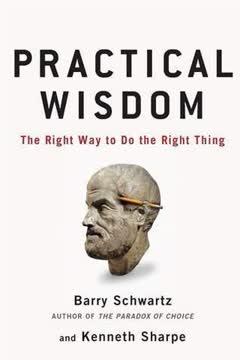
**Author:** Barry Schwartz **Estimated Reading Time:** 45 minutes
**What You'll Learn:**
- Why rules and incentives fail to produce good decisions - How practical wisdom differs from raw intelligence or technical skill - The role of empathy and emotion in sound judgment - Why institutions systematically undermine wisdom - How to develop wisdom through experience and reflection - What it takes to build wisdom-nurturing organizations
**Who This Book Is For:**
Professionals who feel trapped by rigid procedures. Leaders who sense that metrics are destroying meaning. Parents and teachers who want to raise wise children. Anyone who suspects that doing the right thing requires more than following the rules.
A hospital administrator creates a checklist for nurses. The checklist specifies exactly how many minutes each patient interaction should take, what questions to ask, and in what order. The administrator believes this will improve efficiency and consistency. What happens instead is that nurses stop looking patients in the eye. They stop noticing when a patient seems frightened or confused. They follow the checklist and miss the human being. A school district adopts a scripted curriculum. Every teacher teaches the same lesson on the same day. The district believes this will ensure quality. What happens instead is that teachers stop adapting to the students in front of them. They stop noticing when a child needs a different explanation or a different pace. They follow the script and miss the learning. A bank creates an incentive system that rewards loan officers for volume. The bank believes this will drive growth. What happens instead is that loan officers stop asking whether borrowers can actually repay. They stop considering the long-term consequences of their decisions. They follow the incentive and miss the disaster. Barry Schwartz opens Practical Wisdom with a simple observation that turns out to be profound: we have been trying to solve the problems of modern institutions with the wrong tools. We have been reaching for rules when we need judgment. We have been reaching for incentives when we need character. We have been reaching for standardization when we need wisdom. The book's central argument is that good practice in any field, whether medicine, law, education, or banking, requires something that cannot be reduced to a procedure. It requires the ability to perceive what a particular situation demands and to respond appropriately. The ancient Greeks had a word for this ability. They called it phronesis. We call it practical wisdom. Schwartz is not arguing against rules entirely. He acknowledges that rules serve important purposes. They prevent chaos. They protect against incompetence. They provide guidance for novices. But rules are blunt instruments. They cannot anticipate every situation. They cannot weigh competing values. They cannot tell…
Continue reading in the MinuteRead app
Get the complete 30-minute summary of Practical Wisdom
Get the complete summary in the appPractical wisdom is the ability to make good judgments in complex, context-dependent situations. It is not the same as i
Rules cannot replace wisdom. They are general and cannot account for the particularities of specific situations.
Incentives can backfire. They can crowd out intrinsic motivation and encourage gaming.
Emotion is essential for good judgment. It signals what is important and enables empathy.
Wisdom is developed through experience, feedback, and reflection. It cannot be taught in a classroom.
Modern institutions are systematically undermining wisdom through rigid rules, incentives, and standardization.
"Practical Wisdom" is a strong fit if you want practical ideas around philosophy, psychology, self help, especially themes like practical wisdom is the ability to make good judgments in complex, context-dependent situations. it is not the same as i; rules cannot replace wisdom. they are general and cannot account for the particularities of specific situations. The MinuteRead summary distills these concepts into a focused read, whether you're deciding whether to buy the book or applying its lessons at work.
Barry Schwartz is an American psychologist and the Dorwin Cartwright Professor of Social Theory and Social Action at Swarthmore College. He is known for his research in psychology and its application to current events. Schwartz frequently contributes editorials to the New York Times, where he explores the intersection of psychological research and contemporary issues. His work often focuses on decision-making, choice, and the impact of societal structures on individual behavior. Schwartz's exper…
View all summaries by Barry SchwartzContinue Reading
Access the complete 30-minute summary and thousands more nonfiction books in the MinuteRead app.

Continue reading the complete summary in the MinuteRead app.