MinuteRead
30 min
Book summary
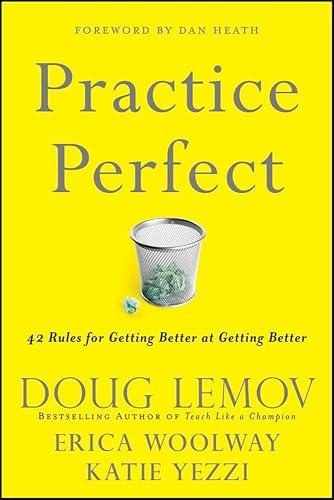
by Doug Lemov
Premium summary · Opens in the app · 30 min read
The most common piece of advice in the world might also be the most misleading. "Practice makes perfect," we tell children, athletes, employees, and ourselves. It sounds right. It feels encouraging. And it is, at best, incomplete.
**Author:** Doug Lemov
**Estimated Reading Time:** 45 minutes
**What You'll Learn:**
- Why "practice makes perfect" is dangerously wrong, and what to do instead - How to identify the few skills that drive most of your results - The difference between drilling and scrimmaging, and when to use each - Why immediate correction beats thoughtful critique - How to build a culture where practice actually sticks
**Who This Book Is For:**
Anyone who teaches, coaches, manages, or wants to improve their own performance. Whether you lead a classroom, a sales team, a soccer squad, or a surgical unit, the principles in this book will change how you think about getting better at anything.
The most common piece of advice in the world might also be the most misleading. "Practice makes perfect," we tell children, athletes, employees, and ourselves. It sounds right. It feels encouraging. And it is, at best, incomplete. Doug Lemov and his colleagues at Uncommon Schools spent years studying what separates great teachers from merely adequate ones. They observed thousands of classrooms, identified the techniques that produced remarkable results, and then tried to train other teachers to use those techniques. That is where they hit a wall. Knowing what to do was not enough. Watching a demonstration was not enough. Even wanting to improve was not enough. The missing ingredient, they discovered, was practice. Not just any practice, but a specific kind of practice that most people never experience. This book exists because most practice is wasted. It is wasted in classrooms where teachers rehearse the wrong things. It is wasted in corporate training programs that produce no lasting change. It is wasted on athletic fields where players repeat the same flawed movements until those flaws become permanent. The problem is not a lack of effort. The problem is a lack of understanding about how practice actually works. Consider the nine-year-old soccer player who spends an afternoon dribbling a ball with locked knees. From a distance, it looks like dedication. Up close, it is the systematic encoding of a mistake. Every repetition makes that awkward movement more automatic, more deeply wired into the nervous system. The child is not becoming a better soccer player. The child is becoming an expert at dribbling badly. Or consider the mammographers who read thousands of scans each year. By any reasonable standard, they are practicing constantly. Yet research shows that many mammographers do not improve with experience. Some actually get worse. The reason is simple: their feedback loop stretches across weeks. They make a judgment, file a report, and rarely learn whether they were right. Practice without feedback is just repetition. The folk wisdom about practice fails because it ignores the central…
Continue reading in the MinuteRead app
Get the complete 30-minute summary of Practice Perfect
Get the complete summary in the appPractice makes permanent, not perfect. Design practice for success.
Identify the 20 percent of skills that drive 80 percent of results. Practice them relentlessly.
Drill to build skill. Scrimmage to test readiness. Drill more as you get better.
Correct instead of critique. Have people redo it right, immediately, and multiple times.
Speed of feedback beats strength of feedback. Close the gap between action and feedback.
Tell observers what to look for before modeling. Novices do not know what excellence looks like.
"Practice Perfect" is a strong fit if you want practical ideas around education, self help, business, especially themes like practice makes permanent, not perfect. design practice for success; identify the 20 percent of skills that drive 80 percent of results. practice them relentlessly. The MinuteRead summary distills these concepts into a focused read, whether you're deciding whether to buy the book or applying its lessons at work.
Motivated to help readers with 1) Repetition doesn't make perfect; it makes permanent, Doug Lemov wrote “Practice Perfect” to package those ideas for a fast, focused read. In “Practice Perfect”, Doug Lemov focuses on 1) Repetition doesn't make perfect; it makes permanent. Through “Practice Perfect”, Doug Lemov distills the core ideas on education into lessons readers can absorb in a single short sitting. Readers turn to this work when they want Doug Lemov's perspective on the subject without wor…
Continue Reading
Access the complete 30-minute summary and thousands more nonfiction books in the MinuteRead app.

Continue reading the complete summary in the MinuteRead app.