MinuteRead
30 min
Book summary
Premium summary · Opens in the app · 30 min read
Every day, you make decisions that shape your life and the lives of others. You decide what to buy, where to work, how much to save, and what to produce. Multiply those decisions by billions of people across the globe, and you have the modern economy. Yet most of us go through life without understanding the invisible forces that coordinate this vast web of human activity.
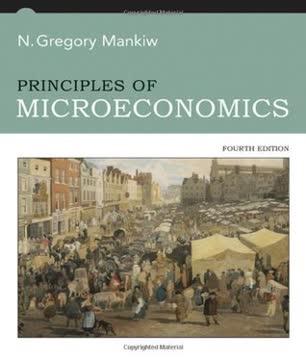
**Author:** N. Gregory Mankiw
**Estimated Reading Time:** 45 minutes
**What You'll Learn:**
- How markets allocate scarce resources through the invisible hand - Why governments intervene in markets and when intervention helps or harms - How taxes, price controls, and externalities shape economic outcomes - Why trade creates winners and losers but benefits nations overall - How to think like an economist about everyday decisions
**Who This Book Is For:**
This condensed edition is for anyone who wants to understand the fundamental forces that shape economic life. Whether you are a student encountering economics for the first time, a professional seeking to make better decisions, or a curious reader wondering why prices rise, why shortages occur, or why governments tax and regulate, this book will give you a clear and rigorous foundation. No prior knowledge of economics is required.
Every day, you make decisions that shape your life and the lives of others. You decide what to buy, where to work, how much to save, and what to produce. Multiply those decisions by billions of people across the globe, and you have the modern economy. Yet most of us go through life without understanding the invisible forces that coordinate this vast web of human activity. Why do prices rise when a hurricane disrupts oil production? Why do rent controls create housing shortages? Why do governments tax cigarettes but subsidize education? Why does international trade make some workers wealthy while leaving others unemployed? These questions are not abstract. They affect your paycheck, your rent, your grocery bill, and your future. Most people answer these questions with intuition, and intuition often leads them astray. They see a greedy landlord raising rents and assume the solution is to cap prices. They see a factory polluting a river and assume the only answer is to shut it down. They see foreign workers taking jobs and assume the solution is to close borders. Each of these intuitions contains a kernel of truth, but each also misses the deeper logic of how markets work and why they sometimes fail. This book exists because economic literacy matters. It matters for voters who elect politicians promising simple solutions to complex problems. It matters for business owners who must anticipate how customers and competitors will respond to their decisions. It matters for workers who want to understand why wages rise and fall. And it matters for citizens who want to evaluate whether government policies will help or hurt the people they intend to serve. The central insight of microeconomics is both simple and profound: people respond to incentives. When the price of something rises, people buy less of it. When the cost of an activity falls, people do more…
Continue reading in the MinuteRead app
Get the complete 30-minute summary of Principles of Microeconomics
Get the complete summary in the appPeople respond to incentives. Every policy and every market can be understood by asking what incentives it creates.
Every choice involves a trade-off. The cost of something is what you give up to get it.
The invisible hand usually leads markets to allocate resources efficiently, but efficiency is not equity.
Prices coordinate economic activity by signaling scarcity and abundance.
Externalities cause market failures when actions affect bystanders.
The tragedy of the commons occurs when shared resources are overused because individuals do not bear the full cost of th
"Principles of Microeconomics" is a strong fit if you want practical ideas around economics, textbooks, business, especially themes like people respond to incentives. every policy and every market can be understood by asking what incentives it creates; every choice involves a trade-off. the cost of something is what you give up to get it. The MinuteRead summary distills these concepts into a focused read, whether you're deciding whether to buy the book or applying its lessons at work.
Nicholas Gregory Mankiw is a prominent American macroeconomist and the Robert M. Beren Professor of Economics at Harvard University. Known for his work on New Keynesian economics, Mankiw is highly influential in academia and ranks among the top economists worldwide. He has authored several best-selling economics textbooks and regularly contributes to The New York Times. Mankiw has also served as Chairman of the Council of Economic Advisers under President George W. Bush and advised Republican po…
View all summaries by N. Gregory MankiwContinue Reading
Access the complete 30-minute summary and thousands more nonfiction books in the MinuteRead app.

Continue reading the complete summary in the MinuteRead app.