MinuteRead
30 min
Book summary
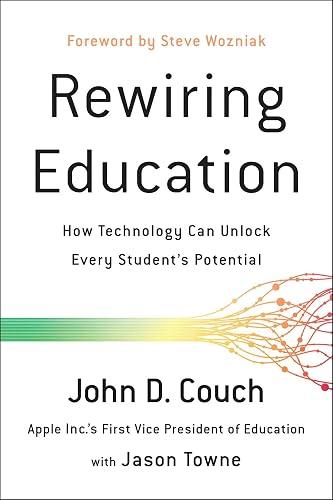
by John D. Couch
Premium summary · Opens in the app · 30 min read
Every day, millions of children walk into buildings designed for a world that no longer exists. They sit in rows, face forward, and receive information from a single authority figure at the front of the room. They are told what to learn, when to learn it, and how to demonstrate that learning. They are sorted, graded, and ranked according to standardized measures that assume all minds develop in the same way at the same pace.
**Author:** John D. Couch with Jason Towne
**Estimated Reading Time:** 45 minutes
**What You'll Learn:**
- Why the current education system was designed for a world that no longer exists - How to move from standardized instruction to personalized learning - What Challenge-Based Learning is and why it transforms student motivation - How technology can redefine education rather than simply digitize old methods - What parents, teachers, and leaders can do to support meaningful change
**Who This Book Is For:**
This book is for parents frustrated by a school system that seems disconnected from their children's lives. It is for teachers who sense that something fundamental needs to change but feel constrained by existing structures. It is for education leaders searching for a coherent vision of transformation. And it is for anyone who believes that human potential is being wasted by outdated approaches to learning.
Every day, millions of children walk into buildings designed for a world that no longer exists. They sit in rows, face forward, and receive information from a single authority figure at the front of the room. They are told what to learn, when to learn it, and how to demonstrate that learning. They are sorted, graded, and ranked according to standardized measures that assume all minds develop in the same way at the same pace. This system was not designed to be cruel. It was designed to be efficient. It emerged during the Industrial Revolution, when society needed workers who could follow instructions, tolerate repetitive tasks, and conform to organizational hierarchies. The factory model of education served that purpose remarkably well for over a century. But the world has changed, and the model has not. John D. Couch has spent his career at the intersection of education and technology. As Apple's first Vice President of Education, he worked alongside Steve Jobs during the early days of personal computing. He witnessed firsthand how technology began transforming industries, communication, entertainment, and commerce. Yet he also watched as schools remained stubbornly resistant to meaningful change. Computers entered classrooms, but they were often used as expensive typewriters or digital worksheets. The underlying structure of education remained untouched. Couch's central argument is that we do not need to repair the current system, nor do we need to replace it wholesale. We need to rewire it. Just as a building's electrical system can be upgraded to handle modern demands while preserving the structure itself, education can be fundamentally reconfigured to meet the needs of today's learners. This rewiring involves changing how we think about students, motivation, technology, learning spaces, and the role of teachers. The stakes could not be higher. In an era of artificial intelligence, automation, and rapid technological change,…
Continue reading in the MinuteRead app
Get the complete 30-minute summary of Rewiring Education
Get the complete summary in the appEducation needs rewiring, not repair or replacement. The factory model is obsolete.
Every student can learn when given the right conditions. The problem is the system, not the student.
Motivation drives learning. Create conditions that foster intrinsic motivation.
Personalization is possible at scale. Use technology to adapt learning to individual needs.
Technology should transform, not substitute. Aim for redefinition, not digitization.
Learning happens everywhere. Design diverse spaces that support different types of learning.
"Rewiring Education" is a strong fit if you want practical ideas around education, technology, psychology, especially themes like education needs rewiring, not repair or replacement. the factory model is obsolete; every student can learn when given the right conditions. the problem is the system, not the student. The MinuteRead summary distills these concepts into a focused read, whether you're deciding whether to buy the book or applying its lessons at work.
Motivated to help readers with "What we need is rewiring—upgrading our educational operating system so that it better connects students, John D. Couch wrote “Rewiring Education” to package those ideas for a fast, focused read. In “Rewiring Education”, John D. Couch focuses on "What we need is rewiring—upgrading our educational operating system so that it better connects students. Through “Rewiring Education”, John D. Couch distills the core ideas on education into lessons readers can absorb in a…
Continue Reading
Access the complete 30-minute summary and thousands more nonfiction books in the MinuteRead app.

Continue reading the complete summary in the MinuteRead app.