MinuteRead
30 min
Book summary
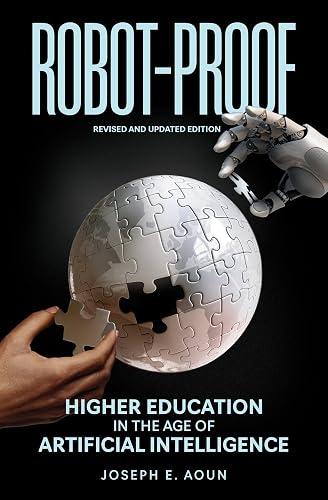
by Joseph E. Aoun
Premium summary · Opens in the app · 30 min read
In 2016, a short film produced by a London-based artificial intelligence company made the rounds on the internet. It showed a robot named Baxter performing a simple task: picking up objects from a table and placing them into a box. What made the video remarkable was not what Baxter did, but how Baxter learned to do it. A researcher stood beside the robot, guided its arm through the motion a few times, and then stepped back. Baxter watched, processed, and then repeated the task on its own. No pro
**Author:** Joseph E. Aoun
**Estimated Reading Time:** 45 minutes
**What You'll Learn:**
- Why the rise of intelligent machines threatens not just manual labor but professional knowledge work - What "robot-proof" actually means and why it requires a fundamental redesign of education - The three new literacies every graduate will need: technological, data, and human - The four cognitive capacities that distinguish human intelligence from artificial intelligence - How experiential learning and lifelong learning become central rather than supplementary - A practical framework for reimagining higher education for the twenty-first century
**Who This Book Is For:**
This book is for anyone who cares about the future of education and work. Parents wondering what their children should study. Students deciding whether their degree will still matter in twenty years. Educators questioning whether their institutions are preparing graduates for the world that is coming. Business leaders trying to understand what skills their future workforce will need. Policymakers grappling with the social consequences of automation. And anyone who has ever wondered whether a machine will eventually do their job.
In 2016, a short film produced by a London-based artificial intelligence company made the rounds on the internet. It showed a robot named Baxter performing a simple task: picking up objects from a table and placing them into a box. What made the video remarkable was not what Baxter did, but how Baxter learned to do it. A researcher stood beside the robot, guided its arm through the motion a few times, and then stepped back. Baxter watched, processed, and then repeated the task on its own. No programming. No code. Just observation and imitation. The video was meant to demonstrate how accessible robotics had become. But for many viewers, it triggered something else: a quiet recognition that the boundary between human work and machine work was dissolving faster than anyone had anticipated. For decades, the standard reassurance about automation went something like this: machines will take the repetitive jobs, the dangerous jobs, the jobs that require brute force or mindless precision. Humans will keep the jobs that require thinking, judgment, creativity, and care. The assembly line worker might be replaced by a robotic arm, but the lawyer, the radiologist, the financial analyst, the journalist, the professor: these people were safe. That reassurance is no longer credible. Artificial intelligence systems now review legal documents, draft contracts, and predict case outcomes. Algorithms analyze medical images with accuracy that rivals or exceeds human radiologists. Automated trading systems execute financial transactions in microseconds. Software writes news summaries, generates marketing copy, and composes music. The boundary between human and machine cognition is blurring, and the consequences are not hypothetical. They are already unfolding in workplaces around the world.…
Continue reading in the MinuteRead app
Get the complete 30-minute summary of Robot-Proof
Get the complete summary in the app**The threat is real.** AI is automating cognitive work, not just manual labor. Nearly half of all jobs are at risk.
**The old model is broken.** Higher education was designed for a world of scarce knowledge and stable careers. That worl
**Humanics is the answer.** A new educational model that cultivates human strengths in creativity and flexibility.
**Learn the new literacies.** Technological literacy, data literacy, and human literacy are as fundamental as reading, w
**Develop the cognitive capacities.** Critical thinking, systems thinking, entrepreneurship, and cultural agility are wh
**Experience is essential.** The cognitive capacities are developed through experiential learning, not lectures.
"Robot-Proof" is a strong fit if you want practical ideas around education, technology, ai, especially themes like **the threat is real.** ai is automating cognitive work, not just manual labor. nearly half of all jobs are at risk; **the old model is broken.** higher education was designed for a world of scarce knowledge and stable careers. that worl. The MinuteRead summary distills these concepts into a focused read, whether you're deciding whether to buy the book or applying its lessons at work.
Motivated to help readers with to ensure that graduates are "robot-proof" in the workplace, Joseph E. Aoun wrote “Robot-Proof” to package those ideas for a fast, focused read. In “Robot-Proof”, Joseph E. Aoun focuses on to ensure that graduates are "robot-proof" in the workplace. Through “Robot-Proof”, Joseph E. Aoun distills the core ideas on education into lessons readers can absorb in a single short sitting. Readers turn to this work when they want Joseph E. Aoun's perspective on the subject …
Continue Reading
Access the complete 30-minute summary and thousands more nonfiction books in the MinuteRead app.

Continue reading the complete summary in the MinuteRead app.