MinuteRead
30 min
Book summary
by Eric Metaxas
Premium summary · Opens in the app · 30 min read
We live in an age of small topics. We are drowning in information but starving for wisdom. Our screens bombard us with headlines, notifications, and hot takes, yet the questions that actually matter, questions about purpose, about God, about why we are here and what we ought to do, get pushed to the margins of our attention. We treat them as small topics when they are, in reality, the only topics that count.
**Conversations on Faith, Science, and the Big Questions**
By Eric Metaxas
**Estimated Reading Time:** 45 minutes
**What You'll Learn:**
Why the biggest questions about existence, meaning, and God are not obstacles to faith but invitations to a richer, more intellectually honest life. You will encounter arguments for intelligent design, the historical evidence for Jesus, the relationship between science and religion, and the surprising ways doubt can strengthen belief.
**Who This Book Is For:**
Anyone who has ever suspected that faith requires checking your brain at the door. Anyone who wonders whether science has rendered God unnecessary. Anyone who wants to engage life's deepest questions with rigor, humor, and intellectual integrity. This book is for the curious, the skeptical, and the believing alike.
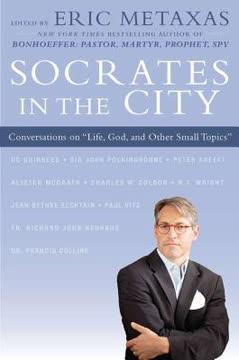
We live in an age of small topics. We are drowning in information but starving for wisdom. Our screens bombard us with headlines, notifications, and hot takes, yet the questions that actually matter, questions about purpose, about God, about why we are here and what we ought to do, get pushed to the margins of our attention. We treat them as small topics when they are, in reality, the only topics that count. Eric Metaxas wrote this book because he noticed something peculiar. The most intelligent people he knew were often the least willing to discuss the biggest questions. In polite company, you could talk about politics, sports, or the latest Netflix series. But bring up God, or the meaning of life, or the evidence for a designed universe, and the room would go quiet. Somewhere along the way, we had decided that serious people do not discuss such things. They are private matters. They are unsophisticated. They are, as the title suggests, small topics. Metaxas disagrees. And he makes his case not by shouting or preaching, but by modeling something increasingly rare: intelligent, good-humored, intellectually rigorous conversation about the things that matter most. The book is a collection of essays, speeches, and reflections drawn from Metaxas's wide-ranging career as a writer, speaker, and host of the Socrates in the City series. Each chapter takes up a question that many of us carry but few of us voice. Is there evidence for God? Can science and faith coexist? Was Jesus a real historical figure, and if so, who was he really? What do near-death experiences tell us about consciousness? Why does the universe appear so finely tuned for life? What makes this book different is its tone. Metaxas does not write like a theologian defending orthodoxy. He writes like a friend at a dinner party who happens to know a great deal about physics, history, and philosophy, and who cannot help but share what he has learned because…
Continue reading in the MinuteRead app
Get the complete 30-minute summary of Life, God, and Other Small Topics
Get the complete summary in the appScience and faith are not enemies. They address different questions and converge on a richer picture of reality.
The universe is fine-tuned for life to an astonishing degree. The odds of this happening by chance are effectively zero.
DNA is a digital code at the heart of every living cell. Codes require a coder.
The historical evidence for the resurrection of Jesus is strong and deserves serious examination.
Doubt is not the opposite of faith. It is a component of mature faith.
Mother Teresa felt God's absence for most of her adult life. Faith is a choice, not a feeling.
"Life, God, and Other Small Topics" is a strong fit if you want practical ideas around philosophy, christian, religion, especially themes like science and faith are not enemies. they address different questions and converge on a richer picture of reality; the universe is fine-tuned for life to an astonishing degree. the odds of this happening by chance are effectively zero. The MinuteRead summary distills these concepts into a focused read, whether you're deciding whether to buy the book or applying its lessons at work.
Eric Metaxas is a versatile author known for his eclectic career spanning various genres and mediums. He has written for VeggieTales, Chuck Colson, Rabbit Ears Productions, and the New York Times. Metaxas is best known for his biographies, children's books, and works of popular apologetics, which have been translated into over 25 languages. His ability to engage with diverse audiences and tackle complex subjects has made him a prominent figure in contemporary Christian literature and apologetics…
View all summaries by Eric MetaxasContinue Reading
Access the complete 30-minute summary and thousands more nonfiction books in the MinuteRead app.

Continue reading the complete summary in the MinuteRead app.